
Local service guide
Baltimore carpet cleaning: quotes and preparation
Arrange carpet cleaning with a written quote covering your rooms, stairs, treatments, furniture moving and drying plan. Disclose leaks or sewage contact before booking so you can ask for the appropriate service. For a Baltimore City sewage backup after heavy rain, report damage to 311 as soon as you discover it and request a Public Works eligibility assessment. Ask about current SOS Cleanup Program availability: the City’s page still describes it as a pilot, and the City must confirm a qualifying cause before approving assistance. [1]
Describe the job before requesting prices
Send each cleaner the same room measurements, stair count and photographs. Describe spills, pet odor and areas you want them to treat. Share the carpet label or manufacturer’s care instructions if you have them. Ask the cleaner to explain the proposed method and how they will check its suitability for your carpet.
Request a written total with any minimum visit charge, treatment extras and furniture moving listed. Ask how the company defines a room if it quotes by room, and which measurements it uses if it quotes by area. Agree that the cleaner must obtain your approval before adding work or changing the price.
Discuss the result you want before accepting the quote. Ask which stains or odors the cleaner expects to address, what they cannot promise, and how they handle a concern after the appointment. Request proof of liability insurance and identify the business that will perform the work.
Separate routine cleaning from water-damage work
For wet carpet, tell the provider where the water came from, when you noticed it and which adjoining areas it reached. Ask whether the company handles extraction, moisture assessment and drying beneath the carpet before agreeing to an ordinary cleaning appointment.
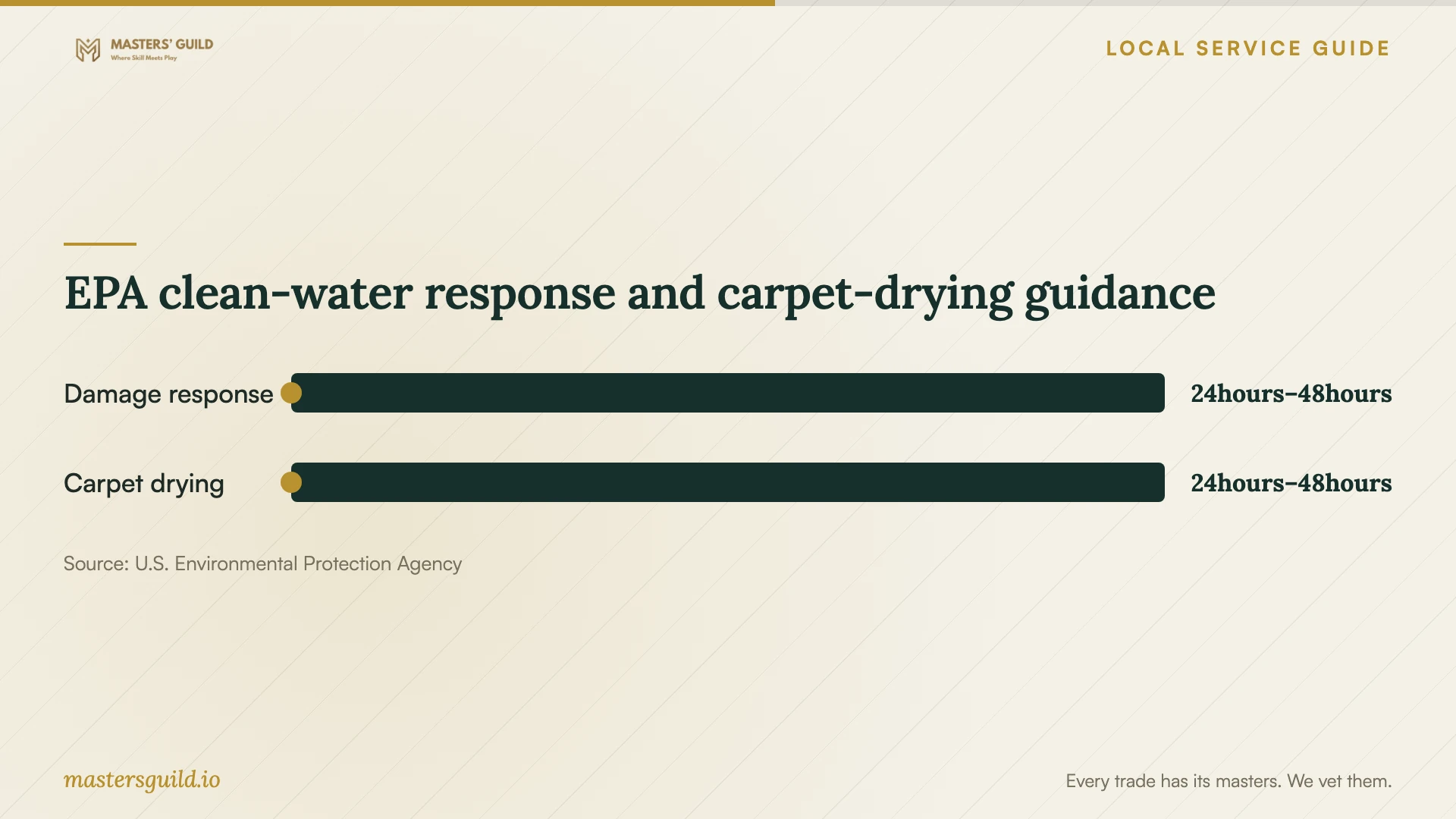
EPA’s clean-water damage guidance calls for water extraction, reduced humidity and drying carpet and backing within 24–48 hours. It also directs responders to clean and dry the subfloor. EPA presents this guidance in its schools and commercial buildings guide; use it to discuss the scope of restoration work at home, rather than as a routine-cleaning drying estimate. [2]
For suspected sewage or other contaminated water, EPA advises consulting an experienced professional if you lack remediation expertise. EPA also advises against using fans before determining that the water is clean or sanitary. Disclose suspected contamination when calling, and ask the contractor how they will assess and handle affected materials. [2]
Agree on access and room use
Explain which floor contains the carpet, how the cleaner can unload and whether they must use stairs or an elevator. Confirm building access with your property manager. Ask how the crew will bring equipment inside and route hoses while keeping your entrance usable.
Decide who will move furniture and which pieces will stay in place. Remove small belongings from the agreed work area. Tell the cleaner if a carpeted staircase provides your only route to bedrooms or if you need a room that evening, then agree on the order of work.
Obtain drying instructions for the proposed cleaning method, including when to walk on the carpet and return furniture. For restoration, ask how the contractor will check the backing and subfloor. EPA’s clean-water guidance includes drying those underlying materials; a dry-feeling carpet surface should not be your sole acceptance check. [2]
Request a City assessment after a sewage backup
Baltimore City DPW describes SOS as no-cost cleanup for residential customers affected by a capacity-related wet-weather sewage backup. Its criteria require at least one-quarter inch of precipitation within 24 hours that causes sewer surcharge or overflow. The City must determine the cause; rainfall by itself does not establish eligibility. [1]
The owner, tenant or property manager must report the damage through 311 as soon as they discover it. DPW excludes nonqualifying backups associated with roots, wet wipes, fats, oil, grease or maintenance issues. Ask DPW to assess your circumstances and confirm current availability because its published page still calls SOS a 12-month pilot. [1]
For approved cases, the published scope includes cleaning, disinfection, removal of affected property, deodorizing, drying and dehumidification. Contractors may remove soiled carpet and flooring. Ask DPW which work it will authorize before committing to private expenses, and contact your insurer about coverage. The City limits eligibility to either SOS or the Expedited Reimbursement Program, not both. [1]
EPA clean-water response and carpet-drying guidance
Local details that affect your job
Use the residential reporting route
Baltimore City includes homeowners and tenants among potentially eligible SOS customers and permits a property manager to report damage. Call 311 as soon as you discover the backup and request a cause assessment. Confirm current service availability before relying on a City cleanup appointment. [1]
Distinguish stormwater entry from a sewer backup
DPW’s May 27, 2021 program bulletin excludes stormwater flooding from SOS and expedited reimbursement assistance. Its current program page restricts SOS to capacity-related wet-weather sewage backups. Describe how water entered your home when reporting; ask DPW to determine the cause instead of assuming rain-related basement water qualifies. [1] [3]
Resolve removal and assistance before paying privately
DPW’s published SOS scope includes removing soiled carpet, flooring and furniture. Ask which materials its contractors would remove and which assistance route applies. The City allows eligibility for SOS or expedited reimbursement, not both, so confirm your options before authorizing a separate cleanup bill. [1]
Match the appointment to the problem
| Situation | Next step | Question for the provider or City |
|---|---|---|
| Routine dirt or isolated stains | Request comparable written cleaning quotes. | Which treatments and furniture moving does the total include? |
| Known clean-water damage | Arrange extraction and drying; EPA advises drying carpet and backing within 24–48 hours. | Who will clean, dry and assess the subfloor? |
| Suspected sewage contamination | Consult a professional experienced in contaminated-water remediation. | Can you assess contamination and handle affected materials? |
| City residence with a wet-weather sewage backup | Report promptly to 311 and request DPW’s cause assessment and availability confirmation. | Does this event meet the published SOS criteria? |
| Potential SOS assistance | Confirm removal plans and the assistance route before commissioning private work. | Which materials would contractors remove, and which expenses should I authorize? |
Your hiring checklist
- Send matching measurements, stair details and photographs to each cleaner.
- Share carpet care instructions and identify stains or odors you want addressed.
- Disclose the source and timing of any water damage or suspected contamination.
- Confirm the total, extras, exclusions and approval process for added work.
- Agree on unloading, building access and furniture moving.
- Plan room use around the cleaner’s drying instructions.
- For a potential qualifying sewage backup, report promptly to 311 and confirm DPW’s availability and authorized scope.
Frequently Asked Questions
How should I budget for carpet cleaning?
Obtain written quotes for the same rooms, stairs and treatments. Ask each cleaner to include minimum charges, furniture moving and any extras. Compare the complete scope and drying arrangements alongside the total.
How long should I keep the room out of use?
Ask the cleaner for instructions specific to your carpet and cleaning method. EPA’s 24–48-hour guidance concerns clean-water damage response, not routine-cleaning dry time. EPA also warns that drying within that window does not guarantee that mold has not developed. [2]
Can a tenant request City sewage cleanup?
Yes. DPW includes Baltimore City residential tenants among potentially eligible customers. An owner, tenant or property manager must report promptly to 311. Ask about current availability and eligibility; the City must confirm a qualifying wet-weather cause. [1]
Should I use fans after a sewage backup?
EPA advises against using fans before determining that the water is clean or sanitary. Consult an experienced restoration professional about suspected sewage contamination and describe the water source before the visit. [2]
Sources and scope
This guide combines the sources below with practical planning guidance. Figures apply to the stated geography and period; request a written quote for your property.