
Local service guide
Bathroom Remodeling in Baltimore: Hiring and Permits
For Bathroom Remodeling in Baltimore, choose a contractor with a current Maryland Home Improvement Commission license, compare written scopes, and identify the responsible master plumber before signing. Maryland requires contractors to hold a current MHIC license. Baltimore City requires a permit before plumbing work unless a specific exception applies, and the application must name the insured, licensed master plumber responsible for that work. Ask bidders to price your preferred scope and any fixture relocation as separate options. [1] [2]
Define the work each contractor should quote
Prepare one scope for all bidders. Describe the repairs you need, the fixtures you want to keep and any changes to the layout. Separate required work from optional purchases. For example, ask for a base proposal that keeps the toilet in place and a separate option for moving it.
For a shower rebuild, request a description of the waterproofing system, drain connection, wall preparation and checks before the crew covers the work. Have the contractor name the products or specify purchase allowances. Ask who will handle floor and wall repairs, painting, debris removal and cleanup.
Send photographs and measurements, then arrange a site visit before accepting the final scope. Show the bidder stains, loose flooring and previous repairs. Agree on how the crew will photograph concealed damage, price additional repairs and obtain your written approval before proceeding.
Confirm who handles the plumbing permit
Baltimore City requires a permit before plumbing work begins unless its regulations provide a specific exception. Section 2903 requires the application to carry the name and address of the insured, licensed master plumber responsible for the work. The City restricts permit recipients to the licensed parties listed in that section. [1]
Ask the contractor to identify that plumber before you approve fixture replacements or relocations. Have the plumber assess the proposed work and explain any claimed exception. Keeping the same layout does not establish an exception under the general permit rule. [1]
If your project requires a permit, request its number and approved scope before the crew starts. Have the contractor explain any additional building, electrical or mechanical approvals for your design. Record who will arrange inspections and give you the associated records at completion.
Put materials, dates and payments in the contract
Maryland requires a legible written home improvement contract signed by each party. The contract must describe the work and materials, identify the contractor’s name, address and MHIC license number, and include approximate start and substantial completion dates. The homeowner must receive a signed copy before work starts. [2]
Use those requirements to review the proposal line by line. Replace broad descriptions such as bathroom renovation with the agreed demolition, repairs, installations and finishes. For allowances, ask what happens if your selection costs more or less than the stated amount. Clarify who orders materials and handles delivery, returns and damaged items.
A contractor cannot accept more than one-third of the contract price as a deposit or accept payment before you sign. Maryland lets you negotiate a smaller deposit and the later payment schedule. Propose milestones tied to work you can check, and put the amounts and conditions in writing. [2]
Separate city charges from the remodeling quote
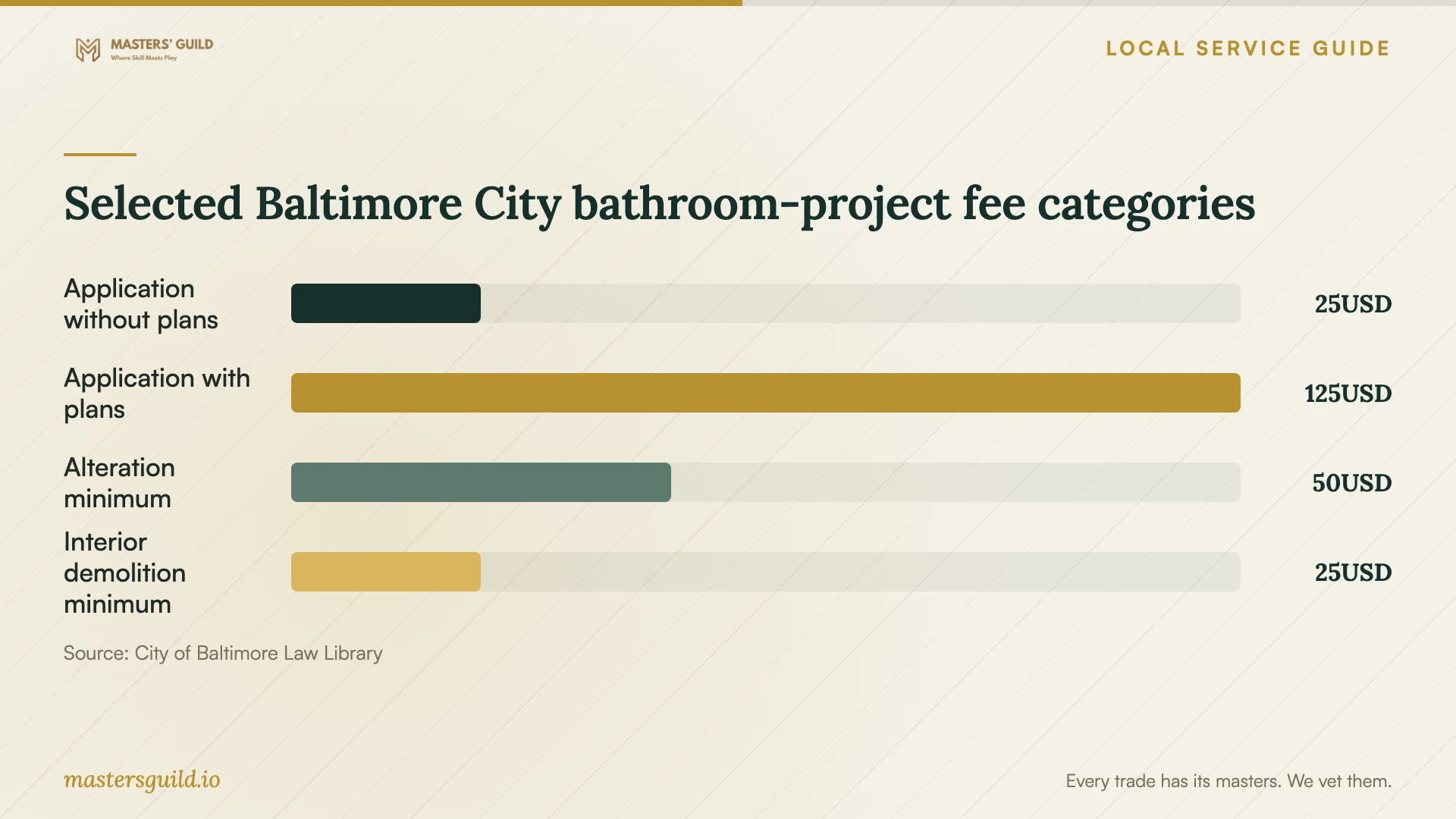
Baltimore City’s published fee schedule lists government charges. For one- and two-family dwellings, the application fee is $25 when construction documents are not required for plan review and $125 when they are required. The schedule also lists a $50 minimum construction permit fee for alterations and repairs and a $25 minimum for interior-only demolition. [3]
These amounts cover separate fee categories. Other applicable charges can add to them. The City imposes a permit tax of 5% of the final permit cost, rounded up to the nearest whole dollar. Ask the bidder which categories apply to your scope and whether the proposal includes them. [3]
Request separate quote amounts for labor, materials, fixture allowances, government charges and contractor permit administration. Use the chart to ask informed questions about fees. Build your remodeling budget from the proposed work, selections and exclusions rather than treating a permit minimum as a project estimate.
Choose fixtures and plan bathroom access
EPA states that standard showerheads use 2.5 gallons per minute and WaterSense labeled models use no more than 2.0 gallons per minute. Independent certification covers efficiency and performance, including spray force and coverage. This national product guidance applies to fixture selection; it does not establish your household’s water-bill savings. [4]
Compare spray settings, controls and cleaning instructions before ordering. Ask the contractor to confirm compatibility with the proposed shower assembly. Keep model numbers and finish choices in the project documents so the crew can confirm what you approved.
Agree on when you will lose toilet and shower access and whether the crew can restore either during construction. If this is your only bathroom, arrange an alternative before demolition. Discuss delivery access, protection for stairs and floors, debris handling and daily cleanup.
At the final walkthrough, check for leaks, drainage problems, fan operation, sticking doors or drawers and unfinished surfaces. Request care instructions, product warranties and the permit records associated with the work. Keep these with the contract and written change approvals.
Selected Baltimore City bathroom-project fee categories
Local details that affect your job
The city application names the responsible master plumber
For plumbing work in Baltimore City, Section 2903 requires the permit application to name the insured, licensed master plumber responsible for the work. It restricts who can receive the permit. Ask bidders to identify that person and explain their permit arrangement before you choose a remodeling contractor. [1]
Plan review changes the application charge
For a one- or two-family dwelling, Baltimore City lists a $25 application fee without required construction documents for plan review and $125 with them. Ask which category applies to your design. The City requires payment of prescribed fees before permit issuance, and the application charge does not cover all applicable fees. [3]
Maryland limits your initial deposit
Maryland’s home improvement contract rules apply to homeowners here: a contractor cannot accept a deposit above one-third of the contract price or any payment before signing. If a bidder requests more, ask for revised terms. You can negotiate a smaller deposit and later payment milestones. [2]
Choose the next step for your bathroom project
| Your situation | Ask the bidder | Before approving |
|---|---|---|
| Finish refresh | Which fixtures or connections will you disturb? | Have the responsible plumber assess permit requirements and any specific exception. |
| Shower rebuild | Which waterproofing, drain and wall preparation will you include? | Record the proposed assembly and repair exclusions in the scope. |
| Fixture relocation | Who is the responsible master plumber, and how will you access the pipes? | Identify the plumbing permit arrangement and obtain a proposed layout. |
| Only bathroom | When will I lose toilet and shower access? | Arrange an alternative and agree on material readiness before demolition. |
| Deposit above one-third | Can you revise the deposit and later milestones? | Maryland prohibits deposits above one-third and payment before signing. |
Your hiring checklist
- Photograph the bathroom and list required repairs, fixtures and optional layout changes.
- Give bidders the same scope and request separate prices for optional work.
- Ask for contractor license details and the responsible master plumber’s name.
- Confirm the permit arrangement and separate government fees from administration charges.
- Compare waterproofing products, fixture allowances and repair exclusions.
- Agree on material ordering, bathroom access and written approval for concealed-damage repairs.
- Review the signed contract, dates and payment milestones before paying.
- Keep change approvals, care instructions, warranties and permit records.
Frequently Asked Questions
Does keeping the layout remove the plumbing permit requirement?
Keeping the layout does not establish an exception. Baltimore City requires a permit for plumbing work unless its regulations provide a specific exception. Ask the responsible master plumber to assess the proposed fixture and connection work before starting. [1]
How much should I pay as a deposit?
Maryland permits an initial deposit of up to one-third of the contract price and prohibits payment before signing. You can negotiate a smaller deposit and the later payment schedule. Record the agreed amounts and milestones in the contract. [2]
Does the city fee chart show the full permit cost?
The chart shows selected application charges and permit minimums. Other applicable fees and the permit tax can add to them. Ask the bidder to identify the categories for your scope and separate government charges from contractor administration. [3]
How should I choose a water-saving showerhead?
Look for the WaterSense label and compare controls and spray settings. EPA requires labeled models to use no more than 2.0 gallons per minute and obtain independent certification for efficiency and performance. Ask your contractor to confirm compatibility before ordering. [4]
Sources and scope
This guide combines the sources below with practical planning guidance. Figures apply to the stated geography and period; request a written quote for your property.