
Local service guide
Heavy Lifting in Bakersfield: Hiring and Planning
Arrange Heavy Lifting in Bakersfield by identifying the item, the carry route, and whether you need transport. Ask the provider to confirm staffing, equipment, damage coverage, and a written scope before booking. For household transport, follow California’s BHGS guidance: verify licensing and insurance and get a written estimate after a visual inspection. [3]
Describe the item and its route
Send photographs of the item, its starting position, its destination, and the route between them. Include dimensions, a model number, and the manufacturer’s weight if available. Label an estimated weight as an estimate. Ask the provider to review this information before proposing a crew or equipment.
Measure door openings, stair landings, and tight hallway turns. Show entrance steps, thresholds, gates, uneven ground, and the intended loading position. Agree on who will remove doors or furniture parts and who will replace them. Include the destination route when you need transport.
For a safe, piano, stone tabletop, or other item needing special handling, ask the provider to confirm acceptance of that specific item. Request a handling plan and equipment list. Describe appliance disconnection and reconnection as separate tasks, then confirm who will perform them.
Check the provider for your arrangement
California’s Bureau of Household Goods and Services advises consumers to confirm a household moving company’s license and insurance. Its guide says companies moving household goods within, into, or out of California must hold a BHGS license. For moves into or out of California, companies must also hold Federal Motor Carrier Safety Administration licensing. [3]
For an in-home rearrangement or loading-only booking, describe the arrangement when asking about licensing. Seek clarification from BHGS if the classification remains unclear. Request the business name on the quote, the crew’s employer, and written confirmation of coverage for the work you want.
Ask how the provider handles damage to the item, floors, walls, and doorframes. Review coverage limits, exclusions, and the claim procedure. Photograph existing damage before work starts, then inspect the item and carry route with the crew after placement.
Compare quotes and agree on changes
Give each provider the same inventory and access details. Ask about minimum booking charges, travel, waiting time, equipment, and additional labor. Have the provider explain when charging starts and ends, who can approve extra work, and how it will document that approval.
For household moves within California, BHGS says the mover must provide a written estimate after a visual inspection and sign the estimate. The moving agreement should include a Not to Exceed Price, with changes handled through change orders. Review the documents and agree to the charges before moving begins. [3]
Build your budget from the quote for your actual job. Ask the provider to resolve uncertainty about weight, access, and equipment before you accept. Keep the agreed inventory and exclusions alongside the quote so you can compare any proposed changes with the original scope.
Plan outdoor loading and prepare access
Use the National Weather Service’s Bakersfield July normals as seasonal background when discussing summer loading. Check the forecast for your booking date and ask about a morning window for exposed carries. The normals describe climate patterns rather than conditions on your moving day. [1]
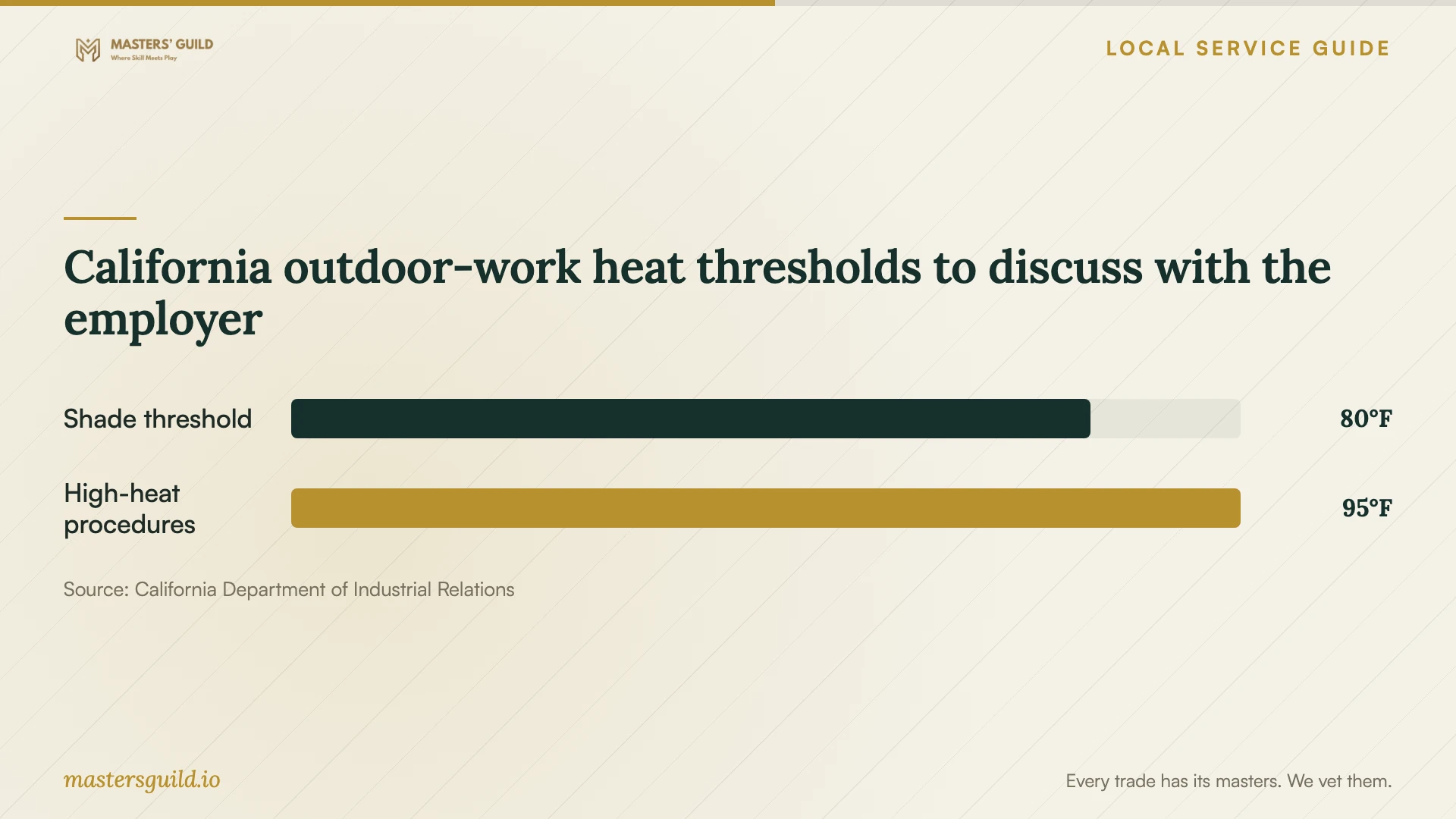
California’s outdoor heat standard assigns drinking-water and preventive cooling-rest responsibilities to employers. Above 80 degrees Fahrenheit, employers must provide shade, subject to stated exceptions for equivalent alternative procedures or qualifying cooling measures. Ask the employer which arrangement it will provide at your property. [2]
At 95 degrees Fahrenheit or above, employers in listed industries must implement high-heat procedures. The list includes transportation or delivery of heavy materials such as furniture when workers load or unload. For that work, ask about worker monitoring, communication, and emergency arrangements. [2]
Clear the agreed route before arrival. Confirm gate access and the loading position with your property manager where applicable. Keep children and pets away from the work area. Show the crew the final position before lifting starts, including the clearance you want around the item.
California outdoor-work heat thresholds to discuss with the employer
Local details that affect your job
California moving paperwork affects short-notice bookings
For a household move within California, including between Bakersfield properties, BHGS requires a visual inspection with the estimate. Its guide says the company must give you the moving agreement at least three days before the move. Ask how the mover will meet those requirements before choosing a short-notice date. [3]
Plan summer furniture loading around outdoor exposure
Consult Bakersfield’s NWS July normals when planning a summer job, then check the actual forecast. For furniture transportation or delivery involving outdoor loading or unloading, California’s high-heat requirements apply at 95 degrees Fahrenheit or above. Describe the exposed carry route and ask the employer about cooling arrangements and monitoring before confirming the loading window. [1] [2]
Match the booking to your task
| Your task | Booking to discuss | Confirm before agreeing |
|---|---|---|
| Furniture between rooms | In-home lifting help | Route review, floor protection, disassembly, and final placement |
| Loading your rental truck | Loading-only help | Licensing clarification, equipment, load securing, coverage, and who drives |
| Household transport within California | BHGS-licensed household mover | Visual inspection, signed estimate, and moving agreement |
| Safe, piano, or stone piece | Provider accepting that specific item | Weight information, handling plan, access review, and coverage |
Your hiring checklist
- Send item photos, dimensions, documented weight if available, and the intended destination.
- Photograph stairs, tight turns, thresholds, gates, and outdoor carries.
- Specify transport, loading, disassembly, and appliance connection tasks separately.
- Ask the provider to confirm staffing, equipment, and access before arrival.
- Compare written charges, minimum booking terms, damage coverage, and extra-work approval.
- Confirm property access, the loading position, and the employer’s outdoor cooling arrangements.
- Record existing damage and inspect the item and route with the crew after placement.
Frequently Asked Questions
Can I arrange help for one heavy item?
Ask whether the provider accepts single-item jobs and what minimum charge applies. Send item and route photos before requesting a quote. Confirm that the scope includes placement at your intended destination.
Does loading-only help need a mover license?
The supplied BHGS consumer guide does not specifically resolve licensing for a loading-only arrangement. Describe your job to BHGS, including who supplies and drives the vehicle and what the hired crew will do. Seek clarification before treating the booking as exempt. [3]
What should I ask about outdoor work?
Discuss exposed carry distances and the forecast. Ask the employer about drinking water, preventive cooling rests, and shade or permitted equivalent alternatives. California’s outdoor heat standard places these worker protections on the employer. [2]
How do I add an item after the moving estimate?
Tell the mover before loading. For moves within California, BHGS says you and the mover sign a change order when you add items after the visual inspection. Review the added work and charges before signing. [3]
Sources and scope
This guide combines the sources below with practical planning guidance. Figures apply to the stated geography and period; request a written quote for your property.