
Local service guide
Mold Removal in Austin, TX: Hiring and Repair Planning
Arrange Mold Removal in Austin by identifying the moisture source, checking Texas mold licenses, and agreeing on an assessment protocol before cleanup. For regulated work, hire independent assessment and remediation professionals and request written clearance criteria. Assign responsibility for leak repairs and rebuilding, then confirm which Austin repair permits your contractors need. [1] [2] [4]
Choose the assessor before comparing cleanup bids
Texas requires licenses for non-exempt mold assessors and remediators. Request the company and individual license details, then check their status and complaint history with TDLR. The Texas Attorney General also warns against ownership conflicts between firms handling assessment and remediation on the same project. [1] [2]
For regulated remediation, ask the assessor for documentation identifying the affected rooms, quantities of materials, proposed cleanup methods, and clearance criteria. The remediator must prepare a work plan and give you a copy before work starts. Use the assessment scope when requesting bids so each contractor prices the same work. [1]
Describe visible growth, musty odors, the suspected leak, and previous cleanup attempts. Ask how the assessor will investigate concealed areas. Have the contractor explain how you will approve additional removal if the crew discovers contamination beyond the original scope.
Understand exemptions and the purpose of testing
Do not use 25 square feet as a universal rule for hiring. TDLR describes minimum-area, homeowner, rental-property, and other exemptions. The minimum-area exemption concerns less than 25 contiguous square feet of visible mold. A licensed remediation contractor must follow the rules even on a smaller job, including a work plan based on a licensed Mold Assessment Consultant's protocol. [2]
TDLR does not require testing to identify the mold type before cleaning or remediation. If an assessor proposes sampling, ask which decision the results will inform and which interpretation criteria they will use. TDLR cautions that sampling cannot establish your health risk without considering inspection findings and the building's conditions. [2]
Arrange the protocol before cleanup if you want formal project clearance. TDLR says a consultant who did not prepare a protocol in advance cannot declare that the project achieved clearance. The agency describes a separate post-remediation inspection certification route; ask the consultant which documentation your proposed work can support. [2]
Price the repair and agree on the schedule
Request separate quote items for assessment, remediation, moisture-source repairs, and rebuilding. Ask bidders to specify material quantities, disposal, access restrictions, exclusions, payment milestones, and approval procedures for additional work. Name the person responsible for coordinating each stage.
Assign responsibility for correcting the moisture source in writing. TDLR advises fixing the moisture problem, removing mold, and keeping the home dry. Its guidance calls for removing and discarding moldy porous materials such as drywall, carpet, and insulation. Painting over mold does not resolve the problem. [2]
Check your insurance policy before committing to an insurance-funded scope. The Texas Attorney General cautions that policies may exclude mold remediation or cap coverage. Ask your insurer which assessment, cleanup, repair, and accommodation costs it covers, and confirm the policy's reporting requirements. [1]
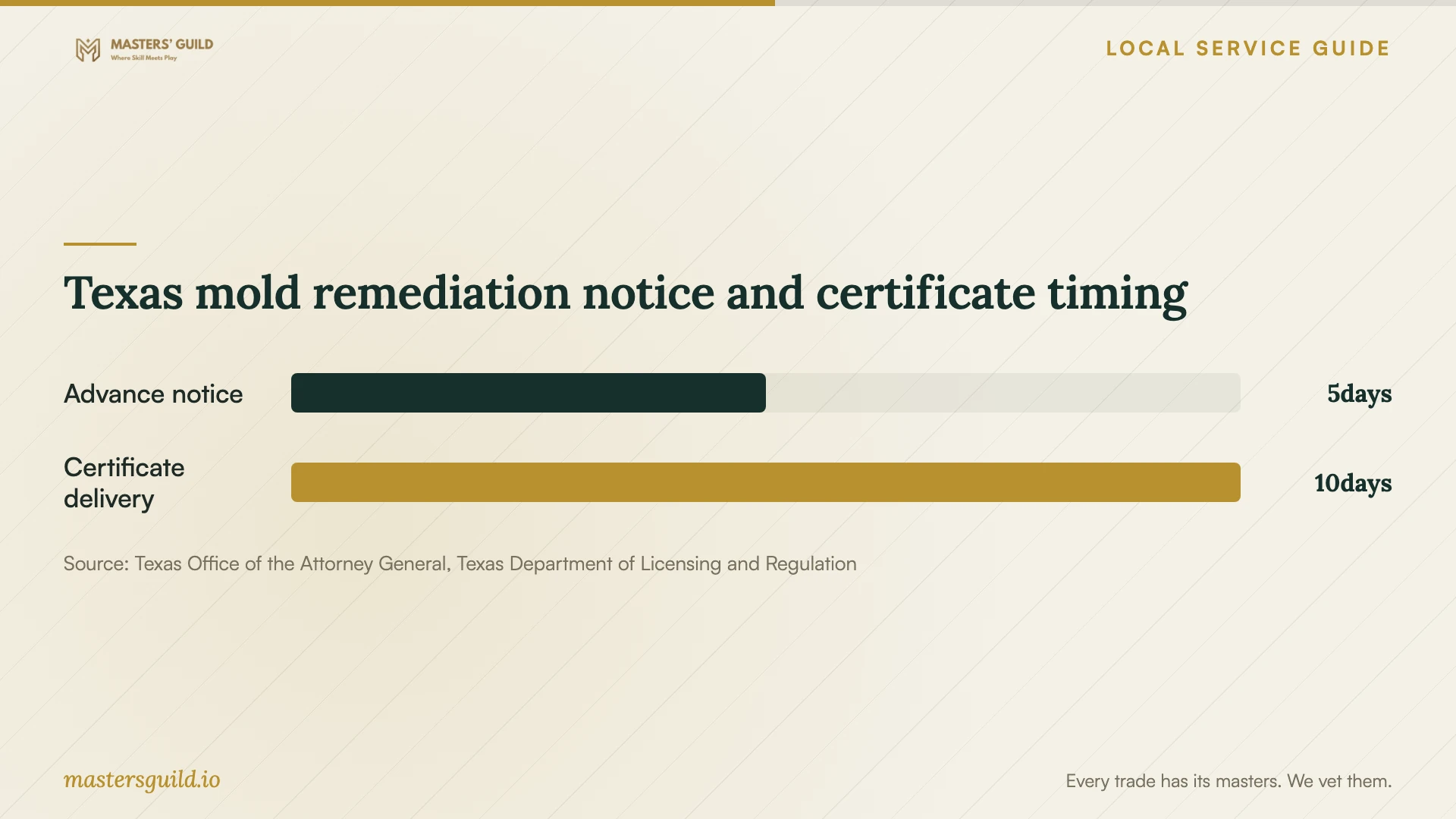
For work subject to project notification, the Attorney General describes notice to TDLR at least five days before remediation begins, except in emergencies. TDLR exempts licensed contractors from notification for projects involving less than 25 contiguous square feet of visible mold, while retaining their other obligations. Ask which requirement applies before agreeing on a start date. [1] [2]
Prepare access and occupied rooms
Photograph affected areas and belongings before work starts. Ask which rooms you can use, where the crew will enter, and how you should arrange children, pets, and furniture. Agree on these details before the contractor establishes containment.
Austin advises residents to avoid water-damaged areas with electrical hazards, unstable walls or ceilings, or slipping risks. Do not touch potentially contaminated water. Leave professional drying equipment running and in place unless the team instructs you to change it. [3]
Tell the contractor your home's construction year before agreeing to demolition. TDLR notes that contractors disturbing existing paint in homes built before 1978 may need EPA Renovation, Repair and Painting certifications and must follow applicable lead-paint requirements. [2]
Collect records when cleanup ends
For regulated remediation, the Attorney General says the remediator must give the owner a remediation certificate within ten days after completing the work. The certificate includes an assessor's statement about compliance with the cleanup plan and indicates whether the contractor fixed the underlying cause. It does not cover other water-damage repairs. [1]
Keep your assessment, work plan, contract, invoices, certificate, and photos together. The Attorney General says the remediator must provide copies of the project-record photos. If you sell the property, you must give the buyer each remediation certificate issued for it. [1]
Review outstanding leak repairs and rebuilding against the agreed scope before approving completion. Record a follow-up contact and ask what to do if moisture or visible growth returns.
Texas mold remediation notice and certificate timing
Local details that affect your job
Report unresolved rental-property defects through Austin 3-1-1
Notify your landlord of moisture problems verbally and in writing, and keep a copy. If management has not corrected a contributing leak, weatherization defect, or ventilation problem, report it through Austin 3-1-1, online, or the app. A city inspector checks for code violations and can issue a Notice of Violation when one exists. Austin does not provide mold inspection or testing. [2] [3]
Confirm repair permits before rebuilding
Austin lists small drywall repairs and certain simple plumbing repairs among permit-exempt work. Other repairs may require permits and inspections. Ask your repair contractor to confirm the classification. For emergency trade work addressing a life-safety issue in an occupied building, the city directs the licensed and registered applicant to apply for a stand-alone permit, then call 512-974-1500 during business hours for prioritization. [4]
Discuss floodplain repairs before committing to reconstruction
For floodplain properties, Austin advises documenting damage and discussing repairs with the Floodplain Office before starting. The city defines substantial damage as repair costs equaling or exceeding 50% of the structure's value before damage. Ask about this review alongside the cleanup scope if your flood-damaged home lies in a floodplain. [4]
Choose the next step for your situation
| Situation | Next step | Point to confirm |
|---|---|---|
| Small visible patch | Ask which exemption applies | A licensed remediator still follows the mold rules on small projects. |
| Recurring growth or musty odor | Arrange inspection of moisture sources and concealed areas | Assign responsibility for fixing the moisture problem. |
| Unresolved leak in an Austin rental | Notify management and report contributing code issues through 3-1-1 | City inspectors investigate code violations and do not test mold. |
| Cleanup followed by repair work | Ask the repair contractor to confirm permits | Austin exempts some small repairs; other work may need permits and inspections. |
| Flood damage in a floodplain | Discuss repairs with Austin's Floodplain Office | Substantial-damage requirements may affect reconstruction. |
Your hiring checklist
- Photograph visible growth, water damage, and affected belongings.
- List prior leaks, cleanup attempts, and recurring odors.
- Request license details and identify each professional's role.
- Agree on the assessment protocol and completion criteria before cleanup.
- Separate remediation, leak repairs, and rebuilding in the quote.
- Confirm permits, room access, and occupancy arrangements.
- Agree on written approval procedures for additional work.
- Collect photos, invoices, and applicable completion documents.
Frequently Asked Questions
Can one company assess and remove the mold?
TDLR allows a company to hold both licenses but prohibits it from doing both activities on the same project, except for its stated school-district exception. For your home, arrange separate assessment and remediation professionals. [2]
Do I need a test to identify black mold?
TDLR does not require testing to identify the type before cleaning or remediation. If you pay for sampling, ask the consultant to establish interpretation criteria and explain how the results will affect the work. [2]
Does Austin send someone to test mold?
Austin Code Compliance does not inspect or test mold. For rentals, it may investigate contributing maintenance-code problems, including leaks and ventilation defects, after management fails to fix them. [3]
Can I clean first and arrange clearance afterward?
Arrange the protocol first if you want formal clearance. TDLR says a consultant who did not prepare the protocol in advance cannot declare clearance. Ask about the separate inspection certification route if cleanup has already occurred. [2]
Sources and scope
This guide combines the sources below with practical planning guidance. Figures apply to the stated geography and period; request a written quote for your property.