
Local service guide
Austin kitchen remodeling: permits, scope and bids
For kitchen remodeling in Austin, hire against a written scope and confirm your property type before choosing a permit route. Austin’s residential exemption list covers one- and two-family dwellings and townhouses no more than three stories. Its Express Permit program covers single-family, duplex or two-family houses and/or accessory buildings on one lot. Have bidders identify wall changes, fixture locations, trade work and responsibility for inspections before you approve demolition. [1] [2]
Define the work bidders should price
Write down what you want to keep: cabinet boxes, sink position, appliance locations, flooring and walls. List replacements and layout changes beside them. Give each bidder the same photos, measurements and appliance specifications. Arrange a kitchen visit and have the contractor identify any work they cannot price until they inspect concealed conditions.
For one- and two-family dwellings and townhouses no more than three stories, Austin lists painting, tiling, cabinets and countertops as building-permit-exempt finish work. Owners must still comply with applicable codes and ordinances. The city lists electrical, mechanical and plumbing exemptions apart from building exemptions, so check the complete scope rather than relying on the cabinet replacement alone. [1]
Describe sink relocation, wall removal, appliance connections and ventilation changes as individual tasks. Have the bidder explain the proposed permit route for your property and scope. If you own a condominium or another property outside the stated residential categories, confirm the applicable requirements with Development Services before relying on this residential guidance. [1] [2]
Check Express eligibility before demolition
Austin offers Residential Express Building Permits for specific small projects at single-family, duplex or two-family houses and/or accessory buildings on one lot. Within its kitchen-remodel category, owners cannot relocate or remove walls, relocate or add plumbing fixtures, or remove drywall beyond tub, shower or sink surrounds. The city may require trade permits for the work. [2]
Have the contractor document both property eligibility and project eligibility. Keeping the sink and walls in place addresses only part of the Express qualifications. If you expand the work beyond those qualifications, Austin requires a new residential building permit application and associated fees, and keeps the previously paid Express fees. [2]
Austin reports one-business-day issuance for most Express Permits, with possible differences for properties in a floodplain or historic district. Separate that issuance guidance from your construction schedule. Agree on dates for application, permit activation, deliveries, demolition, inspections and kitchen handover before committing to a shutdown. [2]
Assign contractor and inspection responsibilities
For an Express building permit, Austin requires a registered general contractor assigned and linked to the permit. A homeowner can take that role after registration. General contractor registration differs from an Austin Build + Connect account and from plumbing, electrical or mechanical trade contractor registration. Identify who will manage each role and schedule inspections. [2]
Collect the names of subcontractors handling utility work, relevant credential information and proof of insurance for review. Put supervision, protection of adjacent rooms, inspection corrections and cleanup responsibilities in the agreement. Tie payment milestones to work you and the contractor can identify.
Speak with references whose projects involved similar work. Discuss change orders, communication and the period without a working kitchen. Agree with your contractor on access hours, debris removal, tool storage and a contact person for questions during construction.
Compare written bids and tax charges
Obtain project-specific written bids. Include cabinet construction and finish, countertops, appliance installation, demolition, disposal, trade work, permits and cleanup. Mark owner-supplied items and exclusions. For selections you have not made, record the allowance and how the contractor will calculate any difference in price.
The Texas Comptroller defines residential real property as family dwellings, including apartment complexes, nursing homes, condominiums and retirement homes. The owner does not have to live there. The definition excludes hotels and residential properties rented for periods shorter than 30 days. Tell the bidder how you use the property before applying the residential tax guidance. [3]
For qualifying residential remodeling, Texas does not tax construction labor. Under a lump-sum contract, the contractor pays tax on purchases and does not charge the customer tax. Under a separated contract, the contractor collects state and applicable local tax on incorporated materials. The contractor also collects tax on specified services, including final cleanup, when the charges for those services are separately identified to the customer. Construction labor remains nontaxable. Have the bidder explain the proposed contract structure and tax calculation. [3]
Require a written change order with cost and schedule effects before approving extra work. Keep money available for unresolved scope. Agree on how the contractor will document concealed damage and obtain your approval before adding repairs.
Prepare for the kitchen shutdown and handover
Confirm dimensions, appliance specifications, selections and delivery arrangements before demolition. Name the person who will check deliveries for damage and fit. Set the last day you can use the sink and cooking appliances, and agree on the steps for restoring them.
Plan a temporary food-preparation area and discuss safe appliance use with the relevant trade professional. At handover, review operation, unfinished items, care instructions and inspection records. Record who will resolve remaining items and the agreed dates.
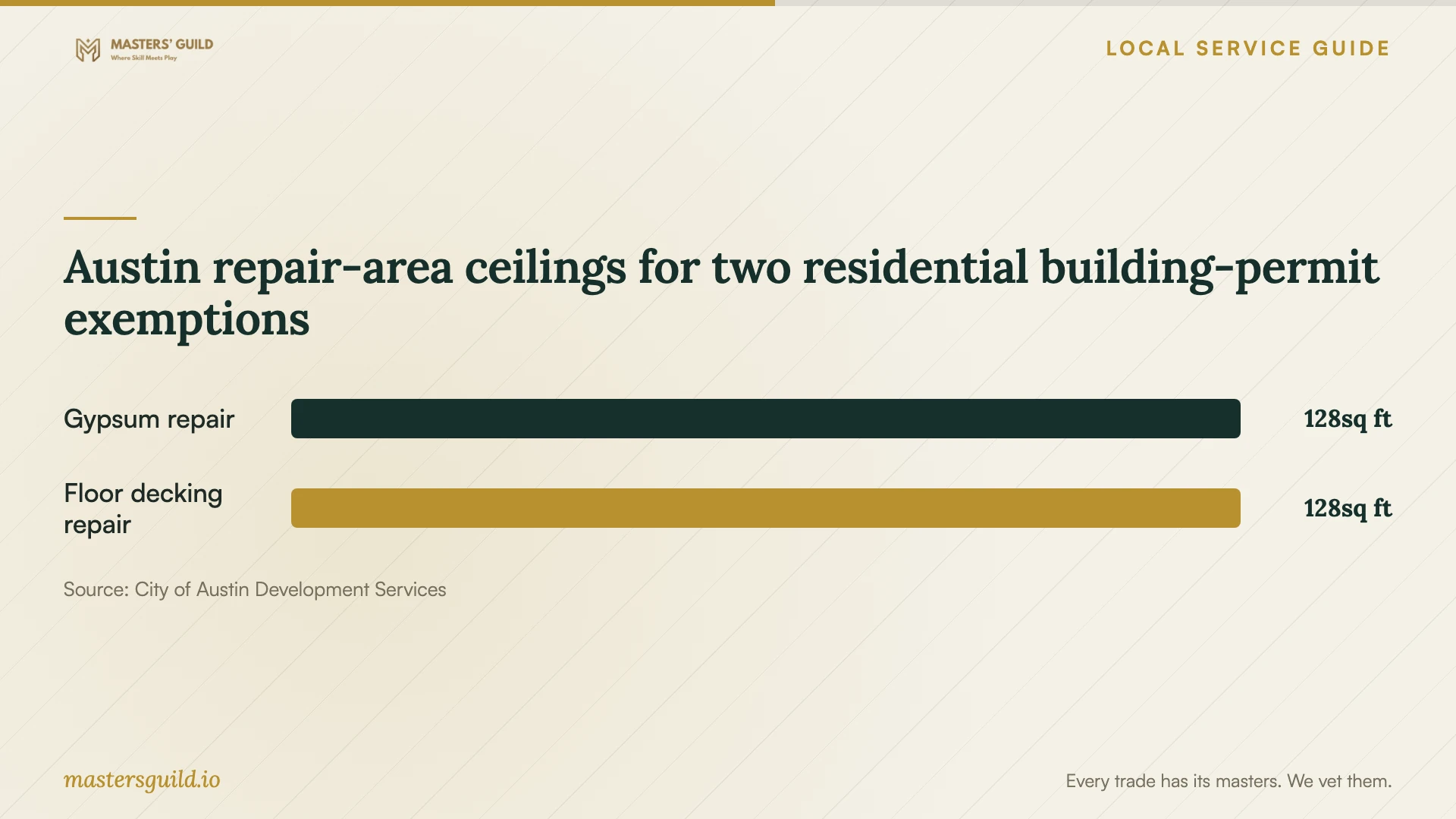
Austin repair-area ceilings for two residential building-permit exemptions
Local details that affect your job
Include trade work in the Express application
For eligible Express properties and projects, Austin instructs applicants to identify plumbing, electrical and mechanical work in the Trade Permits Required section so the city can issue the appropriate trade permit with the building permit. Include that work in the initial application. To add a trade permit after issuance, use the residential application modification process; Austin may charge additional fees. [2]
Prepare registration details before applying
Austin requires a registered general contractor and an Austin Build + Connect account for the Express process. Supply the designated contractor’s portal email and Contractor PIN with the application. The city describes automatic activation after payment when applicants complete the required steps. Confirm those details and permit status before setting demolition dates. [2]
Check the combined scope of a sink replacement
For one- and two-family dwellings and townhouses no more than three stories, Austin exempts certain fixture, faucet and exposed-trap repairs or replacements from plumbing permits when the work does not involve other city departments or inspections from other trades. Have the contractor assess a sink replacement together with related utility changes before treating it as exempt. [1]
Match property and project scope to the permit question
| Property and proposed work | Austin guidance | Next step |
|---|---|---|
| One- or two-family dwelling, or townhouse no more than three stories; cabinets, countertops or tiling | The residential list exempts this finish work from building permits. Separate trade exemptions apply. | Review associated plumbing, electrical and mechanical work. |
| Single-family, duplex or two-family house and/or accessory buildings on one lot; limited kitchen remodel | Express may fit if the project meets all qualifications, including wall, fixture and drywall limits. | Document property eligibility, full scope and required trade permits. |
| Express-eligible property; wall removal or sink relocation | The Express kitchen category excludes wall removal and plumbing fixture relocation. | Confirm the appropriate residential application before demolition. |
| Condominium or another property outside the stated residential categories | The cited residential exemption and Express scopes do not establish eligibility for this property. | Confirm the applicable permit requirements with Development Services. |
| Approved Express project expanding beyond its qualifications | Austin requires a new residential building permit application and associated fees. | Approve the revised scope, application route and costs before extra work. |
Your hiring checklist
- Identify your property type and use before discussing permit and tax treatment.
- Give bidders the same retained items, replacements and layout changes.
- Obtain a written permit assessment for the complete scope.
- Name who will handle applications, inspections and corrections.
- Record materials, allowances, exclusions and tax treatment in the agreement.
- Agree on payment milestones and written change orders.
- Confirm deliveries, room protection and temporary kitchen arrangements.
- Set dates and responsibilities for handover and unfinished items.
Frequently Asked Questions
Do I need a building permit to replace kitchen cabinets?
Austin lists cabinets and countertops as exempt finish work for one- and two-family dwellings and townhouses no more than three stories. Check associated utility work against separate trade exemptions. Owners must follow applicable codes even for exempt work. Confirm the applicable rules if your property falls outside that scope. [1]
Can I move the sink under an Express Permit?
Austin’s Express kitchen category prohibits relocating or adding plumbing fixtures. The program covers single-family, duplex or two-family houses and/or accessory buildings on one lot, subject to project qualifications. For sink relocation, have the contractor confirm the appropriate residential application before starting work. [2]
Does one-business-day issuance mean I can start demolition then?
Austin gives that timeframe for most Express Permit issuance, with possible differences in floodplains or historic districts. Applicants must also complete payment and activation steps. Confirm active permit status, required trade permits, deliveries and contractor readiness before setting demolition dates. [2]
Should a contractor tax my kitchen remodeling labor?
Texas does not tax labor to remodel qualifying residential real property, including family dwellings and condominiums. It excludes hotels and residential rentals for periods shorter than 30 days. Under a separated contract, the contractor collects tax on incorporated materials and on specified services when their charges are separately identified to the customer. Have the contractor explain any tax charge using your property’s use and contract structure. [3]
Sources and scope
This guide combines the sources below with practical planning guidance. Figures apply to the stated geography and period; request a written quote for your property.