
Local service guide
Gardening in Austin: Hiring and Planting Plans
Arrange Gardening in Austin by defining the work you need: a bed cleanup, ongoing care or a planting project. Ask for a written scope covering labor, materials, debris removal and watering after planting. Before approving new beds, confirm soil preparation and who will handle establishment watering within Austin Water’s current restrictions. [1]
Choose the work before comparing gardeners
For an overgrown garden, request a first-visit cleanup with a defined finish: which beds the gardener will weed, which plants they will retain, which shrubs they will trim and where they will put the debris. Walk through the garden together and mark plants you want to protect before anyone starts.
For recurring care, agree on the tasks for each visit and the work that requires separate approval. Ask whether the gardener will inspect plant health, check soil moisture, replenish mulch or handle seasonal planting. Set a spending limit for replacement plants and supplies.
For a new bed, request a plant list with quantities, container sizes and intended placement. Ask the provider to explain their choices for your site’s sun exposure and available watering. Agree on who buys plants, handles substitutions and returns for an establishment check.
Compare written scopes and costs
Ask each provider to price the same scope and state whether they charge by the hour, visit or project. For hourly work, request a labor allowance and a rule for authorizing extra time. For a project quote, ask the provider to identify exclusions and the conditions that would trigger a revised price.
Request separate entries for plants, compost, mulch, delivery and debris removal. Include gate width, steps, parking arrangements and the distance from unloading to the beds in your job description. Send photos and measurements, then ask whether the provider needs a site visit before committing to a price.
Ask for proof of liability insurance and examples of comparable garden work. If the provider proposes a treatment, request the product name, purpose and application plan before authorizing it. Agree on payment milestones, cleanup standards and how you will review the completed work.
Set the watering plan before planting
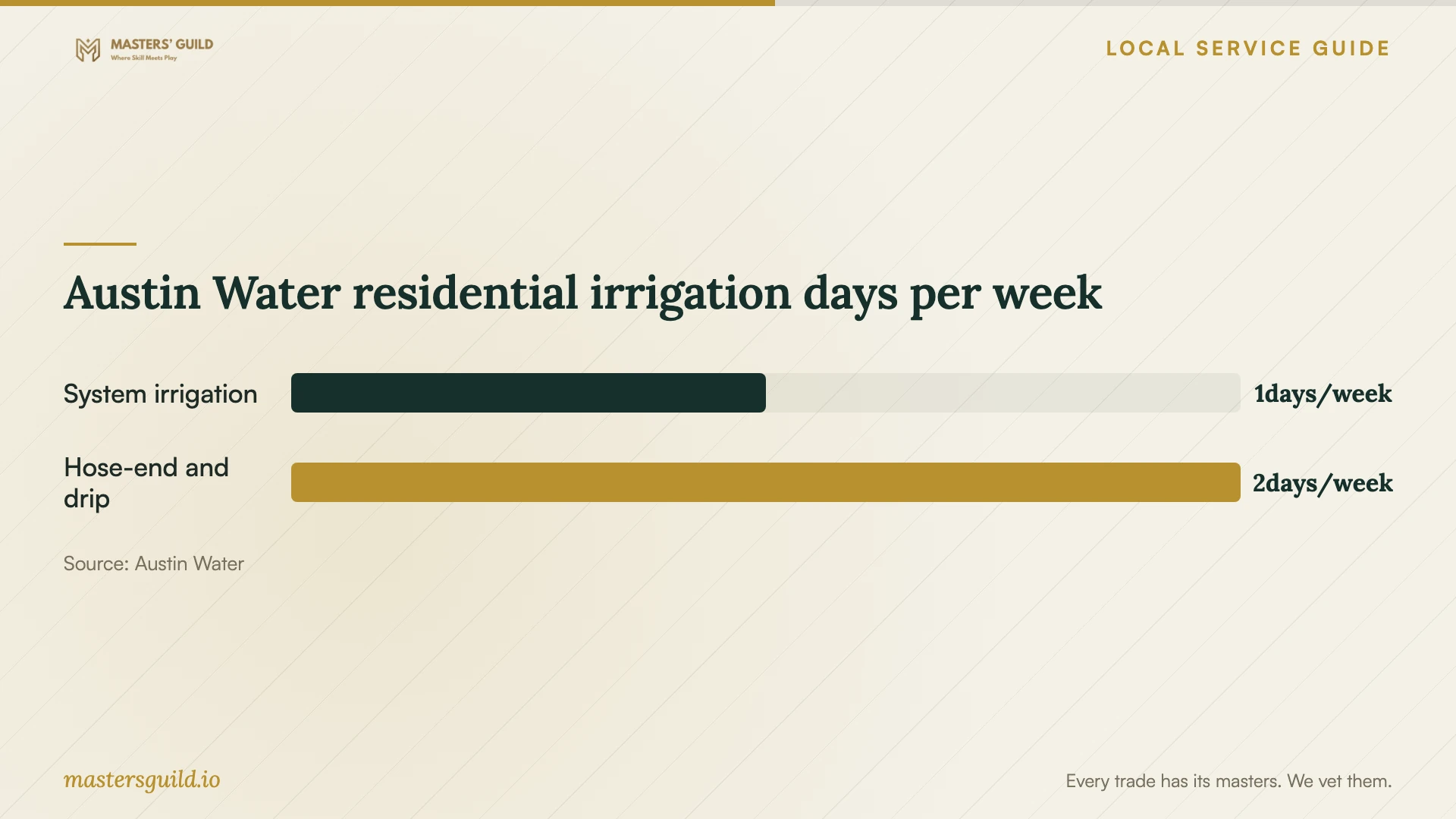
As checked on October 12, 2026, Austin Water lists Conservation Stage restrictions in effect since September 2, 2025. For residential customers, automatic and manual irrigation systems have one watering day per week: Thursday for even addresses and Wednesday for odd addresses. Permitted hours are midnight to 10 a.m. or 7 p.m. to midnight. [1]
Residential hose-end sprinklers and drip irrigation have two days per week within those hours. Even addresses use Thursday and Sunday; odd addresses use Wednesday and Saturday. Austin Water exempts hand-held hose or refillable-container watering, specified tree-watering methods and vegetable gardens using soaker hoses or drip irrigation. [1]
Ask the gardener to identify the method they will use for each planting area and write down who waters between visits. Have them show you how to check moisture and adjust care for rainfall. Check the utility’s current schedule before the project starts, and follow existing restrictions while any variance application awaits approval. [1]
Assess soil before buying plants
Travis County Extension describes Central Texas garden soils that range from sandy to clayey, with some sites having thin soil over rock. Its guidance distinguishes improving soil with compost from bringing in a soil mix to increase depth. Ask your gardener to inspect the actual bed before choosing either approach. [4]
For shallow soil or poor drainage, Extension advises considering a suitable imported soil mix. It recommends blending the first layer into existing soil before adding more, because a sharp boundary between different soil types can impede roots and water movement. Ask the provider to explain preparation, material quantities and finished bed depth in the quote. [4]
Point out areas where you have seen standing water or repeated plant losses. Ask the gardener to investigate before replacing plants. Keep soil preparation as a distinct task so you can review the proposed approach before approving purchases.
Plan fall work and rebate projects
For an October visit, Travis County Extension recommends planting trees and shrubs, adding perennials and grasses before frost, sowing wildflower seeds and preparing frost protection. It also recommends fertilizer decisions based on need and soil-test results. Choose the tasks that fit your garden rather than ordering a blanket treatment. [3]
If you want to replace turf with lower-water planting, check WaterWise eligibility before the gardener removes grass. Austin Water requires healthy turf across at least 75 percent of the conversion area and approval before work begins. It restricts plant installation to spring and fall program windows; confirm the applicable window and completion deadline before setting the contract schedule. [2]
For Bermuda-grass conversion, include removal and follow-up checks for regrowth in the scope. Austin Water explains that Bermuda grass can regrow from small root fragments and advises waiting a few weeks to identify regrowth and repeating treatment as needed. Ask the gardener how they will handle this interval before installing the new planting. [2]
Austin Water residential irrigation days per week
Local details that affect your job
Match visits to your address and watering method
Austin Water allows residential system irrigation on Wednesday for odd addresses and Thursday for even addresses. Hose-end sprinklers and drip irrigation also get Saturday for odd addresses or Sunday for even addresses. Ask the gardener to distinguish permitted irrigation days from the days they visit, and assign any watering needed between visits. [1]
Protect WaterWise eligibility before clearing turf
Austin Water excludes work begun before approval and excludes dead lawns from its WaterWise rebate. Ask for an eligibility check before authorizing turf removal. If you include the strip between sidewalk and street, the utility warns that this often occupies public right-of-way or a utility easement and that homeowners pay for landscaping repairs after utility work. [2]
Choose the scope for your garden
| Your priority | Scope to request | Resolve before starting |
|---|---|---|
| Recover an overgrown bed | Defined cleanup with plant protection and debris removal | Mark plants to retain and approve removal boundaries |
| Maintain established beds | Recurring care with agreed tasks | Set visit frequency and approval limits for materials |
| Plant in shallow or poorly drained soil | Site assessment and soil preparation | Discuss imported soil and blending with existing soil |
| Convert turf using WaterWise | Eligibility review followed by an approved conversion | Get Austin Water approval before work begins |
| Install plants this October | Fall planting with an establishment handover | Assign watering and frost-protection responsibilities |
Your hiring checklist
- Photograph the beds and measure the areas you want maintained or replanted.
- Mark plants to keep and identify shrubs you want the gardener to assess.
- Describe access, unloading space, gates and debris-removal arrangements.
- Request separate prices for labor, plants, soil amendments, mulch and delivery.
- Ask the provider to explain soil preparation before approving a planting list.
- Agree on watering responsibilities between visits and after installation.
- Confirm any rebate approval before authorizing turf removal.
- Write down the completion standard and how you will approve extra work.
Frequently Asked Questions
Should I book a cleanup or recurring gardening?
Request a cleanup if you need to restore a defined area. Ask for a separate recurring-care proposal after you agree on the initial finish. For ongoing care, specify tasks and spending limits so you can compare offers without assuming each provider includes the same work.
Can a gardener water new plants outside my irrigation day?
Austin Water allows hand-held hose or refillable-container watering at any time on any day. It also lists exemptions for specified tree-watering methods and vegetable gardens using soaker hoses or drip irrigation. Confirm the method for your planting area; continue following current restrictions until Austin Water approves any requested variance. [1]
Can I remove the lawn before applying for WaterWise?
Get approval first. Austin Water states that work started before approval does not qualify. The program requires healthy turf across at least 75 percent of the conversion area, and dead lawns do not qualify. [2]
Is October suitable for planting?
Travis County Extension recommends October for new trees and shrubs and for planting perennials and grasses before frost. Ask your gardener to assess the site and include watering and frost preparation. For a WaterWise project, confirm the program’s installation window and deadline. [2] [3]
Sources and scope
This guide combines the sources below with practical planning guidance. Figures apply to the stated geography and period; request a written quote for your property.