
Local service guide
Austin flooring installation and repair
For flooring installation and repair in Austin, hire an installer who inspects the existing floor, defines preparation work, and includes removal and disposal in a written quote. Austin exempts tiling, carpeting, and similar finish work from building permits, but lists a separate residential floor-decking repair exemption of no more than 128 square feet. Ask for permit guidance before expanding the job beneath the finish. [1]
Choose repair or replacement after an inspection
Ask the installer to examine the damaged area and the surrounding floor before quoting a patch or a room replacement. Describe the problem: a loose tile, scratched boards, lifted edges, a soft spot, or damage after a leak. Request an explanation of what the installer plans to remove and what they can assess only after opening the floor.
For a repair, ask the installer to confirm the replacement material, color match, and boundary of the work. For replacement, request a room-by-room scope covering closets, doorways, transitions, and trim. Agree on how you will approve additional work if the installer discovers damaged decking or other concealed conditions.
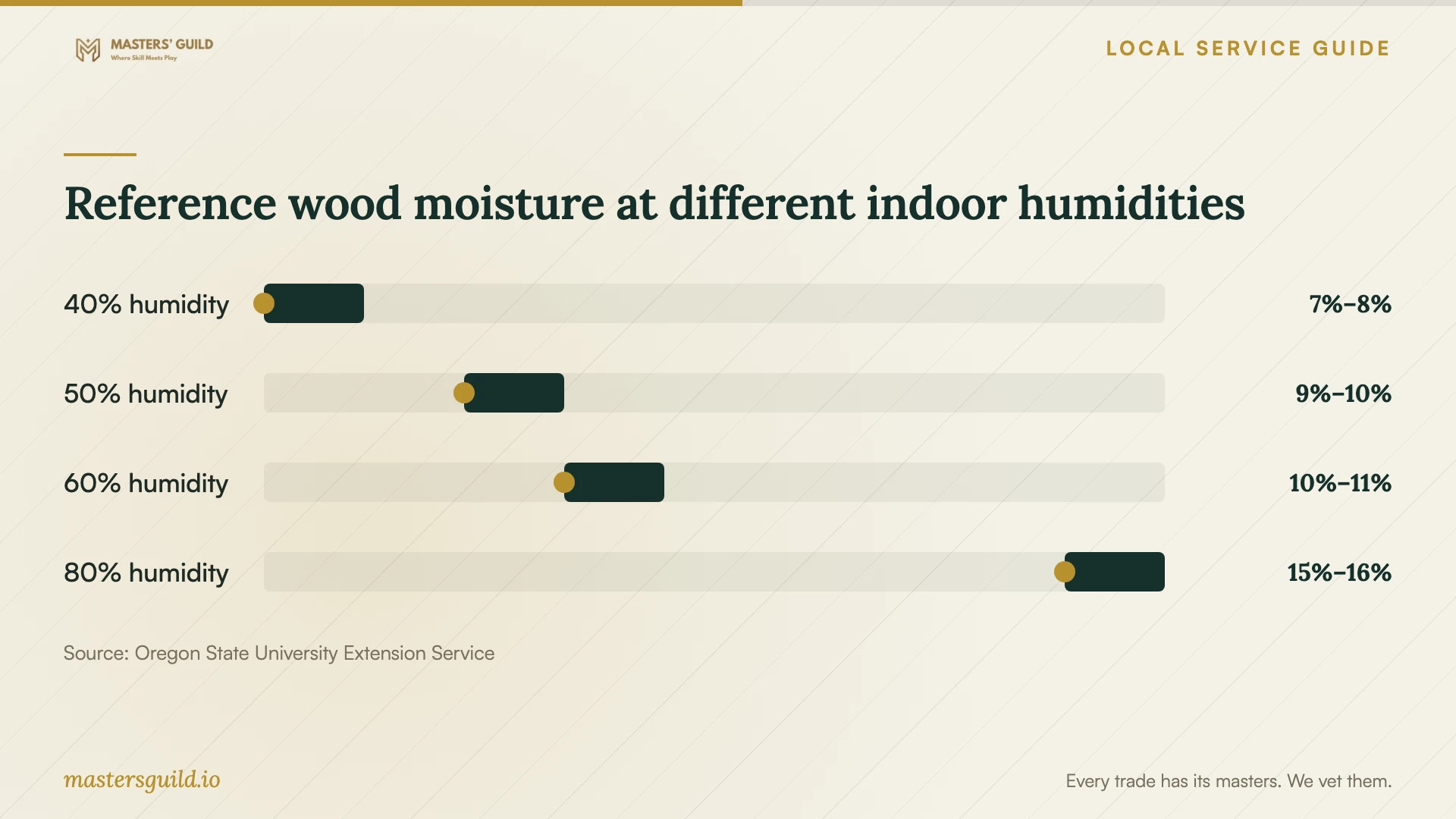
For wood flooring, include moisture assessment in that conversation. Oregon State University Extension explains that solid wood shrinks and swells as it loses or gains moisture. Ask the installer to document relevant readings and use the selected flooring manufacturer's requirements when deciding whether the room and underlying surface are ready. [5]
Get a quote you can compare
Give each bidder the same scope and request the exact product name, installation method, measured area, and material quantity. Ask them to identify labor, removal, hauling, preparation, transitions, trim, and furniture handling. Require a written allowance or approval process for preparation that they cannot price before removal.
Ask who supplies the flooring and who handles damaged deliveries, missing material, or a product substitution. Request written workmanship warranty terms and the manufacturer's installation instructions. For a patch, ask the contractor to show you the proposed match before ordering.
Texas does not tax labor to repair or remodel residential real property. Under a lump-sum contract, the contractor pays tax on purchased supplies and materials and does not charge the customer tax. Under a separated contract, the contractor collects applicable tax on incorporated materials and certain services; construction labor remains untaxed. Ask the bidder to explain the tax line and final total. [4]
Set your budget with written bids for your property, using the same material and preparation scope. Compare the total payable amount and identify any allowances before choosing a contractor.
Set the permit scope before work expands
Austin lists tiling, carpeting, and similar finish work as exempt from building permits. The city requires exempt work to comply with applicable codes and ordinances. Its residential exemption category applies to one- and two-family dwellings and townhouses no more than three stories high. [1]
The city also lists residential floor-decking repairs of no more than 128 square feet as exempt. If the proposed work exceeds that limit or involves structural changes, ask Austin Development Services to confirm the requirements for your scope. For a condo or another building outside the city's residential category, confirm which rules apply before treating the residential decking exemption as permission to proceed. [1]
Resolve removal and disposal before demolition
Texas DSHS identifies floor tile among products that may contain asbestos and explains that disturbing asbestos-containing products can release fibers. For known or suspected asbestos-containing flooring, arrange a qualified assessment before scraping, grinding, or removal. DSHS advises homeowners to plan with a consultant when a renovation will disturb asbestos-containing material. [3]
DSHS describes additional survey and licensing requirements for public buildings, along with a trained-worker pathway for certain resilient-floor removal. Do not assume that those public-building rules establish the requirements for your private home. Ask an asbestos professional to determine the applicable scope and removal approach. [3]
Make the installer responsible for an agreed disposal route. Austin Resource Recovery accepts household carpet through bulk collection but excludes construction or demolition carpet, whole or broken tile, and other construction and remodeling debris. Confirm acceptance before arranging city pickup for any carpet from your project. [2]
Arrange room access and completion
Ask for a schedule covering delivery, preparation, installation, and the point when you can walk on the floor or move furniture back. Have the installer base those dates on the chosen product's instructions and the conditions found on site. Agree on room access, storage space, parking, and who moves appliances before the crew arrives.
Before making the final payment, walk through the work with the installer. Check the agreed repair boundaries, doorway transitions, trim, and cleanup. Collect product details, care instructions, warranty documents, and any recorded moisture readings. Ask the installer to leave the agreed spare material for future repairs.
Reference wood moisture at different indoor humidities
Local details that affect your job
Austin's floor-decking exemption has a size limit
Austin exempts residential floor-decking repairs of no more than 128 square feet. Ask the installer to identify the proposed decking repair area apart from the finish-floor area. If removal reveals a larger repair, confirm the permit requirements with Development Services before authorizing the expanded scope. [1]
City bulk pickup does not cover flooring demolition debris
Austin excludes tile, construction or demolition carpet, and other remodeling debris from bulk collection. The city requires appointments for accepted bulk items and serves eligible residential customers, including single-family homes and up to fourplexes. Put hauling and disposal responsibility in the flooring contract rather than assuming curbside pickup will cover removal. [2]
Choose the next step for your flooring job
| Situation | Next step | What to settle before hiring |
|---|---|---|
| An isolated damaged area | Request a repair assessment | Material match, repair boundary, and underlying condition |
| Finish-floor replacement | Request a complete installation quote | Austin exempts tiling, carpeting, and similar finish work; define any work beneath it |
| Residential decking repair over 128 square feet | Confirm permit requirements with Development Services | The scope exceeds the city's listed residential decking exemption |
| Suspect asbestos-containing flooring | Arrange qualified assessment before disturbance | Applicable requirements and the removal approach |
| Tile or remodeling debris to discard | Include contractor hauling | Austin bulk collection excludes these materials |
Your hiring checklist
- Photograph the damage and list the rooms, closets, and doorways in scope.
- Ask the installer to inspect the existing floor and explain the proposed repair.
- Specify the product, installation method, trim, and transitions in writing.
- Agree on moisture assessment and preparation before installation.
- Resolve suspect old flooring before authorizing demolition.
- Name who handles hauling, disposal, furniture, and appliances.
- Require approval before the contractor adds concealed-condition repairs.
- Agree on access dates, completion checks, and warranty documents.
Frequently Asked Questions
Do I need a permit to replace flooring in Austin?
Austin exempts tiling, carpeting, and similar finish work from building permits. Work beneath the finish needs a separate scope check. The city lists residential floor-decking repairs of no more than 128 square feet as exempt, and exempt work must comply with applicable codes. [1]
Can I put removed tile out for city bulk collection?
Austin Resource Recovery excludes whole or broken tile and other construction and remodeling debris. Include an agreed hauling and disposal route in the installation quote. [2]
Should a residential flooring quote charge tax on installation labor?
Texas does not tax residential repair or remodeling labor. A separated contract can include tax on materials and certain services. Under a lump-sum contract, the contractor pays tax on purchases and does not charge the customer tax. Ask the contractor to explain the contract type. [4]
How long should hardwood acclimate before installation?
Ask the installer to follow the selected product's requirements and assess the room's conditions. OSU Extension explains that wood exchanges moisture with surrounding air. Its reference table supports checking moisture conditions, but does not establish an acclimation duration for your flooring. [5]
Sources and scope
This guide combines the sources below with practical planning guidance. Figures apply to the stated geography and period; request a written quote for your property.