
Local service guide
Duct and Vent Cleaning in Austin, TX
Arrange Duct and Vent Cleaning in Austin after an inspection establishes a reason to clean, then compare three written estimates for the same scope. EPA identifies substantial visible mold inside hard-surface ducts or on system components, vermin infestation, or ducts clogged with excessive dust or debris or releasing particles through supply registers as reasons to consider cleaning. For uneven cooling, request an HVAC assessment before approving cleaning: EPA finds little evidence that cleaning ducts alone improves system efficiency. [1]
Decide whether cleaning addresses your concern
Describe what you have noticed and have the inspector show you the affected location. EPA's cleaning thresholds include substantial visible mold inside hard-surface ducts or on heating and cooling components, vermin infestation, or ducts clogged with excessive dust or debris or releasing particles through supply registers. Have the contractor establish whether these conditions exist and correct the underlying cause before cleaning or replacement. [1]
Treat a mold diagnosis with care. EPA says appearance alone cannot confirm mold; an expert may need laboratory analysis. Request photographs tied to identifiable parts of your system. For wet or moldy duct insulation, EPA recommends removal and replacement because cleaning cannot address the affected material. [1]
Avoid buying cleaning on a promise to prevent illness or cure allergies. EPA says duct cleaning has not been shown to prevent health problems. Discuss unexplained symptoms with your doctor and have the HVAC professional investigate moisture, filters and other possible indoor air concerns. [1]
Compare the work behind each quote
Give bidders the same description of your home and request a list of the systems, supply ducts, returns, registers and equipment components covered by the price. EPA describes system cleaning as work that can include coils, drain pans, fans and air-handler housing as well as ducts. Have each contractor identify exclusions and explain who will handle contaminated components outside their scope. [1]
Request a total price, expected work period, access requirements and procedure for approving additional work. Specify dryer exhaust cleaning as a separate item if you want that service. Keep optional chemicals, repairs and replacement work on separate lines so you can decide on each item before work begins.
Discuss how the crew will collect debris and protect the duct material. EPA recommends vacuum equipment that exhausts outside or HEPA equipment when the exhaust stays indoors. Its guidance calls for soft-bristled brushes on fiberglass duct board and fiberglass-lined ducts. Have the crew seal and reinsulate access holes after cleaning. [1]
Before approving a chemical treatment, have the contractor identify the product, show its label and explain the reason for using it. EPA says no biocides are registered for fiberglass duct board or fiberglass-lined ducts. It distinguishes coatings applied inside ducts from sealing air leaks. Have the contractor specify which procedure they propose. [1]
Check qualifications for the proposed scope
TDLR states that contractors who install, repair or maintain air-conditioning, refrigeration or heating systems must hold its license. ACR companies must employ an ACR contractor at each permanent location. Request the responsible contractor's name and license number, then use TDLR's license search. [3]
Confirm licensing requirements for your proposed scope with TDLR, including whether the contractor will perform equipment maintenance or repairs alongside cleaning. Request insurance information and references from homeowners with the same duct material. EPA says it does not certify or approve duct-cleaning companies, so question a bidder who claims EPA certification. [1] [3]
Prepare for access and inspect the finished work
Before the appointment, agree on access to the air handler, registers, attic entry and any exterior exhaust outlet included in the job. Move belongings away from those areas. Discuss hose placement, furniture protection, pet arrangements and whether you need to leave during an approved treatment.
Have the contractor document accessible conditions before and after cleaning. EPA recommends visual inspection to verify the work, including duct surfaces, registers, blower components and drain pans. During the completion walkthrough, have the crew show you the agreed components, reattach grilles, close access openings and demonstrate system operation. [1]
Continue filter and moisture maintenance after the job. EPA recommends the highest-efficiency filter your equipment manufacturer approves, regular filter changes and attention to gaps that let air bypass the filter. Have the HVAC professional address leaks, standing water in drain pans or wet insulation before you schedule further cleaning. [1]
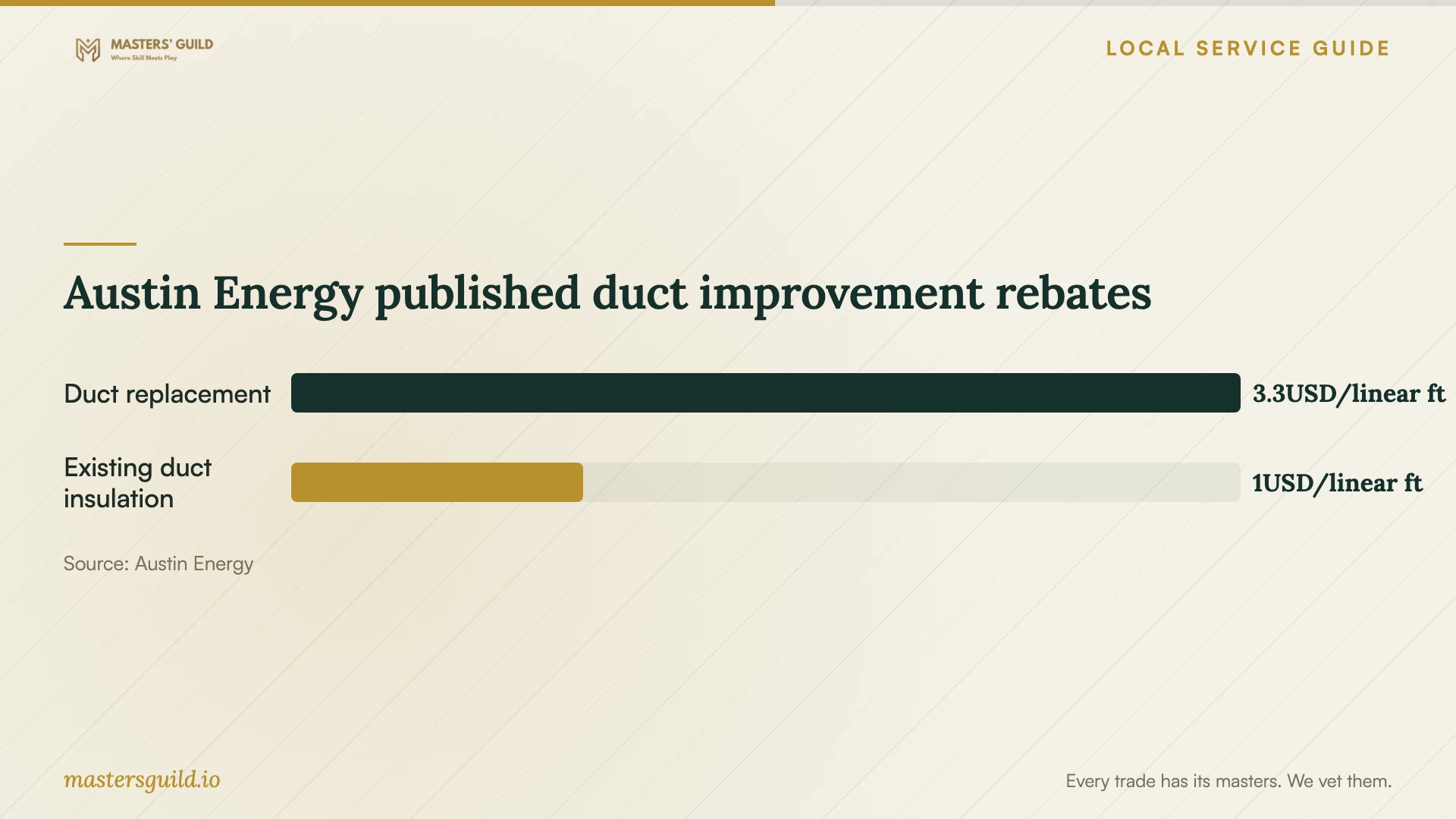
Austin Energy published duct improvement rebates
Local details that affect your job
Use Austin Energy's assessment route for leakage or airflow work
If your home receives Austin Energy electricity at residential rates, check Home Energy Savings before commissioning duct repairs. Participating contractors provide a no-cost home energy assessment and may recommend duct sealing, replacement, insulation or system performance improvements. Eligibility includes a home at least 10 years old, at least three qualifying upgrades and at least $100 in rebates, alongside other restrictions. The utility's published improvement list does not identify standalone duct cleaning. Have a participating contractor confirm your eligibility and proposed measures before signing. [2]
Check Austin's exemption when cleaning leads to replacement
For one- and two-family dwellings and townhouses no more than three stories, Austin lists replacement of supply and return duct runs as permit-exempt mechanical work. It also lists replacement of an exhaust or dryer duct run measuring less than 15 feet. You and your contractor must still comply with applicable codes. For new routing, broader equipment work or a building outside that residential category, have Development Services determine the requirements for the full scope before approving the change. [4]
Choose the next step from the inspection findings
| Finding or concern | Next step | Reason |
|---|---|---|
| Dust on a return grille | Clean the grille and inspect before ordering system cleaning. | EPA says a dusty return register does not establish heavy duct contamination. |
| Ducts clogged with excessive dust or debris, or particles leaving supply registers | Request evidence, cause correction and a written cleaning scope. | EPA identifies these conditions as reasons to consider cleaning. |
| Wet or moldy duct insulation | Discuss replacement and moisture correction with a qualified HVAC contractor. | EPA says affected insulation cannot be effectively cleaned. |
| Uneven cooling or suspected duct leakage | Request an HVAC assessment and check Austin Energy program eligibility. | EPA finds little evidence for efficiency gains from duct-only cleaning; Austin Energy lists duct performance improvements. |
| Proposed replacement of duct runs | Confirm the building category and full scope against Austin's exemptions. | The city lists residential supply and return replacement and distinguishes residential from commercial exemptions. |
Your hiring checklist
- Describe the concern and have the contractor demonstrate conditions that justify cleaning.
- Give each bidder the same system information and request matching written scopes.
- List equipment cleaning, dryer exhaust work, repairs and chemical treatments separately.
- Request insurance details, relevant qualifications and references for similar duct materials.
- Check Austin Energy participation before choosing a contractor for a possible rebate project.
- Agree on access, furniture protection, pet arrangements and approval of additional charges.
- Request a completion walkthrough and photographs of the agreed work.
Frequently Asked Questions
Should I schedule duct cleaning every year?
EPA recommends duct cleaning as needed rather than on a routine schedule. Request inspection evidence that meets its contamination thresholds. Keep regular filter changes and equipment maintenance on your maintenance plan. [1]
How should I budget without a verified local price?
Get written estimates from at least three providers, as EPA recommends. Compare the same components and access requirements. Have each contractor state the total, exclusions and approval process for extras. The utility figures on this page describe rebates for qualifying efficiency work. [1] [2]
Can any contractor arrange Austin Energy duct rebates?
Austin Energy requires a participating contractor for Home Energy Savings. That contractor performs the assessment and handles the rebate application process. The utility requires review and approval before granting rebates, so confirm project eligibility before authorizing work. [2]
Sources and scope
This guide combines the sources below with practical planning guidance. Figures apply to the stated geography and period; request a written quote for your property.