
Local service guide
Commercial Building Cleaning in Austin, TX
Arrange Commercial Building Cleaning in Austin with a walkthrough, a written task list and comparable quotes for the same visit schedule. Agree on access, supplies and correction procedures. Include separate recycling collection, and require a wastewater capture and disposal plan before exterior pressure washing. Austin places commercial recycling responsibility on property owners and business managers. [1] [2]
Define tasks during the walkthrough
Walk each bidder through entrances, work areas, restrooms, break rooms and storage spaces. Describe the task and frequency for each area. Specify which surfaces crews should wipe, which bins they should empty and which floors they should clean. Mark documents, equipment and rooms that crews must leave untouched.
Separate recurring visits from carpet extraction, floor refinishing, high-surface cleaning and exterior washing. Ask for distinct prices for periodic work. Identify flooring materials and request the proposed products and methods before approving treatment. Agree on who moves furniture and when staff can use the area again.
For a clinic or premises with specialized cleaning needs, describe the procedures you expect and ask the bidder to explain staff training and exclusions. Request proof of insurance. Ask who supervises the crew, handles damage reports and supplies replacement staff after a missed visit.
Compare complete quotes
Request walkthrough quotes for your premises and compare the same tasks and visit schedule. Ask each bidder to separate recurring charges, periodic work, consumables and applicable tax. Clarify whether the cleaner supplies restroom paper products and hand soap or replenishes stock you buy.
The Texas Comptroller's Cleaning and Janitorial Services publication, marked October 2006, describes office cleaning, window and floor washing, and trash pickup as taxable services. It instructs providers to collect state tax plus applicable local taxes. Treat this as dated official guidance and confirm current treatment with the Comptroller before relying on a tax exclusion. [3]
Have the bidder state the total payable and explain charges for extra visits, additional rooms or requested changes. Record the scope, exclusions, payment terms and cancellation terms. If you lease the premises, ask the property manager which common-area tasks the building's existing contract covers before buying overlapping work.
Plan collection around Austin's recycling requirements
Austin requires commercial property owners and business managers to provide single-stream recycling for paper, cardboard, metal, glass and hard plastics. The city requires equal or greater recycling capacity than landfill trash capacity, while allowing organics diversion and waste prevention to help meet that requirement. [1]
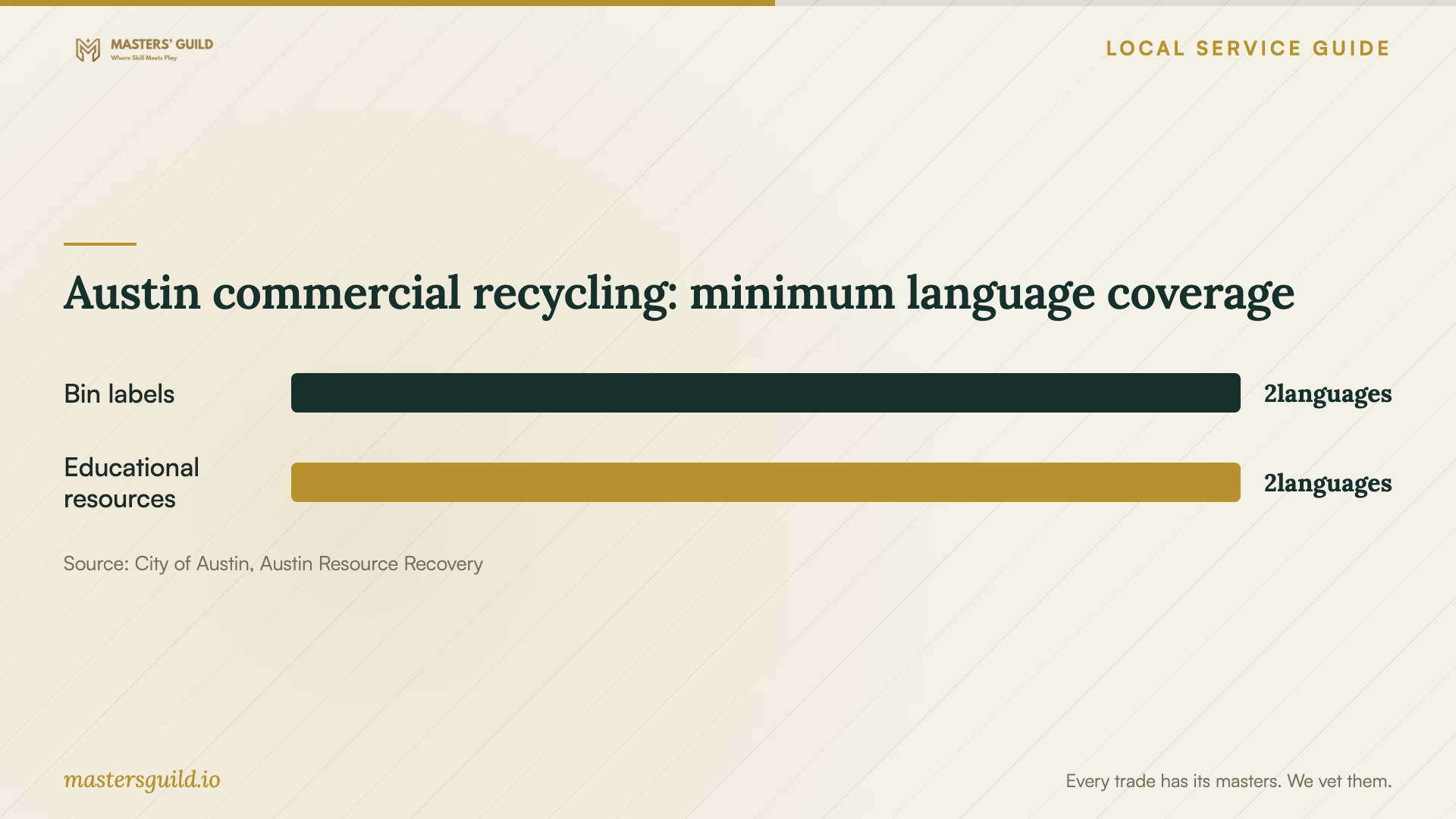
Austin requires recycling bins wherever common areas have indoor landfill trash bins. Managers must group those bins and label them in at least two languages. Outdoor recycling dumpsters and carts must be within 25 feet of all landfill trash dumpsters and carts. [1]
Show the cleaner each indoor collection point and its outdoor destination. Write separate transport and emptying tasks into the scope. Assign someone to report overflowing containers, damaged signs and collection problems to the property manager. Ask the crew to explain its route before accepting a proposal that lists only wastebasket emptying.
Confirm wastewater disposal before exterior washing
Austin Water instructs power-washing operators to contact Utility Compliance Services at 512-972-1060, option 5, before operations to confirm their disposal plan. The city prohibits storm-sewer discharge of wash water containing pollutants or cleaning compounds without treatment before it enters the environment. [2]
Ask the contractor how crews will capture wash water and where they will take it. Austin Water describes sanitary-sewer disposal through a private fixed-site facility with a discharge permit and appropriate pretreatment. For disposal of hauled industrial wastewater into a toilet, cleanout or manhole at the cleaned site, the site must have an Austin Water permit and an appropriately sized sand/oil interceptor. [2]
Keep the disposal plan with the exterior-cleaning proposal. Agree on pedestrian barriers, tenant notices, water access and entrance reopening. Ask the supervisor to check the crew's capture equipment and intended destination before washing starts.
Agree on access and inspect the first visit
Choose a cleaning window around your operating hours. Document keys or access codes, alarm procedures, approved rooms and a contact for access problems. Tell the cleaner where crews can store equipment, and assign responsibility for locking up after the visit.
Inspect the first completed visit against the task list. Describe missed work with concrete observations, such as an unemptied recycling bin or an untouched restroom fixture. Agree on a reporting method and correction deadline. Review the scope with the supervisor before adding visits or changing the contract.
Austin commercial recycling: minimum language coverage
Local details that affect your job
Prepare for the annual recycling plan
Austin requires a recycling plan each year between October 1 and February 1. Name the manager who will submit it and retain hauler invoices, container sizes and locations, pickup schedules and education records. Give cleaners a reporting contact so collection problems reach the person responsible for the plan. [1]
Reject an unsuitable wastewater destination
Austin Water prohibits disposal of hauled industrial wastewater at the City's Approved Receiving Station. If a washing contractor proposes that destination, require another arrangement before scheduling. Ask the operator to confirm acceptance with the receiving facility and consult Utility Compliance Services about the disposal plan. [2]
Choose the scope your premises needs
| Your situation | Specify in the proposal | Check before accepting |
|---|---|---|
| Recurring office cleaning | Room-by-room tasks, schedule and supplies | Full payable total and charges for changes |
| Shared waste areas | Separate collection routes and destinations | Grouped common-area bins and labels in at least two languages |
| Periodic floor care | Surface, method and separate price | Furniture movement and reopening arrangements |
| Exterior pressure washing | Capture method and receiving facility | Operator confirmation of disposal arrangements with Austin Water |
Your hiring checklist
- Prepare a room-by-room task list and identify restricted surfaces and equipment.
- Give bidders the same visit schedule and periodic-work list.
- Request a complete price with consumables, extras and applicable tax identified.
- Show crews separate collection points and their outdoor destinations.
- Request proof of insurance and agree on damage and missed-visit procedures.
- Document wastewater capture and the receiving facility for exterior washing.
- Agree on access, alarms, storage and locking up.
- Inspect the first visit and record corrections against the written scope.
Frequently Asked Questions
How should I compare cleaning prices?
Give bidders the same task list, visit schedule and supply requirements. Compare the full payable total, then review exclusions and charges for extra work. Ask the bidder to identify applicable tax and confirm current treatment before signing.
Can I assign recycling compliance to the cleaner?
Assign collection and reporting tasks in the contract, but keep a manager responsible for oversight. Austin identifies property owners and business managers as responsible for meeting commercial diversion requirements, including the annual recycling plan. [1]
Can the washing crew pour collected water into our toilet?
Austin Water prohibits that disposal of hauled industrial wastewater unless the cleaned site has an Austin Water permit and an appropriately sized sand/oil interceptor. Both requirements apply. Have the operator confirm the disposal plan before work begins. [2]
How do I choose a visit frequency?
Describe occupancy, public access, restroom use and your expectations during the walkthrough. Ask bidders to propose a schedule for those needs. Inspect the initial visits and adjust the task list or frequency where you identify gaps.
Sources and scope
This guide combines the sources below with practical planning guidance. Figures apply to the stated geography and period; request a written quote for your property.