
Local service guide
Carpet Cleaning in Austin: Quotes, Access and Drying
Arrange Carpet Cleaning in Austin by requesting a written scope, a total including applicable sales tax, a vehicle access plan and drying instructions before you book. Texas taxes residential carpet cleaning. Disclose wet carpet or suspected mold before approving the visit so the contractor can assess the moisture problem and propose appropriate work. [1] [3]
Get a quote for the work you want
Send each cleaner the same description: rooms to clean, approximate carpeted area, stairs, visible spots, pet-related concerns and furniture you want moved. Include photos of problem areas and name any products you have applied. Find out whether the cleaner needs an inspection before confirming the price.
Request a breakdown of cleaning, optional treatments, furniture moving and access expenses. Have the company explain how it defines a room and prices a space larger than its quoted allowance. For each stain or odor concern, discuss what the proposed treatment covers and what result the cleaner will commit to. Agree on how you will approve extra work.
The Texas Comptroller classifies residential carpet cleaning, upholstery cleaning, protective chemicals and odor-control chemical applications as taxable services. Its guidance calls for 6.25 percent state sales tax plus applicable local sales tax on taxable charges. Compare complete totals that include tax. [1]
Choose a cleaner who can explain the method
Tell the cleaner your carpet's fiber type if you know it, and share manufacturer care instructions. Discuss the proposed method, how the cleaner will check compatibility and whether they will test treatments in an inconspicuous area. For an unfamiliar carpet, arrange an inspection before approving chemicals or a cleaning method.
Confirm who will do the work, request proof of liability insurance and agree on how to report damage or a concern after the visit. Have the cleaner distinguish base cleaning from optional deodorizing or protection. If the company claims a credential, request its name and a way to verify it.
Plan vehicle and building access
Describe the route from the proposed parking place to your carpet: entry door, floor, stairs, elevator and locked gates. Confirm that the cleaner can use that route with the equipment they intend to bring. For a condo or apartment, check building access rules and elevator reservations with management before setting the arrival time.
Austin tells drivers to read posted parking signs. The city also publishes a map of spaces reserved for construction and special events and updates it daily. Check the location before a visit that depends on curb parking, then agree with the cleaner on who will arrange and pay for parking. [2]
Give the cleaner an alternative access plan if the intended space is unavailable. Confirm whether parking expenses form part of the quote or require a separate payment, and avoid promising a curb space you have not reserved.
Agree on drying and return-to-use instructions
Request a drying estimate for your home and the proposed method, plus instructions for walking on the carpet and replacing furniture. Tell the cleaner if you plan to leave after the appointment or cannot keep the air conditioning running. Agree on whom to contact if the carpet remains damp beyond the estimate.
EPA advises keeping indoor relative humidity below 60 percent, ideally between 30 and 50 percent. It warns that switching off HVAC during or shortly after carpet shampooing or other water-intensive cleaning can cause humidity to rise and moisture or mold problems to develop. Discuss air circulation and moisture control with the cleaner before the visit. [4]
Separate routine cleaning from water damage
Disclose leaks, flooding, sewage backups, lingering dampness or musty odors before booking. EPA identifies the undersides of carpets and pads as possible locations of hidden moisture and mold. Have the contractor assess the source of the water and the affected materials before you approve a routine cleaning treatment. [4]
EPA's cited course guidance concerns clean-water damage. It advises drying wet building materials and furnishings within 24 to 48 hours to avoid mold growth. That prevention window does not establish a drying time for your cleaning appointment, and the course excludes floodwater, sewage and other contaminated water from its cleanup guidelines. [4]
For floodwater or sewage contamination, arrange professional assessment and request a cleanup plan that addresses contaminated water and affected materials. EPA warns that standing water and wet materials can harbor microorganisms and recommends experienced professionals for buildings heavily damaged by floodwater. Do not treat the clean-water drying window as a complete response to contamination. [4]
TDLR advises fixing the underlying moisture problem and removing moldy porous materials such as carpet. Texas regulates mold assessment and remediation, with exemptions that depend on the work and property. If a contractor proposes mold-related work, have them identify the licensing requirement or exemption that applies and verify the relevant credential before approving the scope. [3]
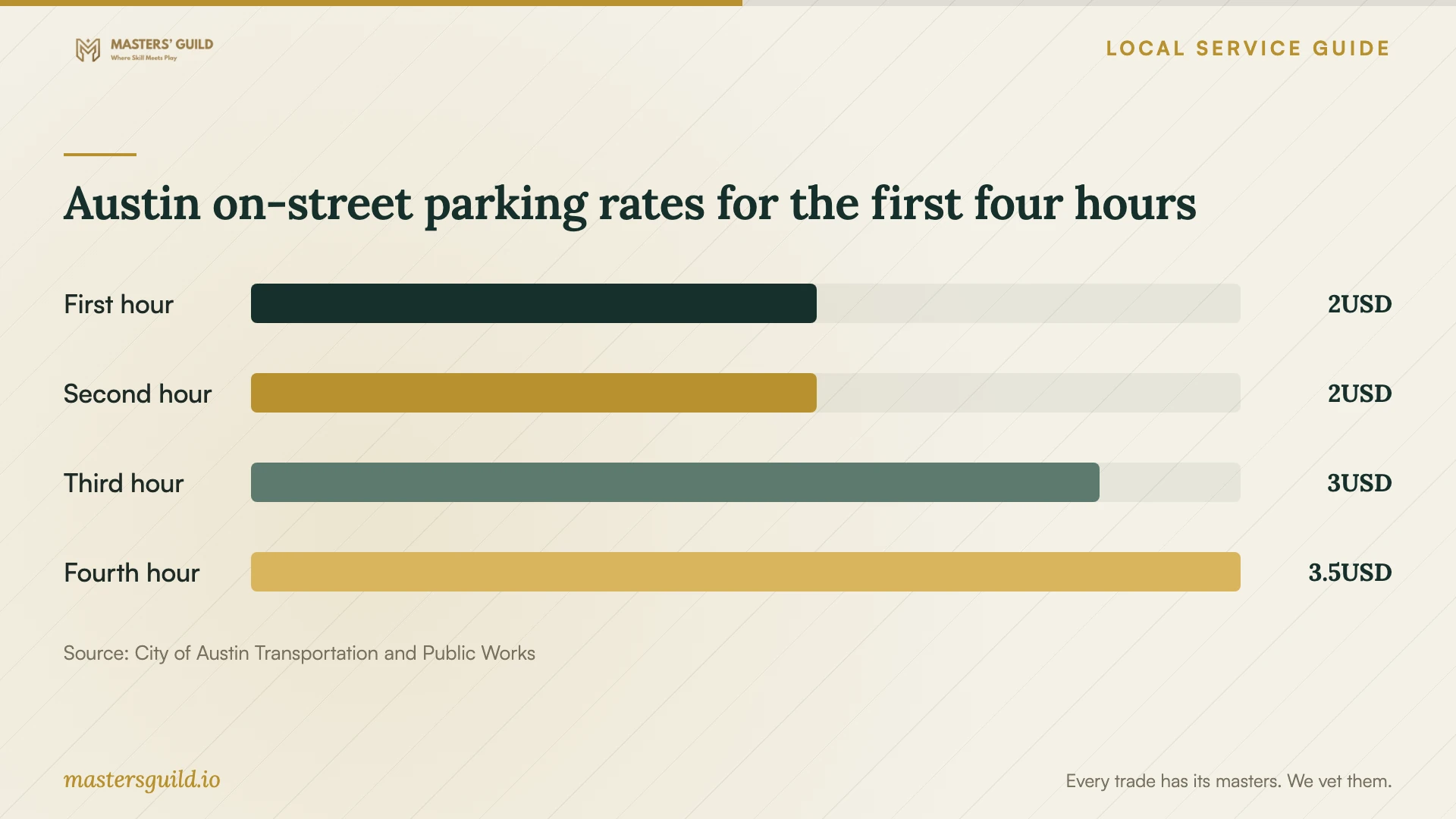
Austin on-street parking rates for the first four hours
Local details that affect your job
Texas tax changes how you compare quotes
For an Austin home, include applicable sales tax when comparing routine cleaning offers. Texas taxes residential carpet cleaning but treats residential water extraction and carpet repairs as nontaxable services. Request distinct charges if you need both types of work. The Comptroller directs providers to collect tax on taxable charges when they bill taxable and nontaxable services separately; cleaning and deodorizing remain taxable even alongside residential extraction work. [1]
Match the appointment to the parking zone
Austin lists Downtown metered parking hours as Monday and Tuesday from 8 a.m. to 6 p.m., Wednesday through Friday from 8 a.m. to midnight, and Saturday from 11 a.m. to midnight. South Congress hours run Monday through Saturday from 8 a.m. to midnight and Sunday from 1 p.m. to midnight. Confirm posted rules at your address before choosing the arrival time. The city identifies South Congress as mobile pay only, so agree on payment arrangements with the cleaner before the visit. [2]
Match the booking to your carpet's condition
| Situation | Work to discuss | Before approving |
|---|---|---|
| Routine soil or visible spots | Cleaning with a defined treatment scope | Confirm included areas, optional treatments and the tax-inclusive total. |
| Condo with curbside access | Cleaning with an agreed equipment route | Check posted parking rules and confirm building entry. |
| Wet carpet after a clean-water residential leak | Water extraction and a drying plan | Request distinct extraction, repair and cleaning charges. |
| Floodwater or sewage contamination | Professional assessment and contaminated-water cleanup | Request a plan addressing contamination and affected materials. |
| Musty odor or suspected mold | Moisture investigation and appropriate mold work | Discuss licensing or exemptions and whether carpet removal is needed. |
Your hiring checklist
- Send each cleaner the same room list, stairs, photos and treatment requests.
- Share carpet care instructions and disclose previous spot treatments.
- Request the complete price, including tax and access expenses.
- Confirm furniture moving, exclusions and approval of additional charges.
- Agree on parking, entry access and any elevator reservation.
- Request drying instructions and a contact for unresolved dampness.
- Disclose water damage, the water source and suspected mold before approving cleaning.
Frequently Asked Questions
How much should I budget for cleaning?
Request a written quote for your rooms and treatments. Give each cleaner the same scope and request a total including applicable tax, furniture moving and parking expenses. Texas taxes residential carpet cleaning, so confirm whether the quoted amount includes tax before comparing offers. [1]
Should I turn off the air conditioning after cleaning?
Get instructions suited to your home and the cleaning method. EPA warns that switching off HVAC during or shortly after water-intensive cleaning can raise humidity and create moisture problems. Discuss humidity control before leaving the home unattended. [4]
Can a cleaner resolve mold in the carpet?
Arrange an assessment of the moisture problem before accepting a cleaning treatment. TDLR says mold is difficult to clean from porous carpet and advises removing moldy porous materials. Have the contractor explain the proposed work and which state licensing requirements or exemptions apply. [3]
Does Texas tax residential water extraction?
The Comptroller lists residential water extraction as nontaxable and carpet cleaning and deodorizing as taxable. If the contractor provides both, request distinct invoice charges and an explanation of the tax calculation. [1]
Sources and scope
This guide combines the sources below with practical planning guidance. Figures apply to the stated geography and period; request a written quote for your property.