
Local service guide
Wall Painting in Aurora, IL: Plan and Compare Quotes
Arrange Wall Painting in Aurora, IL by asking painters to inspect the surfaces and quote the same written scope: rooms, repairs, primer, finish coats, paint product, furniture handling, and cleanup. Before anyone sands or scrapes a pre-1978 home, discuss lead testing and contractor certification. EPA recommends hiring a lead-safe certified contractor for renovation, repair, and painting projects in these homes. Agree on room access and leftover-paint handling before setting the start date. [2]
Give each painter the same scope
Make a room list before requesting estimates. Include wall heights, the current color, your proposed color, and photographs of peeling areas, holes, stains, or cracks. Mark ceilings, baseboards, doors, closets, and window trim as included or excluded. Ask the painter to inspect questionable areas before committing to a price.
Request a written total with the paint brand, product line, sheen, preparation steps, primer scope, and planned finish coats. Ask who buys the materials and how the painter will price additional repairs or coats. If someone quotes by square foot, ask whether they mean wall surface area or floor area before comparing the numbers.
Choose colors using a sample in the room, then record the approved color and sheen in the agreement. Ask the painter to explain how they will assess coverage at completion. For a dark-to-light change or fresh drywall, discuss additional coats: Kane County's paint guidance identifies both as situations that may require more coating. [1]
Resolve preparation and lead questions before booking
Find the construction year and tell the painter before they propose sanding or scraping. EPA advises owners of pre-1978 homes to determine whether the surfaces contain lead-based paint and recommends a certified lead inspector or risk assessor for testing. If you cannot determine the home's age, EPA advises assuming lead-based paint for DIY preparation and using lead-safe practices. [2]
For work that disturbs older painted surfaces, ask the contractor to explain certification, containment, dust control, and cleanup. EPA states that its Renovation, Repair and Painting Rule requires contractors performing covered projects in pre-1978 homes to have lead-safe certification. Ask the painter how the rule applies to your proposed preparation. [2]
Ask who will investigate damp areas or recurring cracks before painting. Agree on which repairs the painter will perform and which need another contractor's assessment. Request written approval of extra work before it starts, including its price and effect on the schedule.
Arrange room access and the completion check
Agree on who moves furniture, takes down curtains, removes wall hangings, and protects floors. Tell the painter which rooms you need each evening and whether children or pets will be home. Request a sequence of rooms, expected work hours, and instructions for returning furniture and using the space.
For lead-related work, EPA advises keeping non-workers out of the work area and containing dust and debris. Its guidance includes removing household items or sealing items that cannot move, covering floors, and cleaning before family members return. Discuss those arrangements before choosing an occupied-room schedule. [2]
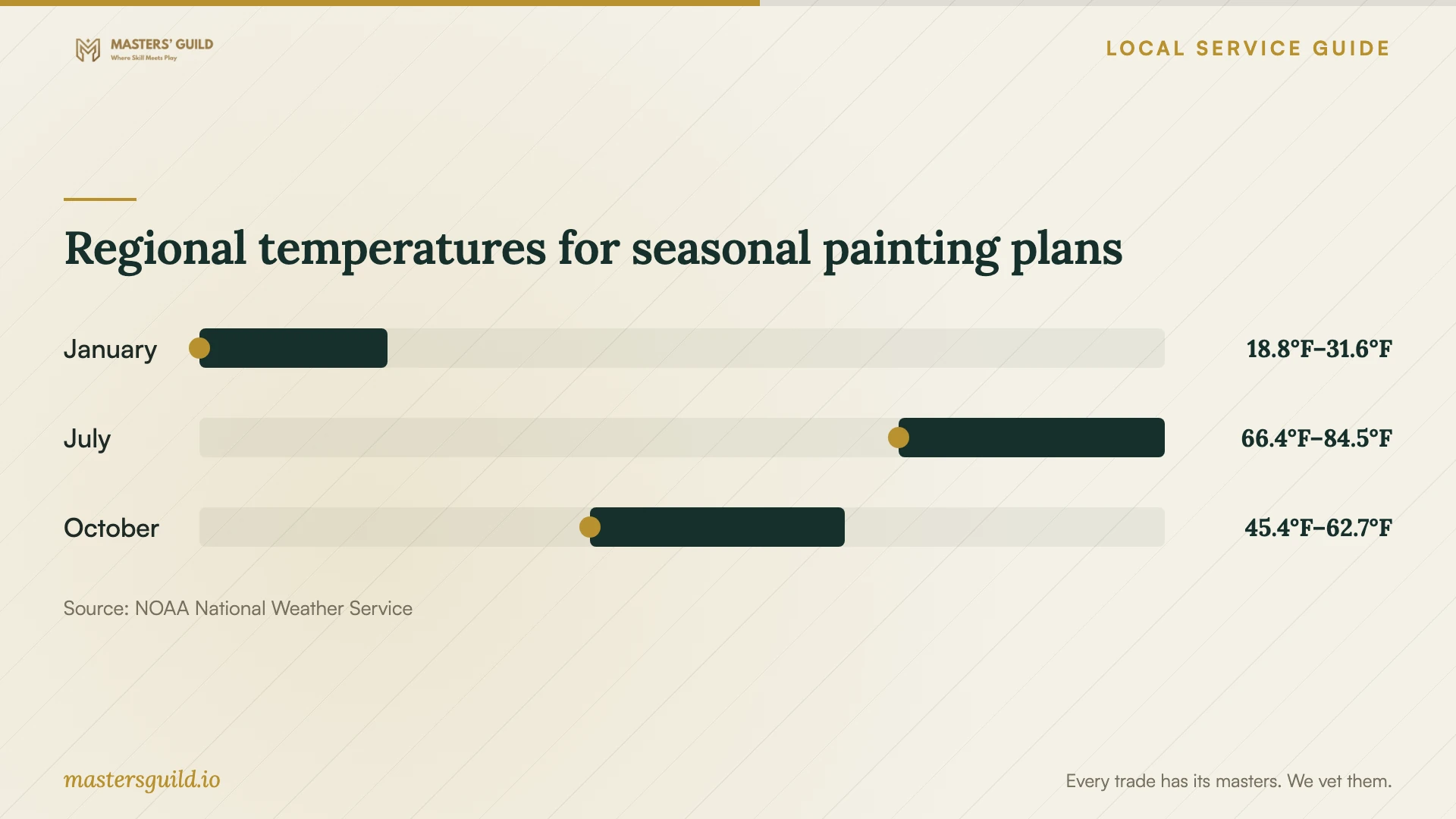
For a cold-weather project, ask the painter how they will follow the chosen product's temperature, ventilation, and drying instructions without relying on open windows throughout the job. Chicago O'Hare's January normal low is 18.8°F for 1991–2020. Treat that as regional planning context rather than a forecast or an indoor painting limit. [3]
Before final acceptance, walk through the rooms with the painter under the lighting you use. Check the agreed repairs, coverage, edges, and cleanup. Record any touch-ups and their completion date. Keep the product details, color formula, and an agreed amount of leftover paint for future repairs.
Include leftover paint in the agreement
Decide whether you or the painter will retain touch-up paint and take surplus material to a collection site. Kane County says Illinois' paint stewardship program accepts architectural coatings, including house paint, primers, and undercoats, at participating locations without a drop-off fee. It also accepts covered paint purchased before the program began. [1]
Keep your touch-up reserve in a climate-controlled space. Kane County recommends cleaning the container and lid rims, sealing the lid, and storing paint in a basement, closet, or utility room instead of an unheated garage. Label your reserve with the room, color, sheen, and product name. [1]
Regional temperatures for seasonal painting plans
Local details that affect your job
Confirm an Aurora collection site before loading cans
Kane County's participating-location list, dated February 2026, names Sherwin-Williams at 473 Rt. 59, Aurora, phone 630-978-3765, and JC Licht Paint & Decor at 3450 Montgomery Rd., Aurora, phone 630-375-9819. The county recommends calling ahead to confirm acceptance and hours and identifies PaintCare's listing as the most up-to-date location reference. Pick a confirmed site before assigning the disposal trip to yourself or the painter. [1]
Separate architectural paint from other project waste
For the Illinois program described by Kane County, locations generally accept up to five gallons per visitor per day. Prepare cans with liquid product and tightly sealed lids. The program excludes spray paint, paint thinners and solvents, caulk, and adhesives. Ask the painter to separate those materials and agree on their disposal route before cleanup. [1]
Choose the next step for your walls
| Your situation | Next step | Question to resolve |
|---|---|---|
| Sound walls and a straightforward repaint | Request a defined painting scope | Which preparation, primer, and finish coats will you include? |
| Pre-1978 home with proposed sanding or scraping | Discuss lead assessment and lead-safe certification | How will you contain dust and clean the work area? |
| Damp areas or recurring damage | Arrange assessment before approving paint work | Who will address the cause and approve the repair? |
| Surplus liquid house paint | Confirm a participating drop-off and quantity allowance | Who will retain touch-up paint and transport the surplus? |
| Spray paint or solvents left from the project | Arrange a separate disposal route | Who will handle materials excluded from architectural-paint collection? |
Your hiring checklist
- List each room and specify whether ceilings, trim, closets, and doors belong in the scope.
- Send photographs of damaged areas and arrange inspection before accepting a firm quote.
- Ask the painter to address the home's age and any lead questions before surface preparation.
- Record paint product, color, sheen, primer, finish coats, and extra-work approval terms.
- Agree on furniture moving, floor protection, work hours, and room access.
- Request product-specific drying and room-use instructions.
- Assign touch-up storage, surplus-paint drop-off, and final walkthrough responsibilities.
Frequently Asked Questions
How should I compare painting prices?
Ask painters to quote the same rooms, repairs, paint product, primer, finish coats, and cleanup. Keep ceilings and trim explicit. Request a written total and the approval process for additional work. Use those details to decide whether each offer covers the result you want.
Can I do the preparation myself in an older home?
Before sanding or scraping, establish the home's age and discuss lead testing. EPA recommends hiring a lead-safe certified contractor for projects in pre-1978 homes. Its rule generally does not apply to owners working in their own home, but exceptions include renting all or part of the home, operating home childcare, and renovating homes for resale profit. [2]
Is leftover-paint recycling free?
Kane County says participating Illinois architectural-paint drop-offs charge no drop-off fee. Locations generally accept up to five gallons per visitor per day. Call to confirm acceptance and hours; take sealed cans containing liquid product and keep excluded materials separate. [1]
How many coats should I request?
Ask the painter to specify coats after inspecting the existing surface and reviewing your color choice. Kane County says two coats are usually sufficient over a light existing shade or primer, while fresh drywall or a dark-to-light change may require additional coats. Agree on how the painter will handle incomplete coverage. [1]
Sources and scope
This guide combines the sources below with practical planning guidance. Figures apply to the stated geography and period; request a written quote for your property.