
Local service guide
Lawn Mowing in Aurora, IL: Scheduling and Hiring
For Lawn Mowing in Aurora, hire a provider who agrees to a cutting height, adjusts visits to grass growth, and puts trimming, clipping handling, and skipped-visit charges in writing. Illinois Extension recommends 3 to 4 inches for most turf stands and removing no more than one-third of the blade per cut. Compare quotes for the same yard and scope, then agree on access and weather delays before the first visit. [1]
Define the work before comparing prices
Send each provider the same description: the areas to mow, current grass height, gate opening, slopes, trees, beds, and obstacles. Include photos of the backyard access and any overgrown areas. Ask the provider to confirm the quote after inspecting the property if access or grass condition remains uncertain.
Request a written scope covering mowing, trimming around fences and beds, edging along pavement, and clearing clippings from walks and the driveway. Specify whether the provider will leave clippings, bag them, or remove them from the property. Ask for separate prices for the first cut, recurring visits, and any cleanup.
Get property-specific quotes for your Aurora lawn to set your budget. For a seasonal agreement, ask for the included visits or service period, extra-work charges, cancellation terms, and treatment of visits the provider skips.
Choose a schedule that protects the grass
Illinois Extension recommends a mowing height of 3 to 4 inches for most turf stands and cutting often enough to remove no more than one-third of the leaf blade. Ask the provider to write down the intended height and explain how they will handle grass that has grown beyond that limit. [1]
Consider weekly visits while your lawn grows enough to need them. Use an every-other-week schedule only when growth allows the provider to meet the one-third rule. Agree on who can authorize an extra visit, a higher initial cut, or a pause, and how each change affects your bill. [1]
Illinois Extension identifies wilting, darkening color, and footprints that remain after walking as signs of drought stress. It also recommends limiting traffic on stressed lawns and explains that dormant cool-season grass has stopped active growth. Ask your provider to assess growth before mowing during a dry spell and to contact you before changing the schedule. [1]
Agree on weather delays and the final visit
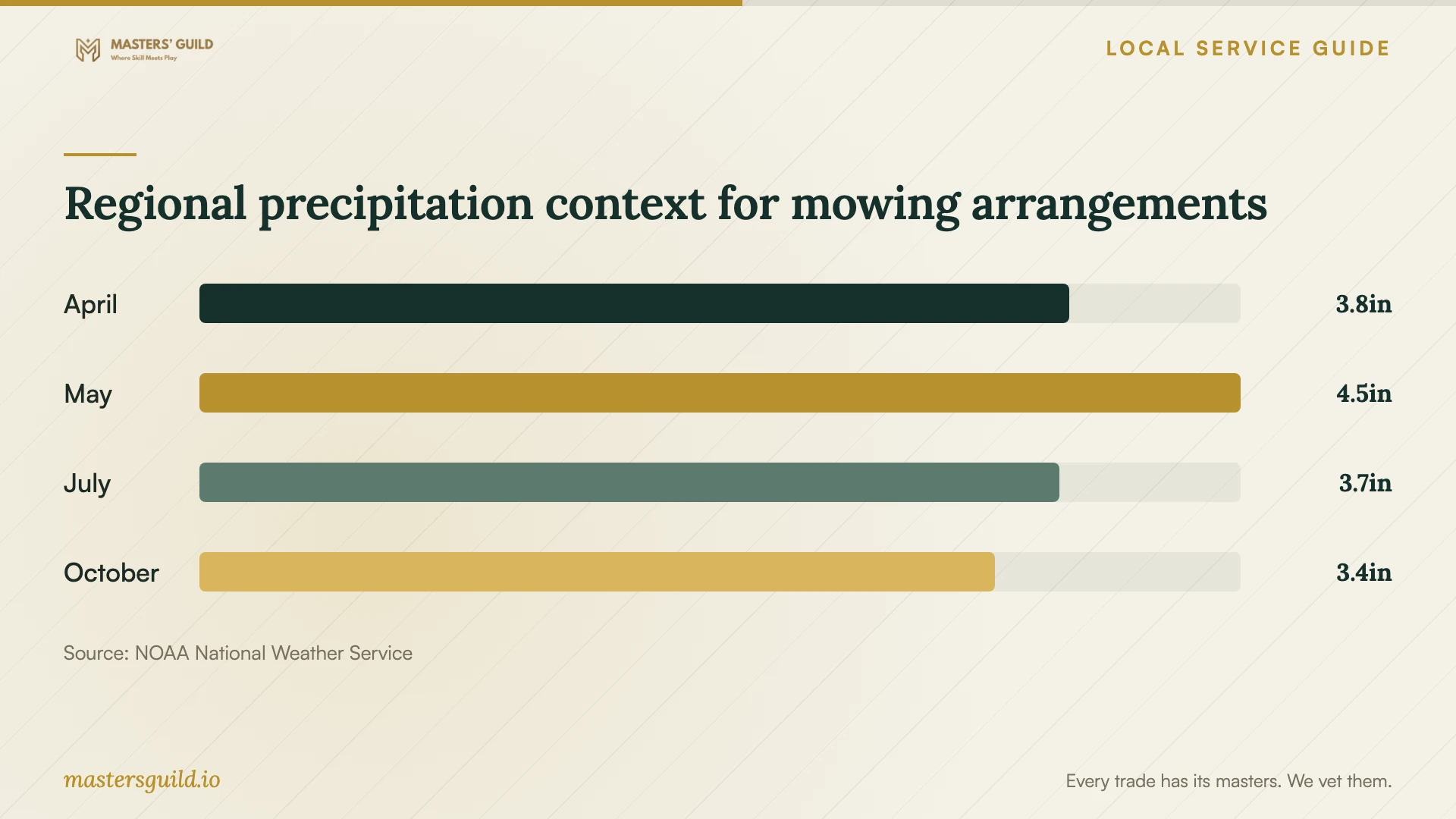
Use regional climate records as planning context, then check your own lawn before each visit. National Weather Service records for Chicago show precipitation across spring, summer, and fall. Those historical averages do not establish whether your Aurora yard will be wet on a scheduled service day. [4]
Ask the provider how they decide to postpone work when the ground is wet, how they notify you, and how they arrange a replacement visit. Put the billing rule in writing: a postponed visit, a canceled visit, and a visit with only part of the scope completed need clear terms.
For fall service, separate leaf collection from grass cutting. Ask whether the provider needs you to clear leaves before mowing or will quote that work. Agree to assess the last cut from grass growth and yard conditions rather than choosing a fixed end date without inspecting the lawn.
Check the provider and prepare access
Ask for evidence of liability insurance and a written process for reporting damage. Walk through the yard before the first visit and identify sprinkler heads, exposed roots, fragile edging, and anything the crew should avoid. Confirm who will secure the gate after the work.
If you add herbicide or another pesticide treatment, Illinois requires licenses for people applying general-use or restricted-use pesticides for hire. The Department of Agriculture lists Turf Pest Control as the category for pesticide use on turf. A licensed operator must work under a licensed applicator’s supervision. [3]
Ask for the applicator’s name, license details, and category coverage, plus the operator’s details if someone else will perform the application. Use the Department of Agriculture’s licensed applicator and operator search from its certification page. Keep chemical treatment separate in the quote so you can approve mowing without authorizing an application. [3]
Regional precipitation context for mowing arrangements
Local details that affect your job
A city citation changes the booking priority
Aurora’s City Council approved a grass-and-weeds abatement resolution on March 25, 2025. The city describes contractor maintenance on private property after citations when owners have not completed abatement. If you have a notice, give the mower its stated scope and deadline before booking, ask for completion photos, and contact Property Standards about how to document compliance. This record does not establish a current height threshold, fine, or homeowner service price. [2]
Illinois credentials matter for chemical add-ons
Illinois requires commercial applicator or operator licenses for pesticide use for hire, including general-use products. The state also requires the applicator’s categories to cover the company’s pesticide work. Before accepting a mowing package with lawn weed treatment, verify the people performing and supervising the application and check Turf Pest Control coverage. Do not treat a mowing agreement as evidence of pesticide qualifications. [3]
Match the agreement to your lawn’s condition
| Situation | Arrangement to discuss | Confirm before booking |
|---|---|---|
| Grass needs frequent cutting | Weekly visits with a growth review | Cutting height and the one-third removal limit |
| Grass grows slowly | Every-other-week visits or an agreed pause | Whether each cut can meet the one-third rule |
| Lawn shows drought stress | Assess growth and limit traffic | Notification and billing for a skipped visit |
| Owner has a grass-and-weeds citation | Deadline-based work matching the notice | Completion date, photos, and city follow-up |
| Quote includes pesticide treatment | Separate approval for the application | Applicator, operator, and category credentials |
Your hiring checklist
- Send matching yard photos and scope descriptions to each provider.
- Confirm the mowing height and plan for the first overgrown cut.
- List trimming, edging, pavement cleanup, and clipping handling.
- Record prices for recurring visits, initial work, and extras.
- Agree on rain delays, growth-based pauses, and skipped-visit billing.
- Clear toys and pet waste; identify obstacles and confirm gate access.
- Request insurance evidence and pesticide credentials when treatments are included.
- If you have a city notice, share its deadline and arrange completion documentation.
Frequently Asked Questions
Should I book weekly or every-other-week mowing?
Choose the interval that lets your provider remove no more than one-third of the leaf blade per cut, following Illinois Extension guidance. Ask to review frequency as growth changes and agree on the price of extra or skipped visits. [1]
Should the crew mow a brown lawn during drought?
Ask the provider to assess whether the grass is growing. Illinois Extension explains that dormant cool-season turf has stopped active growth and recommends limiting traffic on drought-stressed lawns. Agree on a pause and its billing terms before the next scheduled visit. [1]
Can the mowing crew also spray weeds?
Verify credentials before approving the treatment. Illinois requires licenses for pesticide applications for hire, and the applicator’s categories must cover the work. A licensed operator can apply pesticides under a licensed applicator’s supervision. [3]
What should I do if Aurora has cited my yard?
Use the instructions and deadline on your notice to define the job, and ask Property Standards how to confirm completion. Aurora’s 2025 abatement record describes city contractor work after owners fail to complete cited maintenance; it does not specify the deadline or charges for your property. [2]
Sources and scope
This guide combines the sources below with practical planning guidance. Figures apply to the stated geography and period; request a written quote for your property.