
Local service guide
Gardening in Aurora, IL: Hiring and Cleanup Planning
Arrange Gardening in Aurora, IL by agreeing on the beds, plants, and shrubs the gardener will handle, then settle pesticide use and debris removal before accepting a quote. Illinois requires licenses for pesticide application during employment, including general-use products. For a cleanup or pruning job, ask who will sort, bag, and haul the debris; unincorporated Aurora Township excludes contractor use of its brush program. [1] [3]
Choose the work you want completed
Start with a walk-through or photos of each area. Mark plants you want to keep and identify beds that need hand weeding, planting, edging, mulch, or shrub pruning. Ask the gardener to identify unfamiliar plants before removing them. For pruning, agree on the intended shape and which shrubs need individual attention.
For an overgrown garden, request an initial cleanup quote and a separate maintenance proposal. Specify what you expect after the first visit: weeds removed, selected plants retained, paths cleared, and debris handled. For recurring visits, list the tasks the gardener should repeat and those that require your approval, such as replacing plants or applying a treatment.
Compare quotes by scope and total cost
Request an itemized quote for labor, plants, mulch, delivery, and debris removal. If the gardener charges by the hour, ask whether the rate covers one worker or the crew, whether travel counts, and what spending limit they will observe before contacting you. For a fixed quote, agree on how they will handle extra work discovered during the visit.
Compare proposals against the same task list. A quote for weeding and bagging leaves should not stand in for one that includes planting, shrub pruning, and hauling. Ask who supplies materials, approve plant names and quantities, and decide who will water new plants between visits. Request evidence of liability insurance and discuss access to gates, parking, and water.
Verify credentials before pesticide treatment
Illinois requires a pesticide license for anyone applying restricted-use or general-use pesticides during employment. The Department of Agriculture oversees outdoor pesticide application. Its commercial applicator categories include ornamental plantings, turf, and vegetable crops, so check that the proposed work falls within the applicator's categories. [1]
Ask who will apply the product and request that person's license details. Illinois allows a licensed applicator to supervise licensed operators. Ask the provider to explain the product, target problem, treatment area, and label directions for returning to the garden. If you want hand weeding without pesticide treatment, put that preference in the scope before work starts. [1]
Settle disposal before the gardener arrives
Kane County Recycles explains that Illinois prohibits landscape waste disposal in landfills. Its guidance distinguishes weeds, leaves, and plant stems from larger woody brush. It excludes sod, dirt clods, and whole potted plants from yard waste and tells residents to remove pots, tags, stakes, and wire cages from composting material. [2]
Ask the gardener to price sorting, packaging, and hauling for the debris your job will produce. If you plan to use curbside collection, confirm the accepted material, packaging, collection dates, and charges with your municipality or hauler. Kane County gives regional guidance and directs residents to confirm local specifications; do not treat its general bundle dimensions as Aurora's collection rules. [2]
For property in unincorporated Aurora Township, do not assume a hired gardener can use the township brush program. The Highway Department reserves it for residents and excludes contractor use and debris from tree removal services. Include hauling in the proposal unless you have confirmed an eligible disposal arrangement. [3]
Plan visits around weather and plant needs
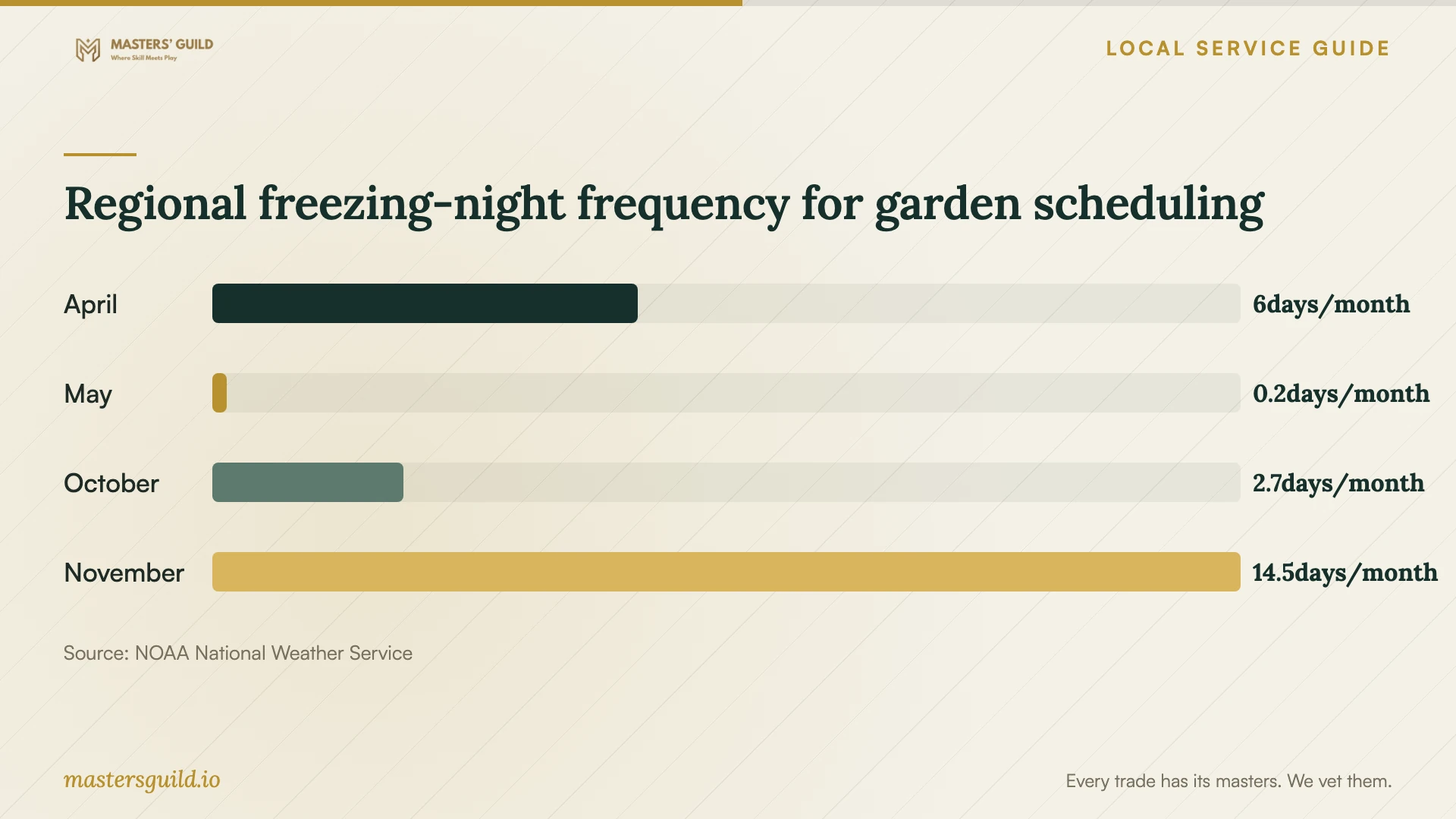
Discuss a weather contingency before scheduling planting or cleanup. As a regional reference, Chicago's 1991–2020 normals show an average of 6.0 nights at or below freezing in April, 2.7 in October, and 14.5 in November. These figures describe Chicago, not observations at your Aurora property or a forecast for the scheduled visit. [4]
Ask the gardener to choose planting and pruning timing for the plants involved and to check the forecast before the visit. Agree on how you will handle a postponement and who will care for plants awaiting installation. For fall work, identify what you want removed and what you want left in place, then confirm the disposal route before the collection season ends.
Regional freezing-night frequency for garden scheduling
Local details that affect your job
Unincorporated township brush pickup has limits
Aurora Township Highway Department lists October 26 as its final 2026 brush session for unincorporated areas. It requires brush in the right-of-way by 7:00 a.m., branches no longer than 6 feet and no thicker than 6 inches, and twine or string bundles weighing no more than 30 pounds. The program excludes contractor use, thorny branches, roots, leaves, and bagged material. Confirm eligibility before arranging disposal; these are township rules, not incorporated Aurora rules. [3]
A bed renovation needs more than a yard-waste plan
Use Kane County's regional sorting guidance when discussing a bed renovation: weeds and plant stems qualify as yard waste, but sod, dirt clods, and whole potted plants do not. Ask for separate handling of excavated material and plastic garden accessories. Confirm the collection arrangements for your address with your municipality or hauler before choosing bagging instead of contractor hauling. [2]
Match the proposal to your garden job
| Your job | Agree before hiring | Disposal or credential check |
|---|---|---|
| Bed weeding and cleanup | Plants to keep, removal method, and completion standard | Separate dirt clods and plastic accessories from yard waste |
| Planting and mulch | Plant names, quantities, material delivery, and watering responsibility | Arrange separate handling for whole potted plants and discarded pots |
| Shrub pruning | Shrubs included, intended shape, and debris removal | Do not assume contractor debris qualifies for township brush pickup |
| Outdoor pesticide treatment | Target problem, product, application area, and label directions | Verify the applicator or operator license and relevant applicator categories |
Your hiring checklist
- Photograph each work area and mark plants the gardener should retain.
- List the cleanup, planting, mulching, and pruning tasks you want priced.
- Approve materials, quantities, and substitutions before purchase.
- Agree on a fixed total or an hourly spending limit and crew size.
- Request insurance evidence and pesticide license details if treatment is proposed.
- Confirm who sorts, packages, and removes each type of debris.
- Arrange gate access, parking, water access, and care between visits.
Frequently Asked Questions
How much should I budget for a gardener?
Request a property-specific quote for your task list. Agree on labor, materials, delivery, and disposal, then ask for a separate price for recurring maintenance. For hourly work, set a spending limit and confirm whether the quoted rate covers one worker or the crew.
Does a gardener need a license to spray weed killer?
Illinois requires a license for general-use and restricted-use pesticide application during employment. For outdoor treatment, ask for Department of Agriculture license details and confirm that the applicator's categories cover the proposed site. A licensed operator must work under a licensed applicator's supervision. [1]
Can the gardener leave branches for township pickup?
Do not assume eligibility. Aurora Township's program covers unincorporated areas, excludes contractor use, and does not accept tree-removal-service debris. Ask the gardener to include hauling unless you have confirmed an eligible alternative for your property. [3]
Can I put everything from a garden cleanup into yard-waste bags?
Kane County guidance excludes dirt clods, sod, and whole potted plants from yard waste and calls for removing plastic pots, tags, stakes, and wire cages. Confirm your hauler's accepted materials and packaging before the gardener bags the debris. [2]
Sources and scope
This guide combines the sources below with practical planning guidance. Figures apply to the stated geography and period; request a written quote for your property.