
Local service guide
Duct and Vent Cleaning in Aurora, IL: Hiring Guide
Arrange Duct and Vent Cleaning in Aurora, IL by asking a contractor to show the contamination, price the full heating and cooling system scope, and explain any proposed repairs before you approve work. EPA recommends cleaning as needed for substantial contamination, rather than on a routine schedule. If the proposal includes mechanical installation or replacement, check the applicable Aurora contractor registration and permit requirements with the Division of Building and Permits. [1] [2]
Decide whether cleaning addresses your problem
Ask the inspector to show you conditions inside the system before discussing a cleaning package. EPA says dusty return registers are normal and can be vacuumed or removed for cleaning. Consider whole-system cleaning when ducts contain excessive deposits, release particles through supply registers, harbor rodents or insects, or contain substantial visible mold growth on hard surfaces. [1]
Request evidence when someone identifies mold. EPA says appearance alone may not establish whether a substance is mold; expert identification and laboratory analysis may be necessary. Have the contractor explain the moisture source and who will correct it. EPA recommends replacing wet or moldy duct insulation because cleaning cannot address that material effectively. [1]
Tell the estimator what prompted your call: debris blowing from a register, a pest problem, water damage, or dust-producing renovation work. Describe the rooms affected and share photographs if you have them. For unexplained health symptoms, EPA advises speaking with your doctor; duct cleaning has not been shown to prevent health problems. [1]
Compare the scope before comparing prices
Have each bidder identify the supply and return ducts, registers, grilles, air handler, blower, coils, and drain pans included in the proposal. EPA warns that leaving a contaminated component uncleaned can recontaminate the system. Get an explanation for any excluded component and identify who will clean it. [1]
EPA's guidance lists a typical reference range of $450 to $1,000 per heating and cooling system, depending on services, system size, accessibility, climate region, and contamination. The publication dates to October 1997, although EPA updated the webpage in February 2026. Treat that range as background, not a current Aurora quote or a price ceiling. [1]
Request a total price after inspection, with separate lines for cleaning, repairs, replacement materials, and any chemical treatment. If someone charges by the hour, request an estimated duration and ask about interruptions. Specify whether dryer-vent cleaning belongs in your requested scope and have the bidder list it separately. [1]
Check methods and proposed treatments
Ask where the vacuum exhaust will go. EPA recommends equipment that exhausts particles outdoors, or HEPA vacuum equipment when the exhaust remains indoors. Have technicians explain how they will protect furniture and floors, reach the system components, and seal and reinsulate the access holes they use. [1]
Have the contractor identify sheet metal, flexible duct, and fiberglass-lined sections before choosing tools. EPA calls for soft-bristled brushes on fiberglass duct board and fiberglass-lined metal ducts. Ask the technician to inspect for asbestos-containing materials before disturbing insulation or register boots; EPA says those materials require specialized contractors and procedures. [1]
Do not approve a sanitizer or interior coating without an explanation of its purpose, duct-material compatibility, and product label. EPA says no biocides are registered for fiberglass duct board or fiberglass-lined ducts and advises against routine encapsulating sealants. EPA also does not certify duct-cleaning companies, so ask anyone claiming EPA certification to clarify the credential. [1]
Prepare for the visit and inspect the result
Before the appointment, agree on access to the equipment and registers, furniture you should move, arrangements for pets, and any period without heating or cooling. Ask how long the contractor expects your specific job to take. Keep the written scope available so you can resolve proposed additions before technicians begin them.
Request a walkthrough or photographs of the cleaned components before closing out the job. EPA recommends visual inspection: check supply and return interiors, blower surfaces, coils, drain pans, and registers. Have the contractor show that access covers are secure, openings are airtight, and the system operates in heating and cooling modes. [1]
After cleaning, follow the equipment manufacturer's filter recommendation and replacement instructions. EPA advises keeping filters fitted without bypass gaps, addressing leaks, and maintaining condensate drainage. During future dust-producing renovations, EPA recommends sealing supply and return registers and keeping the HVAC system off until dust cleanup is complete. [1]
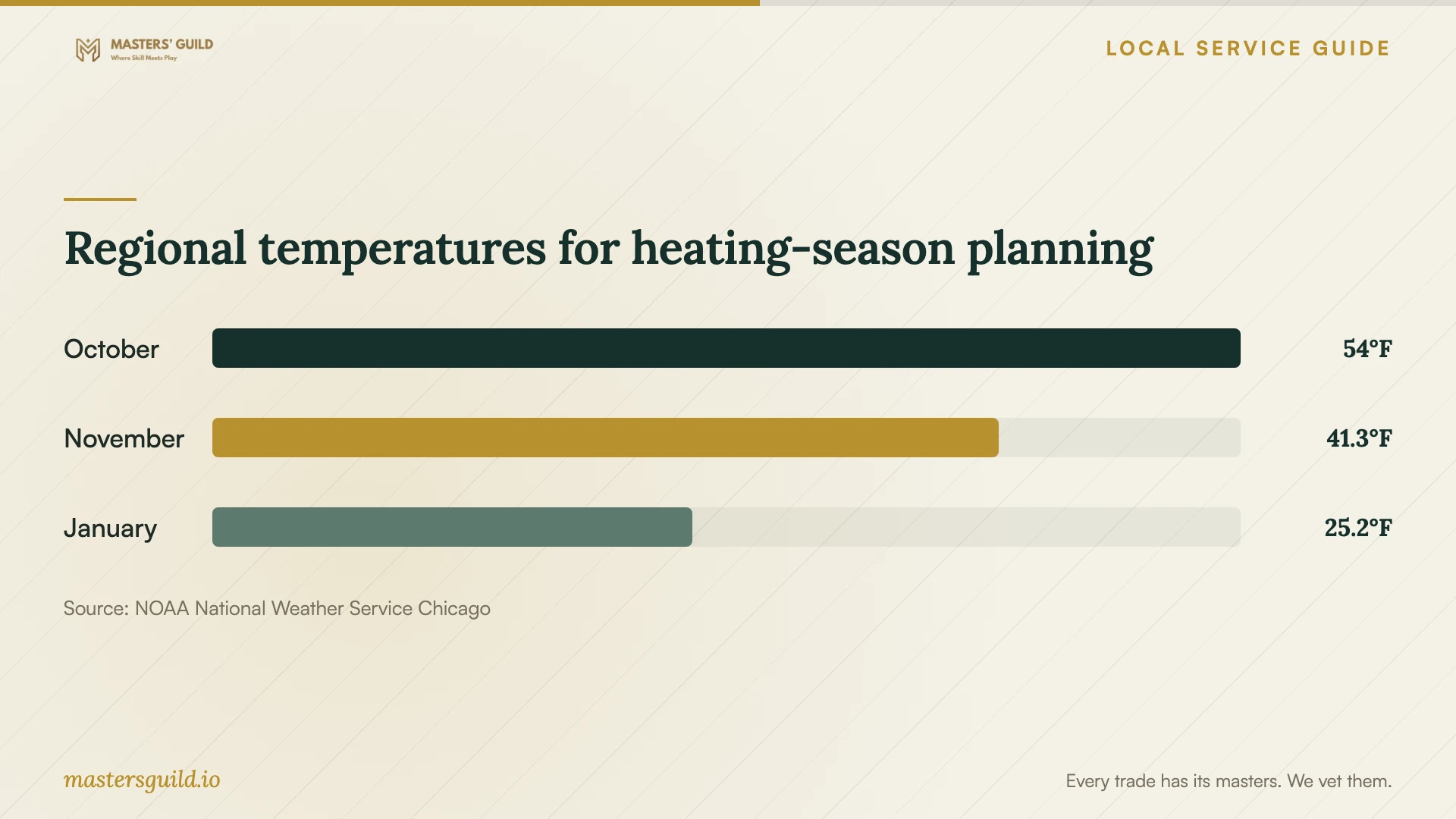
Regional temperatures for heating-season planning
Local details that affect your job
Aurora registration when cleaning expands into mechanical work
Aurora's section 12-16.4 addresses registration for construction installation or replacement and identifies a registered HVAC contractor category for covered heating, air-conditioning, and mechanical ventilation equipment. If a cleaner proposes equipment replacement or duct alterations, send the itemized scope to the Division of Building and Permits and ask which registration and permits apply. This ordinance section does not settle whether cleaning alone requires registration or a permit. [2]
Check insurance for an Aurora registered contractor
For contractors subject to Aurora's registration provisions, the city requires liability insurance documentation with at least $500,000 per occurrence and a $1,000,000 general aggregate, plus workers compensation and employer's liability coverage meeting statutory limits. If your project includes covered mechanical work, ask for the contractor's current registration and insurance certificate. Do not assume these city registration minimums establish the insurance rules for a cleaning-only visit. [2]
Separate fall furnace service from duct cleaning
Chicago O'Hare's 1991–2020 monthly mean temperature drops from 54.0°F in October to 41.3°F in November. These are regional climate normals, not Aurora measurements. Use fall planning to arrange the pre-heating-season inspection EPA recommends for fuel-burning furnaces, while deciding on duct cleaning from contamination evidence. Cold weather does not establish that your ducts need cleaning. [1] [3]
Choose the next step from what you observe
| Observation | Next step | Question to ask |
|---|---|---|
| Dust on a return grille | Clean the grille and inspect before ordering whole-system work. | Can you show substantial contamination inside the system? |
| Excessive debris or particles from supply registers | Consider cleaning after identifying the source. | Which ducts and equipment components will you clean? |
| Suspected mold or wet insulation | Confirm the finding and address moisture; wet or moldy insulation needs replacement. | Who will identify the material and correct the moisture source? |
| Rodents or insects inside ducts | Correct the underlying cause before cleaning. | How will you prevent recurrence? |
| Proposed mechanical installation or replacement | Check the applicable Aurora registration and permit requirements. | Which contractor will perform the additional work? |
Your hiring checklist
- Describe the observed problem and ask the inspector to show supporting evidence.
- Get written estimates with matching component lists and exclusions.
- Separate cleaning from repairs, replacement work, and chemical treatments.
- Ask Aurora Building and Permits about requirements if the scope includes mechanical alterations.
- Request registration and insurance documents when the proposed work falls under city registration provisions.
- Agree on access, pet arrangements, estimated duration, and system downtime.
- Inspect cleaned components, access closures, and system operation before closing out the job.
Frequently Asked Questions
How often should I schedule duct cleaning?
EPA recommends cleaning as needed rather than on a fixed routine. Ask for an inspection and evidence of substantial contamination before accepting an annual cleaning plan. [1]
Will duct cleaning lower my energy bills?
EPA says little evidence supports efficiency improvements from cleaning ducts alone. Research suggests cleaning dirty coils, fans, and heat exchangers may improve efficiency. Ask the contractor to identify the component problem behind any savings claim. [1]
Does a duct cleaner need an Aurora HVAC registration?
Aurora regulates registered HVAC contractors for covered mechanical equipment work. This ordinance section does not establish a separate cleaning-only requirement. Ask the city to review your scope if the contractor adds installation, replacement, or alterations. [2]
Should I accept a chemical treatment for mold?
Ask for evidence, the product label, and an explanation of why physical cleaning and moisture control are insufficient. EPA says no biocides are registered for fiberglass duct board or fiberglass-lined ducts. Wet or moldy insulation requires replacement. [1]
Sources and scope
This guide combines the sources below with practical planning guidance. Figures apply to the stated geography and period; request a written quote for your property.