
Local service guide
Business Plan Consulting in Aurora, IL
Arrange Business Plan Consulting in Aurora, IL around your next decision: testing an idea, opening premises, expanding, or applying for financing. Agree on research, financial assumptions, editable files, revisions, and a delivery schedule before hiring. Consider Illinois SBDC guidance first. For commercial premises, the Aurora Regional Economic Alliance recommends checking zoning suitability and build-out requirements before signing a lease. [1] [3]
Choose the scope around your next decision
Start with the person who will use the plan and the decision they must make. SBA describes lean startup plans as summaries of key elements and traditional plans as detailed documents that lenders and investors commonly request. Ask the recipient which format and supporting materials it expects. [2]
For internal planning, ask the consultant to test your customer definition, pricing, costs, and route to sales. For financing, agree on the funding request, forecast detail, and supporting documents before work starts. Specify the questions you need answered rather than selecting a package by page count.
Review the research and financial assumptions
SBA recommends examining demand, market size, customer location, competing options, and pricing. Ask the consultant to define the customer area for your business and explain that choice. Request source names and dates, with customer interviews identified separately from published data. [2]
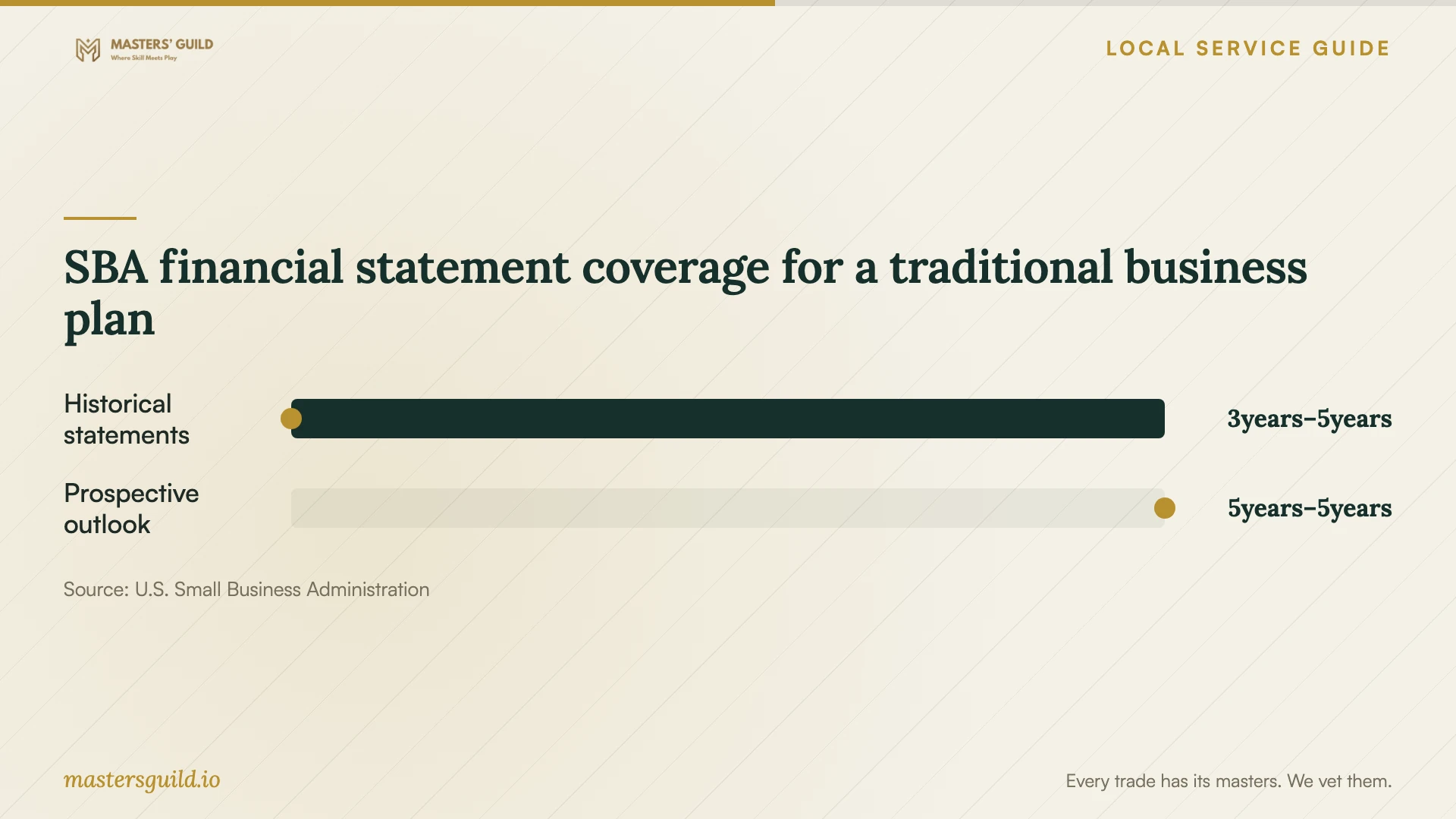
You should be able to trace projected revenue to prices, sales volumes, and your capacity to serve customers. Ask for an assumptions worksheet alongside the narrative. SBA recommends separating one-time startup expenses from monthly expenses and including forecasted income statements, balance sheets, cash-flow statements, and capital expenditure budgets in a traditional financing plan. [2]
During the review meeting, change a few assumptions together: a later opening, slower sales, or a higher equipment quote. Have the consultant explain the effect on cash needs and identify estimates you still need to confirm. Include scenario analysis and spreadsheet instruction in the written scope if you want that help.
Resolve premises questions before signing a lease
The Aurora Regional Economic Alliance advises owners to understand zoning suitability and build-out and approval requirements before signing a lease. Its guidance describes the city’s Development Services Team as a coordinated process involving Planning and Zoning, Engineering/Public Works, Building and Permits, and the City Clerk. Confirm current procedures and requirements with the team. [1]
Keep the premises budget and opening schedule provisional until you receive location feedback. Give your consultant the proposed use, hours, staffing, equipment, and site information. Agree on who will prepare meeting materials, attend the discussion, record unresolved questions, and update the plan after you receive feedback.
Consider public guidance and lender requirements
Illinois SBDCs provide confidential guidance for startups and existing small businesses, including business-plan development, market information, financing assistance, and financial analysis. DCEO states that its network offers no-cost business consulting. Ask a center what assistance it can provide and which tasks you will need to complete yourself. [3] [4]
Discuss Advantage Illinois with your lender before paying for program-specific work. DCEO administers its programs through lenders, requires participating lenders to obtain approval and enrollment, and says lenders have no obligation to use them. Ask whether your lender intends to participate and which documents it needs. [4]
Compare proposals by deliverables and responsibility
Give each consultant the same brief: intended reader, business stage, research boundaries, forecast requirements, available records, and deadline. Request a scope-specific quote and schedule. Agree on review rounds, payment milestones, file ownership, confidentiality, and charges for changes.
An anonymized sample can help you assess the proposed work. Ask the consultant to explain its assumptions and describe who writes the plan and checks the numbers. Set milestones for your document handoff, initial model, draft review, and final delivery. Include time to read the draft and resolve questions before your submission deadline.
SBA financial statement coverage for a traditional business plan
Local details that affect your job
Prepare the Alliance’s recommended meeting materials
For a Development Services Team meeting, the Alliance recommends a business-plan overview covering the potential location, business model, operating hours, and employee count, plus a detailed site plan and equipment information. The Alliance says architectural drawings are not required at this stage and that greater detail allows more detailed feedback. Use its recommendations to prepare, then confirm current meeting requirements with Aurora’s Development Services Team. [1]
Include food and alcohol details in the assignment
For restaurants and businesses selling alcohol, the Alliance’s guidance lists a detailed site plan as required at the meeting because it affects liquor licensing. It also lists a detailed anticipated food-service menu. Ask your consultant who will prepare these materials, and confirm the current requirements with the Development Services Team before the meeting. [1]
Check statewide financing fit with your lender
Advantage Illinois applies statewide, including to businesses operating in Aurora. DCEO says businesses must face a financing challenge as defined by the financial institution and meet additional eligibility standards. The programs operate through lenders rather than as direct borrower loans or guarantees. Have your lender assess fit before commissioning a program-specific submission. [4]
Suggested assignments for your next step
| Your situation | Scope to discuss | Preparation |
|---|---|---|
| Testing a simple idea | Lean plan and assumptions review | Define customers, prices, costs, and revenue streams. |
| Preparing a financing request | Traditional plan and financial projections | Obtain the recipient’s requirements and gather financial records. |
| Opening commercial premises | Plan plus location and opening-budget review | Follow the Alliance’s advice to check zoning and build-out requirements before signing a lease. |
| Exploring public guidance | SBDC assistance followed by any remaining paid work | Ask about business-plan, market, and financial-analysis support. |
| Discussing Advantage Illinois | Lender-specific documentation | Confirm lender participation and required paperwork. |
Your hiring checklist
- Identify the intended reader and request its submission requirements.
- Prepare your business description, proposed prices, customer evidence, and owner background.
- Gather existing financial records or startup expense quotes; label unresolved estimates.
- Assign responsibility for checking premises suitability and preparing location meeting materials.
- Define the research area and the questions you want the consultant to investigate.
- Agree on editable files, review rounds, confidentiality, payment milestones, and change fees.
- Reserve time to review assumptions and explain the finished plan yourself.
Frequently Asked Questions
Should I hire a consultant or write the plan myself?
SBA describes a lean format for relatively simple businesses that summarizes customers, operations, costs, and revenue. Consider SBDC guidance, then commission help with the parts you cannot explain or model. Ask your intended lender or investor whether it expects a detailed traditional plan. [2] [3]
What should a financing plan include?
SBA guidance includes a funding request and financial projections matched to that request. For established businesses, it recommends historical income statements, balance sheets, and cash-flow statements. Confirm the recipient’s forecast horizon and required detail before agreeing on the consulting scope. [2]
Can I start the plan before choosing a storefront?
You can draft your business model and research first. Keep premises costs and the opening schedule provisional. The Alliance advises understanding zoning suitability and build-out and approval requirements before signing a lease. Confirm location questions with the city’s Development Services Team. [1]
How should I compare consulting fees?
Give consultants the same brief and compare included work: research, financial modeling, writing, review meetings, revisions, and editable files. Ask them to identify exclusions and change fees. Obtain a schedule tied to your document handoff and review milestones.
Sources and scope
This guide combines the sources below with practical planning guidance. Figures apply to the stated geography and period; request a written quote for your property.