
Local service guide
Basement Remodeling in Aurora, IL: Planning and Hiring
For Basement Remodeling in Aurora, hire a contractor who can document the city registration applicable to your work. Agree on the intended rooms, repair scope, and approval responsibilities before signing. Aurora requires registered general contractors for permit-required work, subject to owner exemptions. Investigate recurring sewer backups and arrange home radon testing before committing to the finished layout. [1] [2] [3]
Plan the rooms and your role in the work
Prepare a sketch showing the proposed recreation room, office, bathroom, or sleeping space. Describe each room's intended use and mark existing windows, stairs, drains, and equipment. Give bidders the same sketch. Ask them to review ceiling height, equipment access, and proposed partitions before you choose finishes.
Aurora's adopted-code list names the 2024 International Residential Code and 2023 National Electrical Code, with local amendments, and specifies the current Illinois Plumbing Code. Confirm your proposed uses and applicable requirements with Aurora Building and Permits before buying plans, particularly if you want sleeping space or a separate living unit. [1]
Settle your DIY role before dividing the quote. Aurora's owner-occupied single-family exemption requires occupancy documentation, an owner affidavit, and continued residence for at least six months after completion. Under that exemption, the city prohibits hired assistance unless the assistant becomes a licensed contractor in the appropriate trade. The ordinance reserves new electrical services, service replacements, and specified alternative-power installations for licensed contractors. [1]
Tell Building and Permits which tasks you intend to perform and which you intend to hire out. Ask which exemption applies to that arrangement. Have the contractor price the agreed division of work, including who supplies materials and handles corrections.
Investigate water and sewer problems before finishes
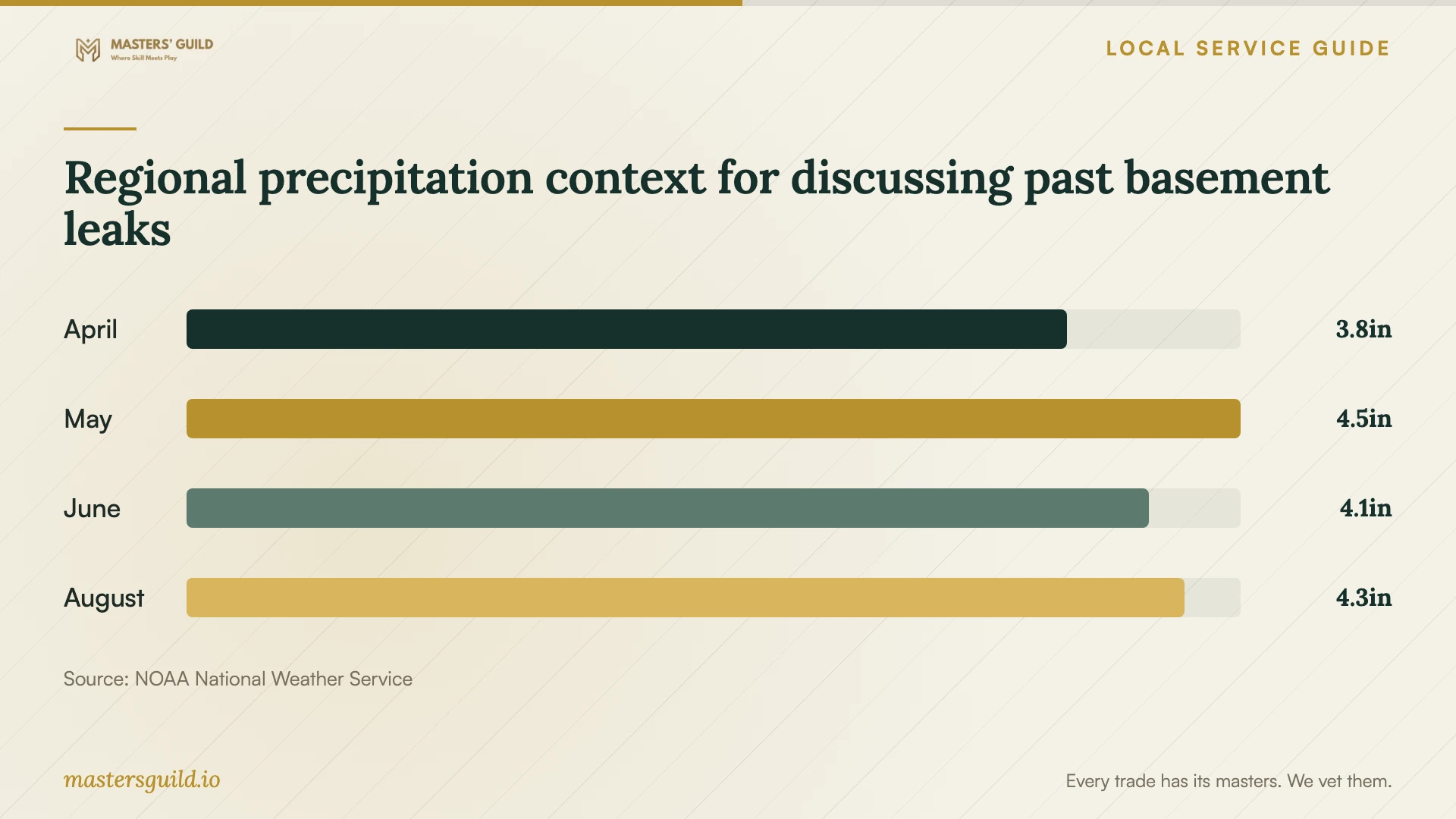
Show the contractor stains, damp corners, previous repairs, and photographs from past leaks. Explain whether water appeared after precipitation, during snowmelt, or alongside drain backups. Request a separate investigation and repair proposal before authorizing framing or flooring over the affected area.
Fox Metro distinguishes one blocked fixture from backups across multiple fixtures. For a single-fixture blockage, it recommends a plumber or rodding service. For multiple-fixture backups within Aurora city limits, it directs residents to city public works. Homeowners maintain and repair their individual sanitary sewer service lines and connections to public mains. [2]
Before commissioning a private sewer-line repair, establish who investigated the public main and request the findings. Fox Metro warns that storm flooding may involve contaminated water and electrical hazards if water submerges outlets or plugged-in devices. Contact the proper authorities if you are unsure about safe access. Arrange the remodeling visit after addressing the active emergency. [2]
Verify city credentials and insurance
Aurora requires city registration for general contractors performing permit-required work, subject to specified owner exemptions. Its ordinance also regulates electrical, plumbing, and mechanical contractor registration. Obtain the names of proposed subcontractors and confirm their applicable Aurora credentials before agreeing to the team. [1]
An electrician may seek reciprocal registration based on another Illinois municipality's credential, but Aurora must accept the testing procedure. The contractor must meet Aurora's registration-payment and insurance requirements. Request proof of Aurora registration even if the electrician presents a credential from a nearby city. [1]
Aurora requires contractors to submit liability insurance documentation to the Division of Building and Permits. Request a current certificate for the business named in your contract. Identify who will supervise subcontractors, communicate with you, and address inspection corrections. [1]
Coordinate radon testing with the layout
Illinois emergency management officials recommend testing all homes for radon regardless of location. Their county and ZIP code map does not determine whether your house needs testing. Arrange a test for your home and discuss the result before finalizing enclosed rooms and finishes. [3]
The state radon page provides a list of licensed measurement and mitigation professionals. If your project involves mitigation, coordinate the proposed equipment and routing with the remodeler. [3]
Mark access to the sump, sewer cleanouts, shutoff valves, electrical panel, and heating equipment on your sketch. Ask the bidder to describe access doors or removable panels in the proposal. Walk through those locations together before approving the layout.
Compare quotes and agree on the construction sequence
Request an itemized proposal covering investigation, repairs, demolition, framing, trade work, insulation, finishes, and debris removal as applicable. Separate optional storage, sound control, and upgraded flooring. Specify products or allowances so you can compare the same work across bidders.
Aurora requires registered HVAC contractors for covered heating, air-conditioning, and mechanical ventilation work. It requires registered plumbing contractors for covered plumbing work and registered electrical contractors for permit-required electrical work, with a specified equipment-replacement exception. Identify the responsible trade contractor for each proposed system change. [1]
Confirm the applicable inspection sequence with Aurora Building and Permits. Put applications, fees, inspection scheduling, and corrections beside the person responsible for each in your agreement. Ask the lead contractor to identify when you will review repair findings and when the team will seek approval to cover work.
Agree on a written change process that records the added work, price, and schedule effect before you approve it. At completion, collect applicable approval records, warranties, equipment instructions, and photographs of concealed work. Walk through the rooms with the contractor and record remaining corrections.
Regional precipitation context for discussing past basement leaks
Local details that affect your job
Owner work involves separate exemptions
Aurora's general-contractor provision exempts an owner serving as general contractor on their own property for work not exceeding $40,000. Its owner-occupied single-family provision has separate documentation, occupancy, and hired-assistance conditions. Do not assume the dollar threshold grants permission to perform every trade task. Describe your proposed arrangement to the city and confirm which provisions apply. [1]
Multiple drain backups change your first call
For multiple-fixture sewer backups within Aurora city limits, Fox Metro lists Aurora Public Works at 630-256-3710 for business hours and after-hours emergencies. Use that route to investigate the public main before commissioning private-line work. Homeowners remain responsible for their individual service lines and connections. Confirm your address's jurisdiction before choosing a contact route. [2]
Choose the next step before committing to finishes
| Situation | Next step | Question to resolve |
|---|---|---|
| Multiple fixtures back up within city limits | Contact Aurora Public Works at 630-256-3710 | Has someone investigated the public main? |
| An electrician presents another city's credential | Request proof of Aurora registration | Has Aurora accepted the contractor's qualifications? |
| You intend to use an owner-work exemption | Confirm the applicable exemption with the city | How do occupancy, project value, and hired assistance affect your plan? |
| You propose plumbing or ventilation changes | Identify the applicable Aurora-registered trade contractor | Who will perform and coordinate each system change? |
| You have no radon result for your home | Arrange a home test | Should you coordinate mitigation with the layout? |
Your hiring checklist
- Prepare one sketch and intended-use description for all bidders.
- Gather photographs and records of leaks, drain backups, and previous repairs.
- Confirm your proposed DIY and hired-work arrangement with the city.
- Request applicable Aurora credentials for the lead contractor and trades.
- Arrange home radon testing before finalizing the layout.
- Compare repair scopes, product allowances, exclusions, and optional finishes.
- Name the person responsible for applications, inspections, and corrections.
- Agree on written changes and the records you will receive at completion.
Frequently Asked Questions
Does a contractor's license from another city suffice?
For electrical work, Aurora may accept another Illinois municipality's testing through reciprocal registration. The contractor still must obtain Aurora registration and meet its payment and insurance requirements. Confirm the Aurora credential before hiring. [1]
Can I hire helpers while using the owner-work exemption?
Aurora's owner-occupied single-family exemption prohibits hired assistance unless the assistant becomes a licensed contractor in the appropriate trade. Confirm your proposed division of work with the city before signing separate labor agreements. [1]
How should I set the budget and completion date?
Request a site-specific proposal after the contractor reviews your intended rooms and existing conditions. Separate repairs, trade changes, and optional finishes. Ask the contractor to identify approval dependencies and material decisions before committing to a completion date.
Can county radon results replace a home test?
Illinois officials say the county and ZIP code map should not determine whether a home needs testing. They recommend testing all homes regardless of location. Use a result from your house when coordinating the remodel. [3]
Sources and scope
This guide combines the sources below with practical planning guidance. Figures apply to the stated geography and period; request a written quote for your property.