
Local service guide
Pressure Washing in Aurora, CO: Plan Your Job
Before booking Pressure Washing in Aurora, confirm your specific cleaning scope with Aurora Water, then choose a contractor who documents the cleaning method, water source, wash-water handling, and total price. The utility prohibits water waste involving excessive runoff, pooling, and spraying onto hard surfaces. Its published watering guidance does not establish whether your proposed pressure-washing work is permitted. [1]
Resolve water restrictions before choosing a date
Describe the proposed surfaces, cleaning products, water source, and containment approach to Aurora Water before booking. The utility's water-waste guidance includes spraying onto sidewalks, driveways, gutters, streets, and alleys, as well as excessive runoff and pooling. The page does not explain how that provision applies to pressure washing or identify a cleaning exemption. Obtain an answer for your job rather than relying on a contractor's general assurance. [1]
Keep landscape watering rules separate from the cleaning decision. Aurora lists seasonal spray-irrigation restrictions from October 1 through April 30 for most areas and October 15 through April 30 for high-use areas such as residential yards. Those dates describe irrigation; they do not supply a pressure-washing schedule. [1]
Build a quote around your surfaces and desired result
Send each contractor the same surface list and photos. Include close-ups of stains, damaged trim, loose coatings, and areas where you have noticed leaks. Mark exclusions and describe the result you want. Have the contractor identify any inspection or repair needed before treatment.
Use a written total with descriptions of cleaning, stain treatment, protection, wash-water collection, and cleanup. Establish who moves furniture and whether an agreed touch-up carries another charge. For uncertain stains, agree on a test area and record which marks the contractor expects to improve or leave behind.
Have the contractor name the method and products for each material, including any manufacturer's care instructions they intend to follow. Review proof of insurance and the process for reporting damage. Keep dated photos of the work area with the accepted scope so both parties can distinguish existing conditions from later concerns.
Plan where the wash water will go
Aurora explains that storm-drain pipes discharge to the nearest stream or river and that runoff from paved surfaces can carry motor oil, antifreeze, and trash. During the site assessment, show the contractor the driveway slope and nearby drain inlets. Have them describe containment, collection, and disposal before you approve work involving oily surfaces or cleaning products. [2]
Do not choose a disposal route by guessing that a nearby drain is suitable. Have the contractor identify the proposed destination and resolve any handling questions before work starts. Aurora's Environmental Services page lists 303.739.6772 for information about hazardous-material handling and reports of spills or illegal dumping. [2]
Set water costs, access, and completion terms
Identify whether the crew will bring water or use an approved connection on the property. For metered water, obtain an expected consumption figure and establish who pays the utility charges. Aurora's April 7, 2026 drought announcement described a $2.15 per 1,000 gallons surcharge on residential, multifamily, and commercial use above 110% of the customer's winter quarter average, after normal tiered rates. Verify current billing terms with the utility before budgeting around that announcement. [3]
Arrange parking, gate access, and a clear work area. Tell the crew about pets, outdoor electrical equipment, and walking routes you need to keep open. Put weather postponement and cancellation terms in the agreement, including how the contractor will assess freezing conditions and drying time.
At completion, walk the area with the contractor and compare the result with the agreed scope. Record remaining touch-ups, inspect adjacent belongings, and check that the crew has removed collected waste and equipment. Get instructions for replacing furniture and resuming use of the cleaned area.
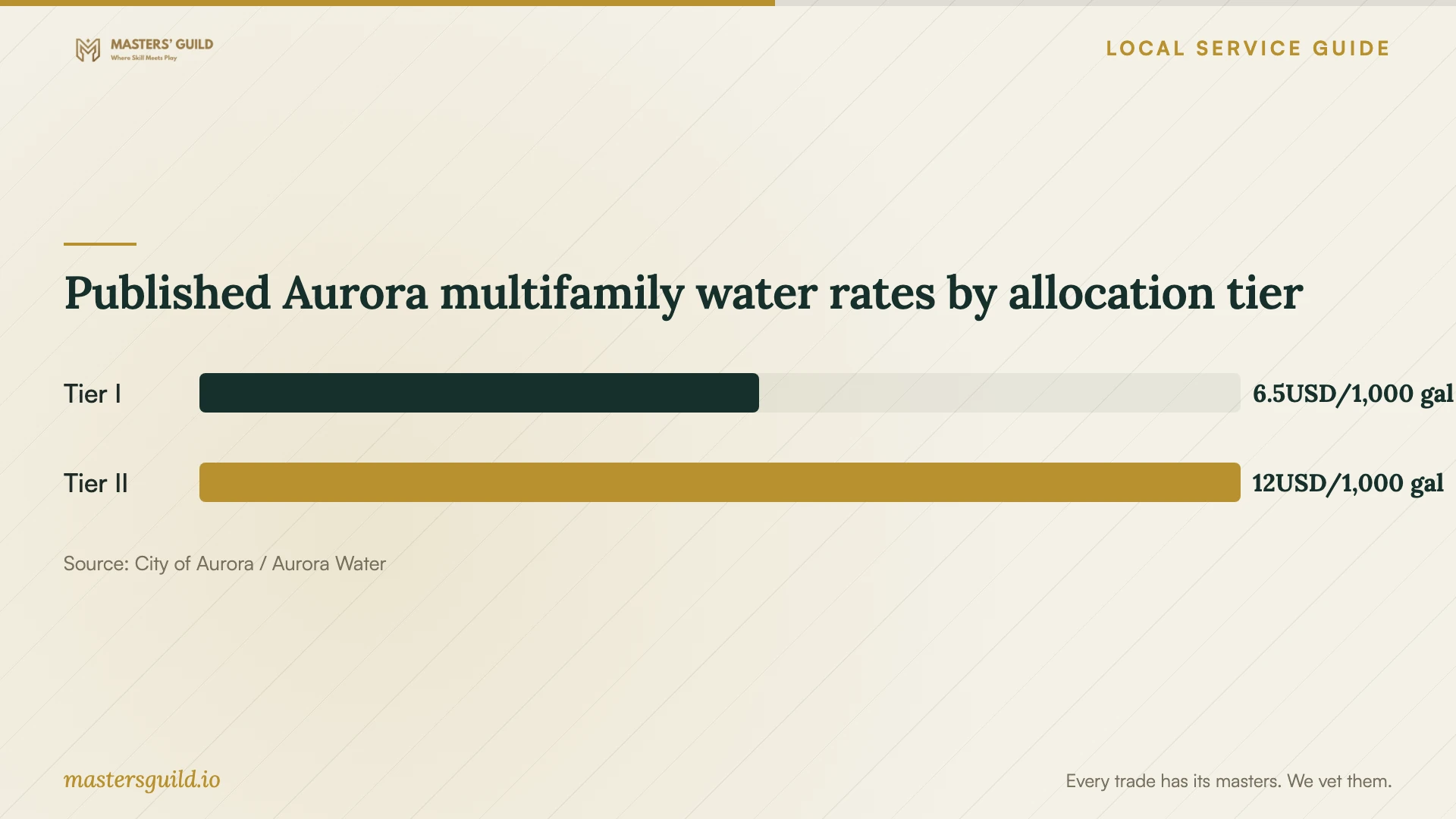
Published Aurora multifamily water rates by allocation tier
Local details that affect your job
Hard-surface spraying needs a scope-specific answer
Aurora Water includes spraying onto hard surfaces in its prohibited water-waste guidance. Before booking, describe your intended driveway, patio, or siding cleaning to the utility, including water use and containment. The published page does not resolve permission for that work; seasonal irrigation dates cannot answer the question. [1]
Street drainage changes the site assessment
Aurora's storm drains discharge to streams or rivers. For a driveway that slopes toward the street, include drain locations and the contractor's collection approach in the assessment. For hazardous-material handling questions, the city lists 303.739.6772. [2]
Shared water accounts need account-holder approval
Aurora applies annual allocations to commercial, irrigation, and multifamily water accounts serving two or more dwelling units. Single-family residential homes do not have allocations. Before using an HOA or shared connection, obtain the account holder's permission and check the account category and remaining allocation. The utility charges Tier II for usage above the annual allocation for the remainder of the year. [4]
Resolve these conditions before approving work
| Your situation | Decision to resolve | Next step |
|---|---|---|
| Driveway or patio washing | How does the hard-surface spraying provision apply? | Confirm your specific cleaning scope with Aurora Water before booking. |
| Driveway slopes toward a street drain | How will the crew contain and collect wash water? | Review the site plan with the contractor; city storm drains discharge to streams or rivers. |
| Crew will use your meter | Which current utility charges apply? | Confirm billing terms. The April 2026 announcement described a surcharge above 110% of the customer's winter quarter average. |
| HOA or shared meter | Who authorizes use, and does the account have an allocation? | Check the account category. Aurora Water multifamily accounts serving two or more dwelling units have annual allocations. |
| Damaged or unfamiliar surface | Which treatment will you authorize? | Arrange inspection and agree on a test area and expected result. |
Your hiring checklist
- Resolve your specific cleaning scope with Aurora Water before booking.
- Give bidders matching photos, surface lists, and exclusions.
- Keep the accepted methods, products, test area, and expected results in writing.
- Review insurance and document existing damage.
- Approve the water connection, consumption estimate, and responsibility for utility charges.
- Record containment, collection, and disposal arrangements.
- Set access, postponement, and completion walkthrough terms.
Frequently Asked Questions
How should I set a pressure-washing budget?
Use property-specific written quotes. Give bidders the same scope and compare the total alongside treatment, water handling, and cleanup responsibilities. Resolve exclusions and extra-charge triggers before accepting the price.
Can I use Aurora's watering days to schedule cleaning?
Aurora's watering page describes irrigation schedules and also prohibits water waste involving hard-surface spraying, runoff, and pooling. It does not establish a pressure-washing schedule or exemption. Confirm your proposed work with Aurora Water before booking. [1]
Does a single-family home have an annual water allocation?
Aurora Water says single-family residential homes do not have allocations. Its April 2026 drought announcement separately described a residential surcharge tied to the customer's winter quarter average. Check current account billing terms before supplying water for cleaning. [3] [4]
Sources and scope
This guide combines the sources below with practical planning guidance. Figures apply to the stated geography and period; request a written quote for your property.