
Local service guide
Arrange lawn mowing in Aurora, CO
For lawn mowing in Aurora, choose a provider who agrees to a cutting height, adjusts visits to growth, and explains skipped-visit billing. CSU Extension recommends a 2.5 to 3 inch height and removing no more than one-third per cut. Aurora Water advises against mowing dormant grass. Compare written quotes for the same scope of work. [1] [3]
Compare quotes with a written scope
Send each provider the same photos and description of your front and back lawns. Include current grass height, slopes, gate width, narrow passages, and obstacles. Mark areas you want left untouched. Have the provider confirm equipment access before you accept the quote.
Compare written quotes for the same scope of work. List mowing, trimming around fences and beds, pavement edging, clipping handling, and cleanup. Request a first-visit price and a recurring-visit price. Keep overgrowth recovery, leaf removal, hauling, treatments, and irrigation work as separate items so you can decide which work to authorize.
For a seasonal agreement, confirm whether you pay per completed cut or through fixed installments. Write down weather rescheduling, cancellation terms, dormancy pauses, and return-visit charges. Request proof of liability insurance and agree on a contact for damage to sprinkler heads, fences, or gates.
Set the cutting height before choosing visit frequency
Use CSU Extension's recommended 2.5 to 3 inch height and one-third removal limit as the starting point for the mowing agreement. CSU advises keeping a consistent height throughout the year and says homeowners do not need a shorter cut in late summer or fall. [3]
Choose visits that fit the lawn's growth. For bluegrass and fescue, CSU says active spring growth may require cuts every three to four days. During slower growth caused by heat, drought, or cold, it gives an interval of seven to ten days. Before choosing biweekly service, have the provider assess whether the lawn can stay within the one-third limit. [3]
Plan staged mowing for overgrowth. After a weather delay or missed cut, CSU recommends raising the mower height, then mowing again a few days later at the normal height. Confirm the return-visit price before work begins and identify who will approve schedule changes. [3]
Specify clipping handling and pavement cleanup
Request that the crew return clippings to the lawn while following the one-third rule. CSU says clippings return nutrients to the soil and do not contribute to thatch buildup. If you prefer bagging, include collection, hauling, and disposal in the written quote. [3]
Require cleanup that keeps clippings out of streets and gutters. CSU advises crews to direct side discharge away from hard surfaces and warns that debris can wash into storm drains. Have the crew clear pavement without blowing clippings into the roadway. [3]
Agree on dormancy pauses and autumn tasks
Pause mowing when the lawn goes dormant. Aurora Water identifies July and August as typical opportunities for summer dormancy and says most lawns can remain dormant for up to four weeks, depending on turf health. It advises homeowners to reduce foot traffic and avoid mowing, fertilizing, and aerating during dormancy. [1]
Decide who will assess dormancy, notify you before a skipped visit, and approve the restart. Record how a pause affects per-visit charges or seasonal installments. For a brown patch, request an assessment before authorizing mowing or a treatment.
For autumn work, arrange irrigation shutdown as a separate task. Aurora Water advises residents to blow out their irrigation systems or schedule an irrigation specialist or landscaper. Confirm who will perform the work and what the charge covers. [2]
Base the final mowing visit on growth and the one-third rule. CSU recommends maintaining the mowing height through fall. Keep irrigation shutdown and the final cut as separate decisions when discussing the remaining visits. [3]
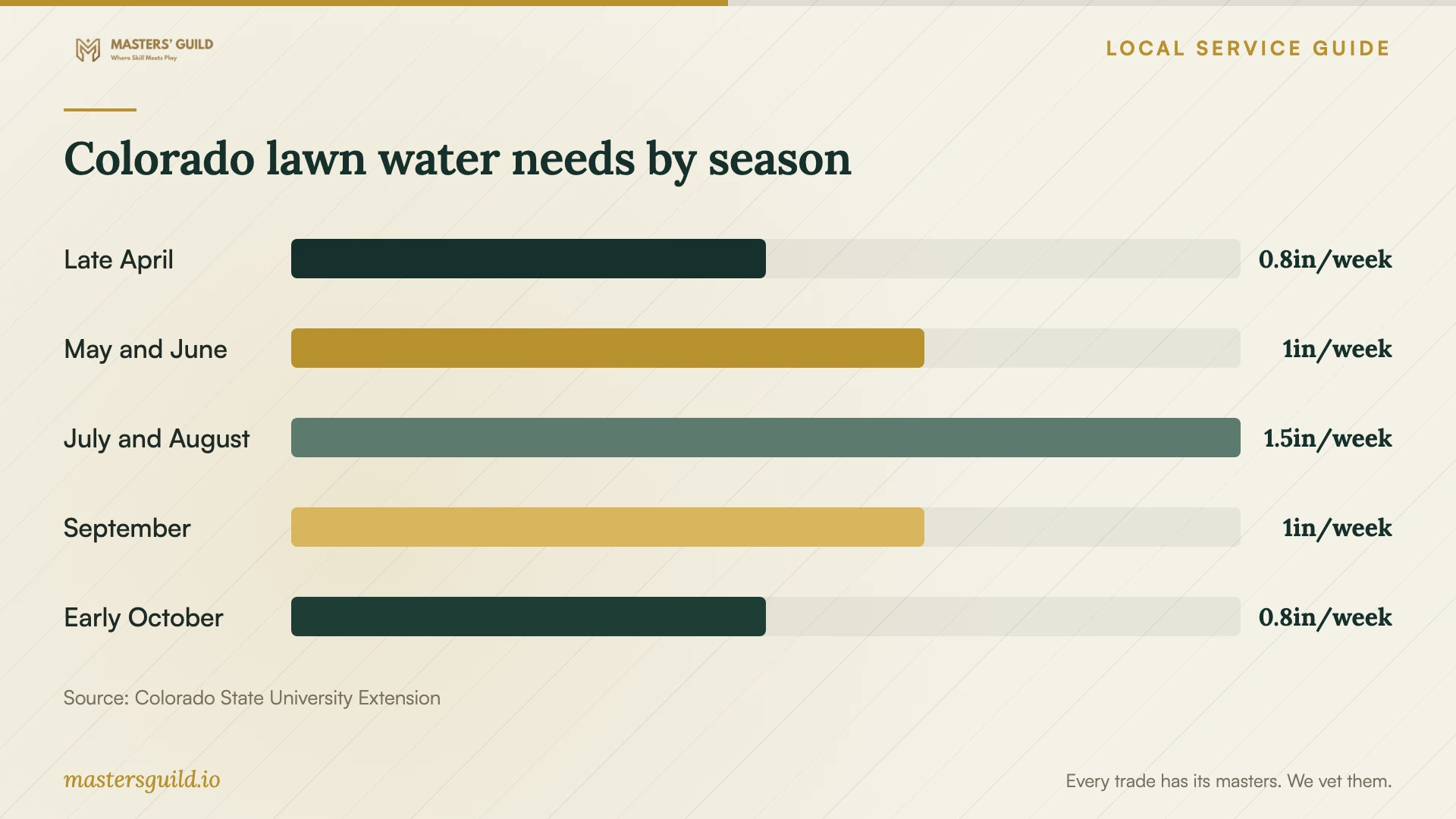
Colorado lawn water needs by season
Local details that affect your job
Confirm the irrigation deadline for your property
As of October 12, 2026, Aurora Water tells customers whose lawns use a residential meter to stop irrigating by October 15. The city prohibits spray irrigation in residential yards and other high-use areas from October 15 through April 30. Noncommunal multifamily and HOA areas have an October 1 deadline; communal-use spaces have an October 15 deadline. Before accepting bundled mowing and watering work, confirm the meter and use category. For a shared landscape, check the category with Aurora Water rather than assuming the residential deadline applies. [2]
Check lawn and irrigation add-ons before authorization
Aurora requires residential and commercial customers to obtain a permit when installing or enlarging a lawn with sod or seed, or installing, renovating, or enlarging an automated irrigation system. The city's watering restrictions also prohibit installing new cool-weather turf, including Kentucky bluegrass and fescue. If a provider proposes new turf or lawn expansion, request the grass species and project boundaries, then confirm the scope with Aurora Water before authorizing work. Do not treat the permit requirement as permission to install prohibited turf. [2] [4]
Choose the agreement for your lawn's condition
| Lawn or proposed work | Service to discuss | Agreement detail |
|---|---|---|
| Bluegrass or fescue in active spring growth | CSU says mowing every three to four days may be needed to follow the one-third rule | Who checks growth and approves extra visits |
| Bluegrass or fescue growing more slowly | CSU gives seven to ten days during slower growth caused by heat, drought, or cold | How reduced frequency changes billing |
| Dormant grass | Pause mowing in line with Aurora Water's advice | Who confirms the pause and restart |
| Overgrown grass after a delay | Raise the initial cutting height and return a few days later at normal height | Price and authorization for the return |
| Lawn enlargement or automated irrigation renovation | Review Aurora permit requirements and the prohibition on new cool-weather turf | Who confirms the proposed scope before work |
Your hiring checklist
- Send matching photos, lawn boundaries, current grass height, and equipment-access details to each provider.
- List mowing, trimming, edging, clipping handling, and pavement cleanup in the quote.
- Agree on cutting height, growth checks, and a staged approach to overgrowth.
- Confirm first-visit and recurring prices, plus approval for separately priced extras.
- Record weather rescheduling, dormancy pauses, skipped-visit billing, and cancellation terms.
- Identify sprinkler heads, secure pets, and agree on gate security and damage reporting.
- Confirm irrigation shutdown arrangements and check proposed lawn or sprinkler alterations with Aurora Water.
Frequently Asked Questions
Should I choose weekly or biweekly mowing?
Choose an adjustable schedule that keeps each cut within the one-third removal limit. CSU says bluegrass and fescue may need cuts every three to four days during active spring growth and seven to ten days during slower growth. Have the provider assess growth before you commit to biweekly visits. [3]
Should the crew mow brown grass?
Have the provider assess dormancy before mowing. Aurora Water advises against mowing dormant grass. It suggests a gentle tug test: grass that resists pulling out is likely dormant. Confirm pause and billing terms while you assess the lawn. [1]
Should I request a shorter final fall cut?
CSU recommends a consistent mowing height throughout the year and says homeowners do not need to cut turf shorter in late summer or fall. Maintain the agreed height and decide whether to book another visit from the lawn's growth. [3]
Can a mowing provider add new sod?
Confirm the proposed species and project scope with Aurora Water before authorizing installation. Aurora requires a permit for lawn installation or enlargement, and its watering restrictions prohibit new cool-weather turf such as Kentucky bluegrass and fescue. [2] [4]
Sources and scope
This guide combines the sources below with practical planning guidance. Figures apply to the stated geography and period; request a written quote for your property.