
Local service guide
Mold removal in Augusta, GA: Hiring and repair planning
Arrange Mold removal in Augusta by asking an experienced contractor to assess the affected materials and moisture source, then provide a written cleanup and repair scope. Check references and ask which EPA or professional remediation guidance the crew follows. Before authorizing demolition or rebuilding, confirm local permit requirements and who will obtain approvals. If you suspect mold contamination in the HVAC system, EPA advises keeping it off because operation could spread mold through the building. [1] [2] [4]
Decide whether you need a cleanup contractor
Start with the affected area, water history and materials. EPA says you can handle a moldy area smaller than about 10 square feet in most cases. For extensive water damage or growth exceeding that area, EPA directs readers to its broader remediation guidance. Treat that size as a starting point for deciding who should clean up, rather than a guarantee that a small patch needs no investigation. [4]
Hire a professional experienced with contaminated-water damage if sewage or other contaminated water caused the problem. If you have health concerns, consult a health professional before cleanup. Tell prospective contractors about suspected HVAC involvement before the visit, and follow EPA advice to keep a potentially contaminated system off. [4]
Prepare a short history for the assessment: where you first noticed growth, whether it returns after cleaning, and whether it followed a leak or water entry. Photograph accessible damage and identify rooms you want the contractor to inspect. Avoid opening walls just to improve the photos.
Compare written scopes before comparing totals
Ask each bidder to describe the rooms and materials included, proposed cleaning methods, disposal, protection of adjacent areas and any exclusions. Request separate amounts for assessment, cleanup, moisture repairs and rebuilding. Ask how the contractor will price additional damage discovered after opening a wall, and require your approval before that extra work proceeds.
EPA recommends checking contractor references and experience with mold cleanup. Ask the contractor to identify the EPA, IICRC or other professional guidance they intend to follow. Have them explain how that approach applies to your affected materials rather than accepting a general promise to treat the house. [4]
Ask which materials the crew expects to clean and which they expect to remove. EPA notes that moldy porous materials, including carpet and ceiling tiles, may need disposal because complete removal of mold can be difficult or impossible. EPA also advises cleaning and drying moldy surfaces before painting or caulking. [4]
Plan moisture repairs and reconstruction together
Include the water problem in the work plan. EPA advises fixing plumbing leaks and other water problems and drying items completely. Georgia DPH identifies inadequate ventilation, leaking plumbing, improper repairs and poor construction as potential causes of residential mold problems. Ask the assessor to explain the suspected cause and distinguish confirmed findings from areas that need further investigation. [3] [4]
Assign responsibility for each phase before scheduling: stopping the water, removing damaged material, cleaning, drying and restoring finishes. Ask who will coordinate any plumber, HVAC contractor or builder. For permitted electrical, plumbing or mechanical work, Augusta says contractors need the appropriate state license and a current local business license. [2]
Agree on completion records before work starts. Request photographs, a description of materials removed, the moisture-repair record and the contractor's criteria for proceeding with reconstruction. Ask whether any proposed testing will change a cleanup or occupancy decision, who will interpret it, and whether its cost appears in the quote.
Understand the limits of public mold assistance
Georgia DPH provides educational information about indoor air quality but does not offer specific services for indoor mold growth. Its Environmental Health Section regulates tourist accommodations, rather than providing a residential mold inspection service. Homeowners should arrange their own assessment and cleanup instead of planning around a DPH inspection. [3]
DPH states that mold inspection, testing and remediation practices have no enforceable state or federal standards. Ask a contractor making a regulatory claim to name the rule and explain its application. Keep that discussion separate from building and trade permits, which Augusta requires for qualifying repairs. [1] [2] [3]
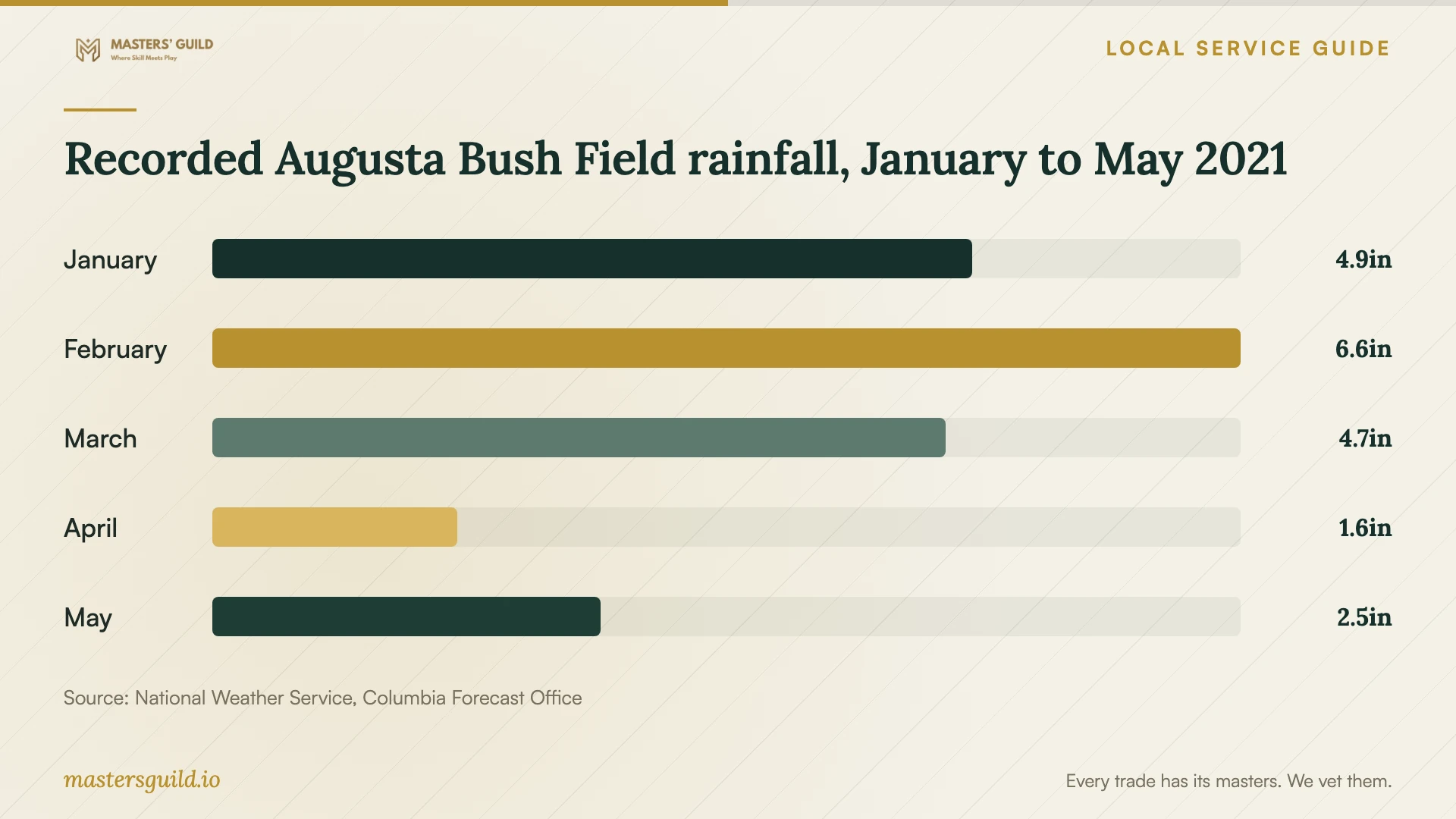
Recorded Augusta Bush Field rainfall, January to May 2021
Local details that affect your job
Confirm permits before opening walls or rebuilding
Augusta's permit page lists renovations and projects with materials costing over $500 as permit triggers, along with work requiring code inspections. Its FAQ also lists water-damaged properties and limits the ordinary-repair exception. Do not assume a repair needs no permit because its materials cost less than $500. Describe the proposed demolition, reconstruction and moisture repairs to License and Inspection at (706) 312-5050. The city says a hired contractor is responsible for obtaining the permit and cautions against contractors asking the customer to obtain it. [1] [2]
Check historic approval for exterior moisture repairs
Augusta identifies Summerville, Downtown and Old Towne as historic districts. For a property within a historic district, the city requires a Certificate of Appropriateness for exterior building work. Include that approval in planning for exterior leak repairs. The FAQ exempts plumbing and electrical work from a COA; HVAC work requires one for a new unit or relocation, but not replacement in the same space. Confirm the proposed scope with Planning and Zoning at (706) 821-1796 before arranging exterior work. [2]
Choose the next step for your situation
| Situation | Next step | Question to resolve |
|---|---|---|
| Small area under about 10 square feet | Consider EPA's homeowner cleanup guidance, subject to its cautions. | Does the water history or a health concern change who should clean it? |
| Sewage or other contaminated water | Hire a professional experienced with contaminated-water damage. | Does the proposed scope address both cleanup and building repairs? |
| Suspected HVAC contamination | Keep the system off and consult EPA's HVAC guidance before further action. | Who will assess the system and coordinate any mechanical repairs? |
| Wall removal or reconstruction | Confirm permit requirements with Augusta before construction. | Which contractor will obtain permits and arrange inspections? |
| Exterior repair in a historic district | Confirm Certificate of Appropriateness requirements. | Does the repair or HVAC change require historic approval? |
Your hiring checklist
- Photograph accessible growth and record the leak or water-entry history.
- Ask bidders to identify affected materials and areas they have not inspected.
- Check references for comparable mold cleanup work.
- Separate cleanup, moisture repairs, disposal and rebuilding in the estimate.
- Name the person responsible for permits and any historic approval.
- Agree on access, room use and equipment arrangements during the work.
- Require written approval for additional work and request completion records.
Frequently Asked Questions
Can I clean mold from a bathroom surface myself?
EPA says homeowners can handle areas smaller than about 10 square feet in most cases. Its hard-surface guidance calls for detergent and water followed by complete drying. Consider its cautions about contaminated water, HVAC contamination and health concerns before starting. [4]
How should I compare removal costs?
Request quotes for the same affected areas and materials. Ask each bidder to separate cleanup, disposal, moisture repairs and restoration, then identify exclusions and charges for additional discoveries. Use those written scopes to compare totals.
Does every mold cleanup need an Augusta building permit?
The cited city guidance does not establish a blanket permit rule for surface mold cleaning. It does identify renovations, water-damaged properties and qualifying repairs as permit matters. Confirm the actual demolition, rebuilding and trade work with License and Inspection before construction begins. [1] [2]
Will Georgia DPH inspect my home for mold?
DPH says its indoor air quality program provides educational information and does not offer specific services related to indoor mold growth. Its Environmental Health Section regulates tourist accommodations. Arrange a residential assessment through an appropriate service provider. [3]
Sources and scope
This guide combines the sources below with practical planning guidance. Figures apply to the stated geography and period; request a written quote for your property.