
Local service guide
Lawn mowing in Augusta, GA: Plan the Right Service
Arrange Lawn mowing in Augusta by asking for a written quote that names your grass type, cutting height, visit schedule, edging and clipping disposal. Choose the schedule around grass growth: UGA publishes different mowing intervals for different turf species. If you want bagging, specify compliant curbside preparation or hauling, because Augusta requires containment for loose clippings. Separate an overgrown first cut from the recurring maintenance price. [1] [3]
Define the visit before comparing prices
Give each provider the same description: the areas to mow, current grass height, gates, slopes, trees, beds and access restrictions. Send photos of the front and back lawn, narrow passages and any overgrowth. Ask the provider to confirm access before you accept a quote, including whether their equipment fits through your gate.
Request an itemized scope covering mowing, trimming around obstacles, edging and cleanup of paved areas. Name any areas you want the crew to leave alone. Keep leaf removal, brush cutting, weed treatment and irrigation work as separate options unless you intend to buy them. Ask whether the first visit carries a separate charge and who supplies bags or containers.
The supplied sources do not establish a typical private mowing price for Augusta. Compare written offers for your property rather than treating county cleanup charges as contractor estimates. Ask how the provider charges for extra visits, missed access, bagging and work after a long gap between cuts. [2]
Match the schedule to your grass
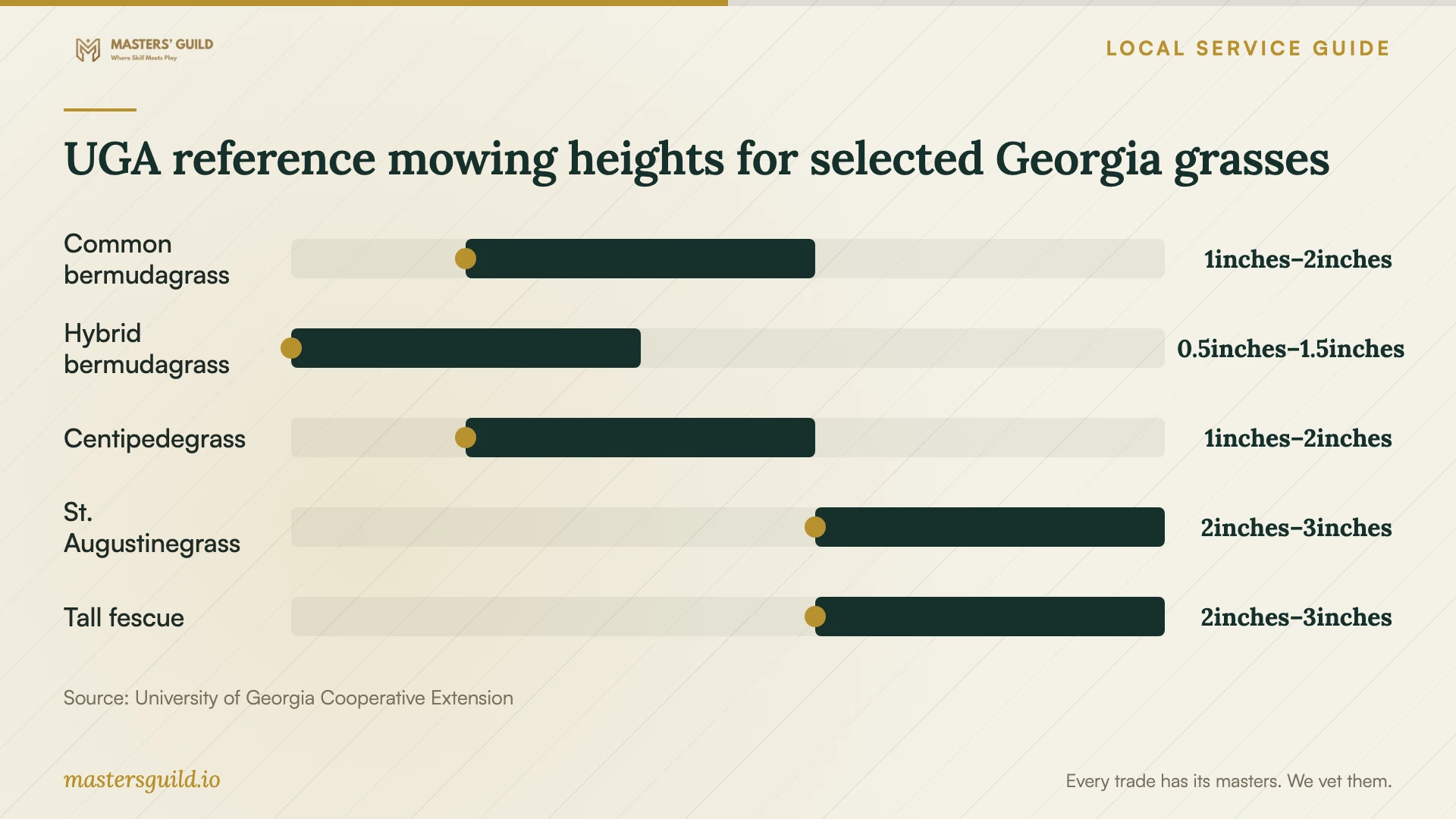
Ask the provider to identify the turf and explain their proposed height. UGA’s Georgia mowing table lists common bermudagrass at 1 to 2 inches with intervals of 5 to 7 days, and hybrid bermudagrass at 0.5 to 1.5 inches with intervals of 3 to 4 days. For centipedegrass, it lists 1 to 2 inches and 5 to 10 days. These are species-specific reference intervals, not a fixed calendar for your property. [3]
Avoid committing to a two-week interval without discussing growth and the intended cut. UGA recommends frequent mowing during vigorous growth to prevent scalping, which thins turf and can allow weeds to establish. Ask the provider how they will adjust visits when growth changes and whether you must approve extra cuts. [3]
Agree on a plan for an overgrown lawn before the crew starts. Ask whether the provider proposes staged cuts, what height they will leave after the first visit and when they will return. Request their explanation if they propose cutting below the species guidance. Put any additional work and charges in writing.
Choose a clipping disposal plan
UGA recommends returning clippings to recycle nutrients into the soil. Its annual-bluegrass guidance identifies an exception: collecting clippings when that weed produces seedheads can reduce the spread of viable seed. Ask the provider to explain why they recommend bagging for your lawn rather than adding it to every visit. [3]
For curbside disposal, Augusta requires crews or residents to contain loose grass clippings in paper Kraft bags or 32-gallon containers. Containers must open at the top and carry a YARD WASTE label. Ask the provider to include that preparation in the quote, or choose hauling and confirm where the crew will take the material. [1]
Augusta provides weekly yard-waste collection to residential customers and includes compliant collection in annual solid-waste fees. The city charges extra for out-of-compliance removal. Before paying for hauling, decide whether compliant curbside collection meets your needs and agree who will move the prepared material to the curb. [1]
Set access and rescheduling terms
Choose a service window and agree how the crew will notify you of a change. Give gate instructions, secure pets and remove toys or movable obstacles before the visit. Mark sprinkler heads and explain any areas where you want the provider to avoid equipment. Ask who handles accidental damage and request proof of insurance.
Coordinate sprinklers with the visit. Augusta Utilities’ conservation page allows general landscape irrigation between 4 PM and 10 AM and prohibits it between 10 AM and 4 PM. It lists exceptions for drip irrigation, soaker hoses, hand watering and personal food gardens. Check the utility’s current guidance before changing your watering plan. [4]
Agree how you and the provider will handle a rain delay or a lawn that does not need cutting. Specify whether a skipped visit changes the bill, whether the crew returns on another day and how either party can cancel the arrangement. After the first visit, review the cutting height, edges and cleanup against your written scope before extending the schedule.
UGA reference mowing heights for selected Georgia grasses
Local details that affect your job
Prepare yard waste for the actual collection day
Augusta requires yard waste at the curb by 6 AM on your service day. The city caps the total at 10 cubic yards per week and requires a single row or pile no longer than 10 feet. Keep it clear of sidewalks and streets. For a mowing and cleanup job, ask the provider to confirm volume and placement before relying on city pickup. [1]
Respond to a vacant-lot notice with a cleanup scope
Augusta’s vacant-lot page states that weeds, undergrowth or other plant life cannot exceed 12 inches. It says the city may correct violations at the owner’s expense if the owner does not correct them within 10 days of receiving the annual notice. If you own a vacant lot, give the provider the notice and request vegetation cutting plus trash and debris removal. Do not assume mowing alone addresses all listed violations. [2]
Choose the scope that fits the property
| Your situation | Request | Point to confirm |
|---|---|---|
| Maintained lawn | Recurring mowing, trimming and cleanup | Grass-specific cutting height and visit interval |
| Overgrown lawn | Separate first-cut assessment and maintenance quote | Proposed cutting height and any staged return visits |
| Clippings need removal | Bagging with curbside preparation or hauling | Paper Kraft bags or 32-gallon containers for Augusta collection |
| Vacant lot with a notice | Vegetation cutting and debris removal | Listed violations and the city’s 10-day correction period after the annual notice |
Your hiring checklist
- Send photos and identify the boundaries of the areas to mow.
- Ask the provider to identify the grass and propose a cutting height.
- Get separate first-visit and recurring-service prices.
- Confirm trimming, edging and paved-area cleanup in writing.
- Choose returned clippings, compliant curbside preparation or hauling.
- Confirm gate access, pet arrangements and sprinkler locations.
- Agree on rain delays, skipped cuts, extra visits and cancellation terms.
Frequently Asked Questions
Should I choose weekly or biweekly mowing?
Ask for a schedule based on your grass and its growth. UGA lists 5 to 7 days for common bermudagrass and 5 to 10 days for centipedegrass, with shorter intervals for hybrid bermudagrass. Discuss how the provider will adjust visits rather than choosing a two-week plan by default. [3]
Can I put bagged grass clippings out for city collection?
Augusta accepts grass clippings as yard waste. Use paper Kraft bags or 32-gallon containers, contain loose material and follow curbside placement rules. The city prohibits plastic bags and includes compliant collection in annual solid-waste fees. [1]
Does mowing remove the need for weed treatment?
Do not assume a mowing visit includes weed control. UGA notes that annual bluegrass can produce viable seed even under close mowing. Ask the provider to identify the problem and quote any treatment separately; collecting seed-bearing clippings may help reduce seed spread. [3]
Can I use the county’s cleanup fees to budget for a mowing service?
Augusta publishes equipment, labor and administrative charges for its vacant-lot cleanup program. Those charges describe county intervention and owner billing. Obtain a private provider’s written quote for your property and agreed scope. [2]
Sources and scope
This guide combines the sources below with practical planning guidance. Figures apply to the stated geography and period; request a written quote for your property.