
Local service guide
Duct cleaning in Augusta, GA: scope and hiring
Arrange Duct cleaning in Augusta, GA by having a contractor show you the condition that could justify cleaning, then compare written estimates for the same system scope. EPA identifies reasons to consider cleaning: substantial visible mold inside hard-surface ducts or on heating and cooling components; vermin infestation in ducts; or ducts clogged with excessive dust and debris, or particles actually releasing into the home from supply registers. If the estimate includes duct repairs or replacement, confirm local permit requirements before approving that work. [1] [2]
Decide whether cleaning fits the problem
Have the contractor show you the affected location before agreeing to cleaning. EPA’s criteria include substantial visible mold inside hard-surface ducts or on other heating and cooling components, vermin infestation in ducts, and ducts clogged with excessive dust and debris or particles releasing into rooms from supply registers. Request photographs and an explanation of which ducts or components need attention. [1]
Start with accessible register cleaning if your concern is a dusty return grille and an inspection reveals no substantial internal contamination. EPA recommends duct cleaning as needed rather than on a routine schedule. It also says duct cleaning has never been shown to prevent health problems. Discuss unexplained symptoms with your doctor rather than relying on a cleaner’s health promises. [1]
For suspected mold, have the contractor identify the affected material and investigate moisture. EPA cautions that appearance alone cannot confirm mold; an expert may need laboratory analysis. Discuss replacement of wet or moldy fiberglass duct material with a qualified heating and cooling contractor. Correct the underlying moisture problem before cleaning or replacing affected materials to reduce the risk of recurrence. [1]
Compare written scope before comparing totals
Get written estimates from at least three providers, as EPA recommends. Have each identify the system it will clean and list the included supply and return ducts, registers, grilles, coils, drain pans, blower and air-handler housing. Require exclusions in writing, along with an explanation of who will handle contaminated components outside the proposed scope. [1]
Give each Augusta estimator the same information: your equipment locations, system count, access limits and the problem you want investigated. Request a total that identifies access work, cleanup and any proposed additions. For dryer exhaust cleaning, request a separate scope and price so you can approve each job on its own terms.
Discuss how the crew will collect dust and protect your duct material. EPA recommends vacuum equipment that exhausts outdoors, or HEPA vacuum equipment when exhaust stays indoors. It recommends soft-bristled brushes for fiberglass duct board and fiberglass-lined metal ducts. Have the contractor explain how it will seal and reinsulate access holes it creates. [1]
Approve repairs and chemical treatments separately
Require a written change proposal for repairs discovered during cleaning. Request photographs, the affected location, the proposed repair and its price. Before the crew starts added mechanical work, contact Augusta-Richmond County License and Inspection for a permit determination, including whether the Building Official considers the work a minor repair. [2]
Before approving chemical treatment, review the product label, intended use and duct material with the contractor. EPA says no biocides are registered for fiberglass duct board or fiberglass-lined ducts. It also advises against routine coatings that encapsulate contaminants. Have the contractor explain why physical cleaning and moisture control would not address the problem. [1]
Question any claim that EPA certifies the cleaning business. EPA does not certify, endorse or approve duct-cleaning companies. Check references and experience with systems like yours. If the proposal includes mechanical repairs, also confirm the repair business’s local license with License and Inspection. [1] [3]
Prepare for the visit and inspect the result
Before booking, agree on the expected work duration and interruption of heating or cooling. Discuss whether occupants or pets should leave during any proposed treatment. Clear access to registers and equipment, arrange a place for pets and identify areas where you want the crew to document conditions before and after cleaning.
At completion, have the crew show you the cleaned components and compare them with the written scope. EPA considers visual inspection the best way to verify cleanliness. Check that the crew has reattached registers, closed access openings and demonstrated system operation in heating and cooling modes. Request correction of unfinished work before signing off. [1]
Continue filter and moisture maintenance after cleaning. EPA recommends the highest-efficiency filter your equipment manufacturer allows, regular filter changes, proper condensate drainage and prompt leak repairs. Have your heating and cooling contractor investigate standing water or wet insulation before arranging another cleaning. [1]
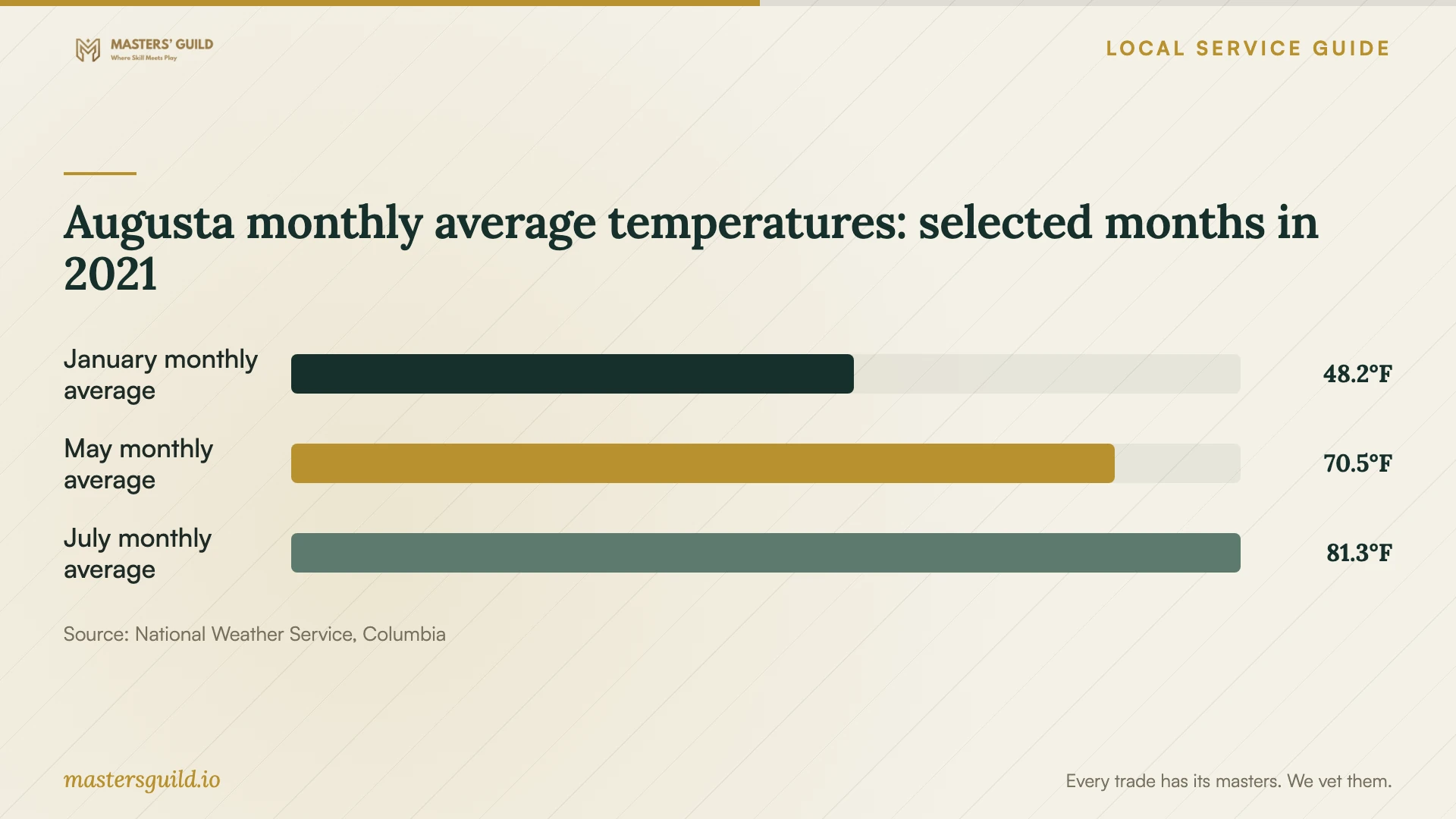
Augusta monthly average temperatures: selected months in 2021
Local details that affect your job
Confirm permits before adding mechanical work
Augusta-Richmond County requires permits for mechanical projects exceeding $500 and states that new installation and repair work require permits. The Building Official determines which minor repairs can proceed without one. Confirm cleaning-only permit requirements with License and Inspection at (706) 312-5050, Monday through Friday, 8:30 am to 5:00 pm. If the estimate adds duct repair or replacement, describe that work and establish who will obtain any required permit before work begins. [2]
Verify the repair contractor’s local business license
Augusta requires mechanical professionals to obtain their business license from the License and Inspection Department. If your cleaner proposes mechanical repairs or brings in another contractor, get the repair business’s name and license information, then confirm the credential with the department. Check this separately from the permit for the proposed work, and review cleaning experience and references alongside the credential. [3]
Choose the next step from the observed condition
| Observed condition | Next step | Question for the contractor |
|---|---|---|
| Dusty return grille without substantial internal contamination | Clean the accessible grille and review filter maintenance. | Can you show contamination beyond the register? |
| Ducts clogged with excessive dust and debris, or particles releasing from supply registers | Consider cleaning and obtain a written system scope. | Which ducts and equipment components need cleaning? |
| Substantial visible mold inside hard-surface ducts or on system components | Confirm suspected mold and correct its underlying cause before cleaning. | How will you identify the material and address moisture? |
| Wet or moldy fiberglass duct material | Discuss replacement with a qualified heating and cooling contractor. | Which material needs replacement, and what caused it to become wet? |
| Vermin infestation in ducts | Correct the underlying infestation before cleaning. | How will you establish that the cause has been corrected? |
| Proposed duct repair or replacement | Confirm permit requirements and the repair contractor’s local business license. | Who will obtain any required permit before work begins? |
Your hiring checklist
- Write down the problem you want investigated and where you noticed it.
- List equipment locations, system count and access limits for each estimator.
- Request photographs and an explanation of the condition that could justify cleaning.
- Compare written component lists, exclusions, total prices and expected heating or cooling interruption.
- Require a separate written proposal for repairs, replacement or chemical treatment.
- Confirm permit responsibility and local business-license information for proposed mechanical repairs.
- Clear agreed work areas and arrange a place for pets.
- Review cleaned components, completion photographs and system operation before signing off.
Frequently Asked Questions
How often should I have my ducts cleaned?
EPA recommends cleaning as needed rather than on a routine schedule. Have a contractor document the condition inside your ducts before agreeing to repeat service. Continue filter changes, equipment maintenance and moisture prevention between visits. [1]
Does cleaning alone require an Augusta permit?
Confirm cleaning-only requirements with License and Inspection at (706) 312-5050. Describe the exact work, including any proposed repairs or replacement. Augusta requires permits for mechanical installation and repair work, with minor-repair exceptions that the Building Official determines. [2]
How much should I budget?
Obtain comparable written Augusta quotes for the same systems and components. Have each contractor identify access work, exclusions and proposed additions. Agree on how the contractor will price discoveries that change the job before accepting the estimate.
Will cleaning reduce my energy bill?
EPA says little evidence supports efficiency gains from cleaning ducts alone. Cleaning dirty coils, fans and heat exchangers may improve efficiency. Have the contractor identify the affected component and explain the proposed work before you consider any savings claim. [1]
Sources and scope
This guide combines the sources below with practical planning guidance. Figures apply to the stated geography and period; request a written quote for your property.