
Local service guide
Yard Cleanup in Atlanta, GA: Plan the Job
For Yard Cleanup in Atlanta, hire against a written scope covering work areas, debris collection, hauling, and completion. Include collection around drainage openings because Atlanta Watershed Management tells residents to keep leaves out of streets, storm drains, and catch basins. For branches or vines affecting a Georgia Power service wire, ask the utility to assess its involvement before booking the affected work. Request separate prices for ground cleanup and tree work. [1] [2]
Write a scope a contractor can price
Describe the result you want in each area: collect lawn leaves, gather fallen twigs, remove agreed weeds from beds, or clear a named debris pile. Mark plants you want to retain. Include surface leaf collection beside visible drainage openings; Atlanta Watershed Management directs residents to keep yard debris and leaves clear of stormwater pipes and structures around their property. [2]
Send wide photos of each work area and close photos of debris piles or dense growth. Show the gate opening, steps, slopes, and route to the loading location. Ask whether the contractor can give a firm quote from those photos or needs a walkthrough. Identify pruning, tree removal, stump work, chemical treatment, and repairs as separate requested tasks.
Have each contractor price the same task list. For hourly work, ask whether the rate covers one worker or the whole crew and set a spending limit that requires your approval to exceed. Write down exclusions and the process for approving additions.
Collect leaves around drainage openings
Atlanta Watershed Management warns that leaf-blocked storm drains can cause flooding on neighborhood streets and sidewalks. The department tells residents to keep leaves out of streets, storm drains, and catch basins. Give the contractor a collection instruction rather than accepting a plan to blow yard leaves into the street. [2]
Point out visible drainage openings during the walkthrough. Ask the crew to collect nearby surface debris and include those locations in the completion inspection. Define drainage investigation as a separate task. If you see standing water or suspect an internal blockage, request an assessment before accepting surface leaf removal as the complete remedy.
Coordinate service-wire work with Georgia Power
For properties served by Georgia Power, ask the utility to assess branches affecting a service wire. Georgia Power says it trims around service lines on a limited basis after identifying a condition needing attention or receiving a customer inquiry. Its examples include limbs substantially rubbing on the wire or deflecting the wire path. [1]
Within that limited service-line policy, Georgia Power assigns substantial tree work, including tree removals and limb removals over 3 inches in diameter, to the property owner. The utility also says its contractors cut vines pulling down a wire but do not remove those vines because of worker safety precautions. Ask what work the utility will perform and what remains for your contractor. [1]
If safe tree work requires service-wire disconnection, contact Georgia Power at 1-888-660-5890 and schedule a minimum of 72 hours in advance. Confirm the utility appointment before committing to the affected tree-work date. Ask for a separate ground-cleanup appointment if you want that portion completed while you coordinate the remaining work. [1]
Agree on hauling, access, and weather changes
Ask whether the total includes collecting, bagging, loading, hauling, and disposal. If you want material retained for composting, identify the location and acceptable material. Before agreeing to curbside placement, confirm the collection arrangements for your address. Include Atlanta’s instruction to keep leaves out of streets and drainage openings in the removal plan. [2]
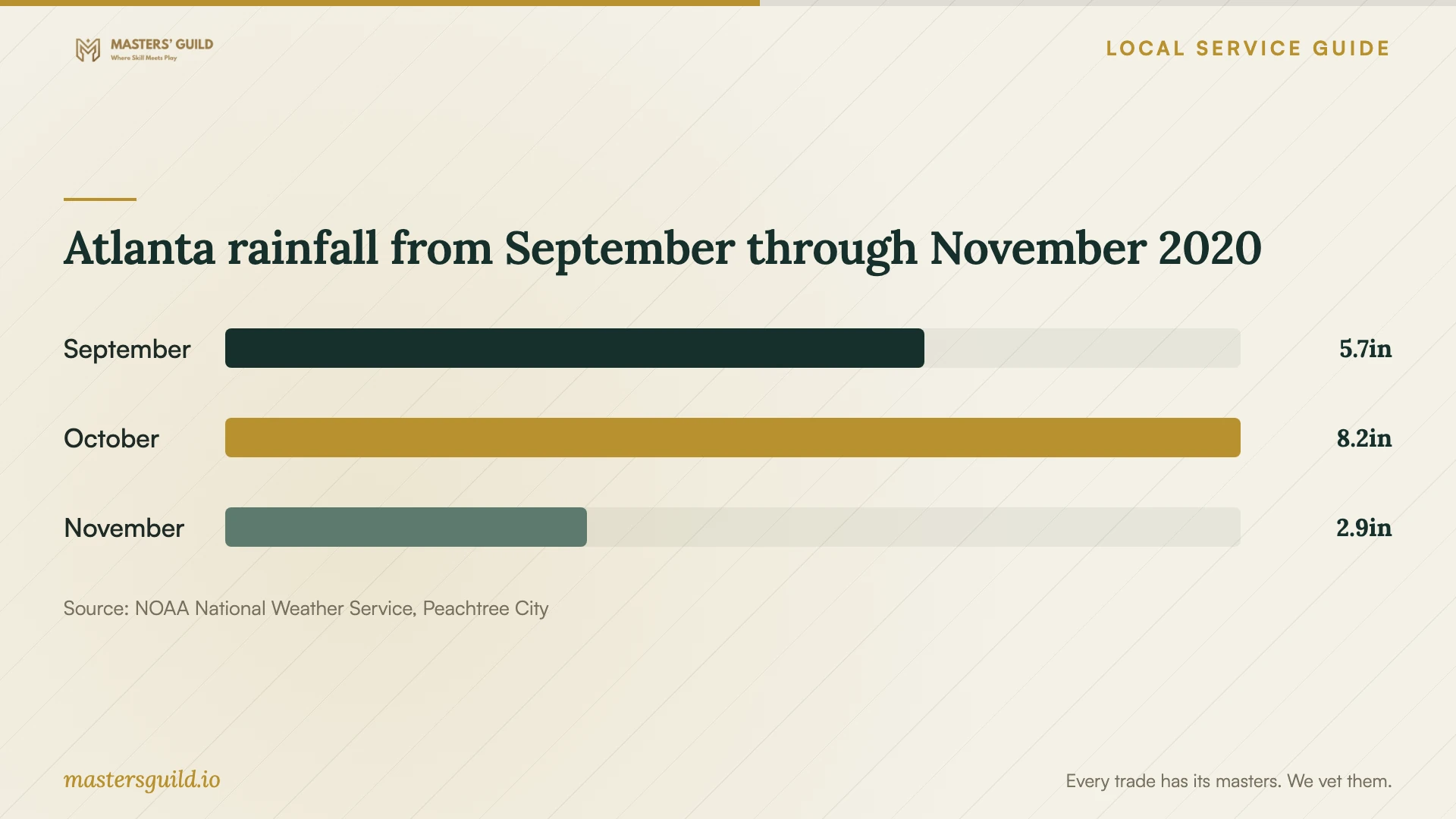
Discuss equipment access across the lawn and agree on weather rescheduling. The National Weather Service reports Atlanta rainfall totals of 5.67 inches in September 2020, 8.23 inches in October, and 2.93 inches in November. Those historical observations provide context for discussing wet-ground access; they do not predict conditions for your appointment. [3]
Choose the finish you need before agreeing to one visit or repeat visits. For a deadline, specify the completion date and ask how the contractor will handle a weather delay. If you expect additional leaf fall after the first visit, request a follow-up price and clarify whether the original agreement includes return trips.
Inspect the agreed work before payment
Walk the named work areas with the contractor. Check the listed debris piles, retained plants, paved surfaces, and agreed loading area. At drainage edges, check that the crew collected surface leaves in line with Atlanta Watershed Management’s guidance to keep leaves and yard debris clear of stormwater structures. [2]
Review any work the crew deferred and agree on the next step before closing the job. If you cannot attend, request completion photos from the viewpoints used for the quote. Keep the written scope beside the photos so you can compare the result with the work you authorized.
Atlanta rainfall from September through November 2020
Local details that affect your job
Atlanta’s leaf guidance changes the removal plan
Atlanta Watershed Management tells residents to keep leaves out of streets, storm drains, and catch basins. Identify nearby drainage openings in your job description and require collection of surface leaves. If a contractor proposes blowing leaves into the street, ask for a collection and removal plan that follows the city’s guidance. [2]
Georgia Power coordination changes the work sequence
Georgia Power’s limited service-line trimming policy separates utility work from substantial tree work assigned to the owner. Ask the utility to assess its involvement before booking branches affecting its service wire. If safe tree work requires service-wire disconnection, schedule at least 72 hours in advance and confirm the utility appointment before the affected contractor visit. [1]
Match the work to the next step
| Situation | Next step | Confirm before booking |
|---|---|---|
| Loose leaves and ground debris | Request a defined ground-cleanup quote | Work areas, retained plants, and hauling arrangements |
| Leaves beside a storm drain or catch basin | Specify surface collection following Atlanta’s leaf guidance | The crew will keep leaves out of streets and drainage openings |
| Limbs substantially rubbing on a Georgia Power service wire or deflecting its path | Ask Georgia Power to assess its limited trimming involvement | Utility scope and remaining contractor work |
| Safe tree work requiring service-wire disconnection | Schedule Georgia Power disconnection at least 72 hours in advance | Utility appointment before affected tree work |
| Tree removal or limb removal over 3 inches in diameter within the service-line policy | Arrange the substantial work Georgia Power assigns to the owner | Separate tree-work scope and utility coordination |
Your hiring checklist
- Photograph work areas, debris piles, gate openings, and the loading route.
- Mark plants to retain and list the result you want in each area.
- Specify surface leaf collection beside visible drainage openings.
- Flag service-wire concerns for utility assessment before assigning affected work.
- Confirm bagging, loading, hauling, disposal, and any retained material.
- Get the total price, exclusions, and approval process for additions in writing.
- Agree on weather rescheduling and a completion walkthrough or photo review.
Frequently Asked Questions
Can a cleanup crew blow leaves into the street?
Atlanta Watershed Management advises against blowing or sweeping leaves into streets, storm drains, or catch basins. Specify collection and agree on where the crew will take the material. [2]
Will Georgia Power handle branches near my service wire?
Ask Georgia Power to assess the branches. Its limited service-line trimming examples include limbs substantially rubbing on the wire or deflecting its path. Within that policy, it assigns substantial tree work, including tree removal and limb removal over 3 inches in diameter, to the owner. [1]
How can I compare cleanup quotes?
Give each contractor the same photos and task list. Ask for a total covering the named work areas and state whether bagging, loading, hauling, and disposal are included. For hourly work, clarify crew size and require approval before exceeding your spending limit.
Does the rainfall chart identify the best month to book?
No. The chart contains three monthly Atlanta observations from 2020. Use it to prompt a conversation about weather delays and access across wet ground. Choose your appointment around the work you need completed and discuss rescheduling with the contractor. [3]
Sources and scope
This guide combines the sources below with practical planning guidance. Figures apply to the stated geography and period; request a written quote for your property.