
Local service guide
Tax Preparation in Atlanta, GA: Accounting and Hiring
For Tax Preparation in Atlanta, choose a provider whose proposed engagement covers your business records, personal filing needs, and any income connected to other states. Compare written scopes that separate bookkeeping cleanup, ongoing accounting, and return preparation. Give candidates a short description of your business and unresolved records so they can explain the work before quoting.
Choose the accounting work you need
Start with the outcome you want: completed returns, reconciled accounts, or ongoing bookkeeping with regular reports. For a combined engagement, identify each deliverable and the person responsible. Include your personal return in the written scope if you want the accountant to handle it alongside business work.
Describe your business structure, ownership, income sources, and the condition of your records. Have the provider name the returns they propose to prepare rather than agreeing to a vague package called business taxes. Tell them about missing statements, unexplained transactions, and prior notices before accepting the quote.
For bookkeeping cleanup, define the accounts and months covered. Agree on how you will answer transaction questions and approve work beyond that period. For ongoing accounting, review a sample report and set a delivery schedule that gives you time to discuss the figures.
Evaluate the person handling your records
Use the Georgia State Board of Accountancy's verification instructions if a candidate offers services as a Georgia CPA. The Board directs consumers to CPAverify for individual and firm license status and says it updates those statuses daily. Georgia uses Active and Lapsed statuses. [2]
Beyond the credential check, discuss how the provider would handle your specific records. Have them explain who prepares the work, who reviews it, and who answers questions after filing. Resolve a Lapsed record before engaging the person or firm as a licensed CPA. [2]
Include notice assistance in the discussion. Establish whether the engagement covers explaining a notice, preparing a response, or only delivering the original return. Record the provider's proposed scope and fee so you know whom to contact if a letter arrives.
Account for residency and other-state income
Georgia taxes full-year residents on income from all sources except tax-exempt income, and its Department of Revenue allows a credit for taxes paid to another state. For work or business activity across state lines, have the preparer assess the relevant returns and credit. [1]
Nonresidents who work in Georgia or receive Georgia-source income and must file a federal return generally must file Georgia Form 500. The state's examples include rents and income from flow-through entities. Its guidance also includes an exception for certain employee compensation; have the preparer assess whether it applies to your situation. [1]
Prepare a timeline of where you lived and worked, with move dates and income records connected to each state. Identify any rental property or business interest outside your home state. Let the provider review those facts before settling the number of returns and the price.
Set the price, review process, and handoff
Compare quotes against the same list of work. Separate cleanup from recurring accounting, and distinguish personal returns from entity returns. Specify how the provider will obtain your approval for additional states, missing-record work, amendments, or notice assistance.
Georgia supports electronic filing for full-year, part-year, nonresident, and individual amended returns. The state imposes no electronic filing fee, but software providers and practitioners may charge. Have the provider explain any filing charge and whether their price includes the Georgia return. [3]
Agree on a document deadline, a review appointment, and a completion target. Before authorizing filing, review the proposed returns with the preparer and resolve unanswered questions. At handoff, obtain your return copies and the agreed filing confirmation, and keep a record of payment instructions.
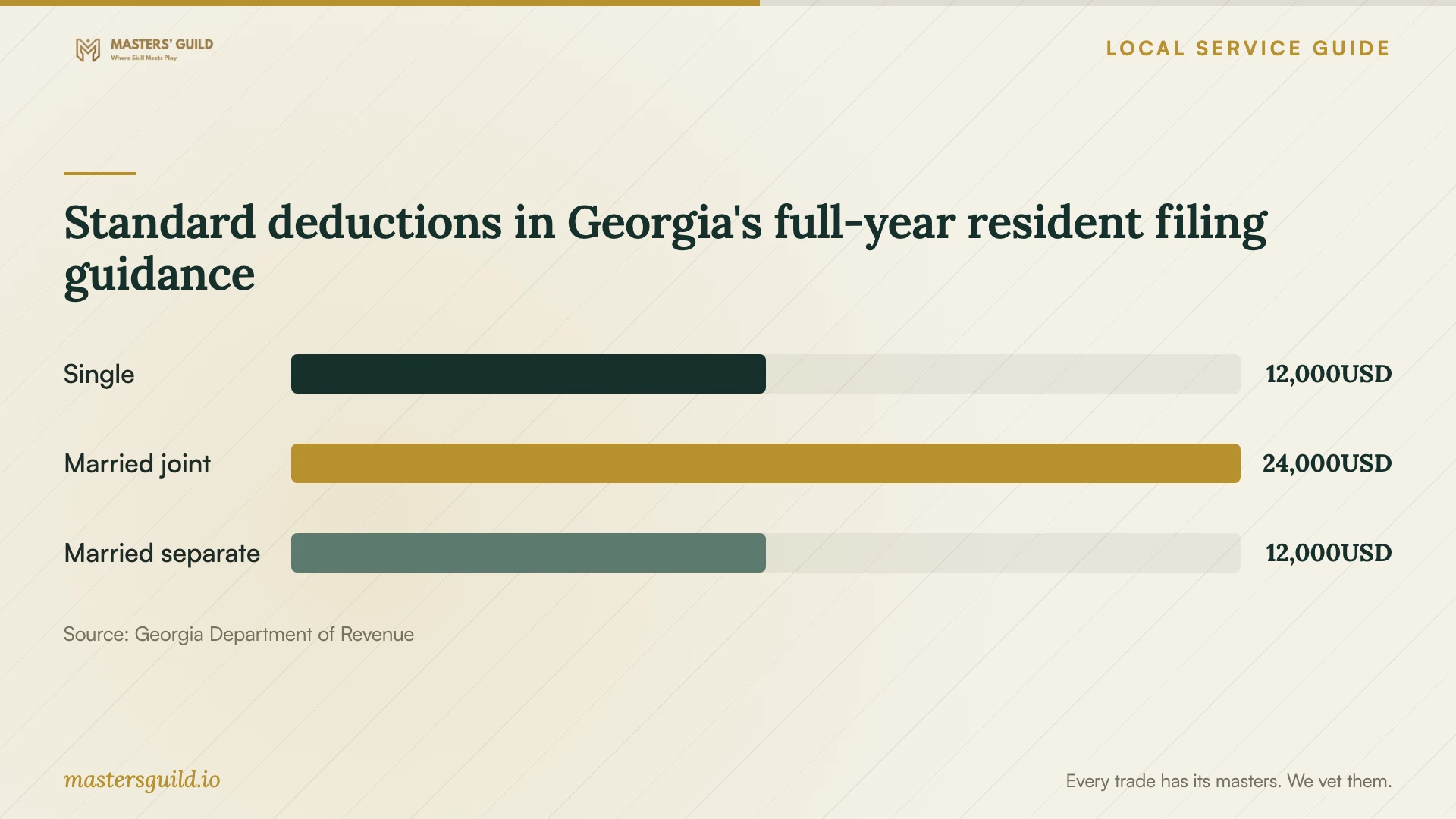
Standard deductions in Georgia's full-year resident filing guidance
Local details that affect your job
Moving into or out of Georgia changes the brief
An Atlanta owner who was a legal Georgia resident for only part of the tax year must file Form 500 and complete Schedule 3 if a federal return is required. Give the preparer your move timeline before they quote, and include Georgia income allocation in the proposed scope. These are statewide requirements that apply here. [1]
Verify the Georgia CPA and the firm separately
The Georgia Board instructs consumers to select Individual or Firm in the CPAverify search. Obtain the responsible CPA's name and the firm's licensed name, then match each search result to your engagement. Checking the firm record alone leaves the individual's status unchecked. [2]
Separate Georgia return transmission from payment
The Department of Revenue does not offer income tax return e-filing through its website or the Georgia Tax Center, although taxpayers can make payments through the Georgia Tax Center. Establish how your preparer will transmit the return and how you will authorize payment. Making a portal payment does not transmit the income tax return. [3]
Match your situation to the engagement
| Your situation | Work to include | Point to settle |
|---|---|---|
| Your books contain unresolved transactions | A defined cleanup period before return preparation | Who supplies missing records and approves adjustments? |
| You moved into or out of Georgia | Form 500 and Schedule 3 when part-year residency and federal filing requirements apply | Does the price include Georgia allocation work? |
| You live elsewhere and receive Georgia rent or flow-through income | Assessment of Georgia nonresident filing requirements | Which income and state returns will the preparer review? |
| You want recurring accounting | Named reports, covered accounts, and a delivery schedule | What will you receive each reporting period? |
| You need to correct an individual return | An amendment engagement; Georgia permits individual amended return e-filing | Does the proposed fee cover preparation and transmission? |
Your hiring checklist
- Write a brief describing your business structure and the accounting outcomes you need.
- List the accounts, months, and unresolved transactions involved in cleanup.
- Gather prior returns, income statements, ledgers, bank records, and tax notices for review.
- Prepare a dated residency and work-location timeline.
- Record the preparer, reviewer, and contact for questions in the engagement.
- Set an approval process for work and charges outside the agreed scope.
- Reserve time to review the completed returns before authorizing filing.
Frequently Asked Questions
Can I e-file a Georgia return after moving during the year?
Yes. Georgia supports electronic filing for part-year returns. Tell your preparer about the move before they choose the return treatment and prepare the filing. [3]
Can a preparer e-file an older Georgia return?
Georgia says it accepts electronic returns for up to two years before the current tax year. Identify the outstanding years at the first meeting so the provider can confirm the filing method for each. [3]
Do the chart amounts determine whether I need paid preparation?
No. The amounts concern filing obligations. Georgia also lists federal filing requirements and Georgia-taxable income that federal rules do not tax as filing triggers for full-year residents. Choose a preparation arrangement based on the work you need help completing. [1]
Sources and scope
This guide combines the sources below with practical planning guidance. Figures apply to the stated geography and period; request a written quote for your property.