
Local service guide
Special Item Transport in Atlanta: Plan Your Move
For Special Item Transport in Atlanta, choose a mover who can explain how the crew will handle your item and reach its destination. For household-goods transport within Georgia, verify the carrier’s DPS certificate, get a signed written estimate and review damage protection before booking. If loading will block a public lane, street or sidewalk, settle the Atlanta closure-permit responsibility before move day. [1] [2] [3]
Choose a crew for the specific item
Start with the object, rather than a general request for moving help. Send photographs, dimensions, the make and model, and any documented weight. Describe loose parts, existing damage and the destination position. For a piano, pool table, safe or fragile artwork, ask the mover to explain the handling method and identify who will perform any dismantling, packing or reassembly.
Ask whether the company quoting the job will also carry the item. Georgia DPS requires household-goods carriers under its jurisdiction to hold a certificate. Its household-goods page provides the licensed-mover listing and tells customers to contact DPS to verify carrier status. Use the carrier’s legal name and certificate number when checking. [1] [2]
Ask for examples of similar items and access conditions, then request a plan for your own move. Establish whether delivery means placing the object in the room, reassembling it, or completing setup. Put the agreed tasks in the estimate so you can compare offers on the same scope.
Survey both ends before agreeing to a price
Walk the route from the item to the truck and from the truck to its final position. Measure door openings and tight turns. Photograph stairs, landings, thresholds and the proposed loading space. Ask the mover to review that route before you commit, especially if the item cannot pass through an opening in its current form.
The DPS guide tells customers to show the estimator everything they want moved and disclose destination problems such as stairs and elevators. It also requires a free written estimate before the move begins. Ask the estimator to include the agreed services, crew size, vehicle size and liability terms, then sign your copy. [1]
For a building with shared access, ask management about loading space, elevator reservations, permitted moving hours and protection requirements. Confirm arrangements at both addresses. If the mover proposes equipment outside the building, identify its footprint and check whether anyone will need to block public access.
Compare the estimate and damage protection
Ask whether the estimate is binding or non-binding. The DPS guide describes a binding estimate as an amount both parties agree to before the move. For a non-binding estimate, the carrier cannot demand more than 110% of its quote as a condition of releasing the load and must wait 30 days before demanding any balance. [1]
For Georgia intrastate household moves, the guide describes charges below 50 miles as based on workers and hours, and charges above 50 miles as based on shipment weight and distance. Ask the carrier to confirm the applicable basis, including a route at the boundary, and explain packing, crating, setup and any other quoted services. These rules do not establish a price for your particular item. [1]
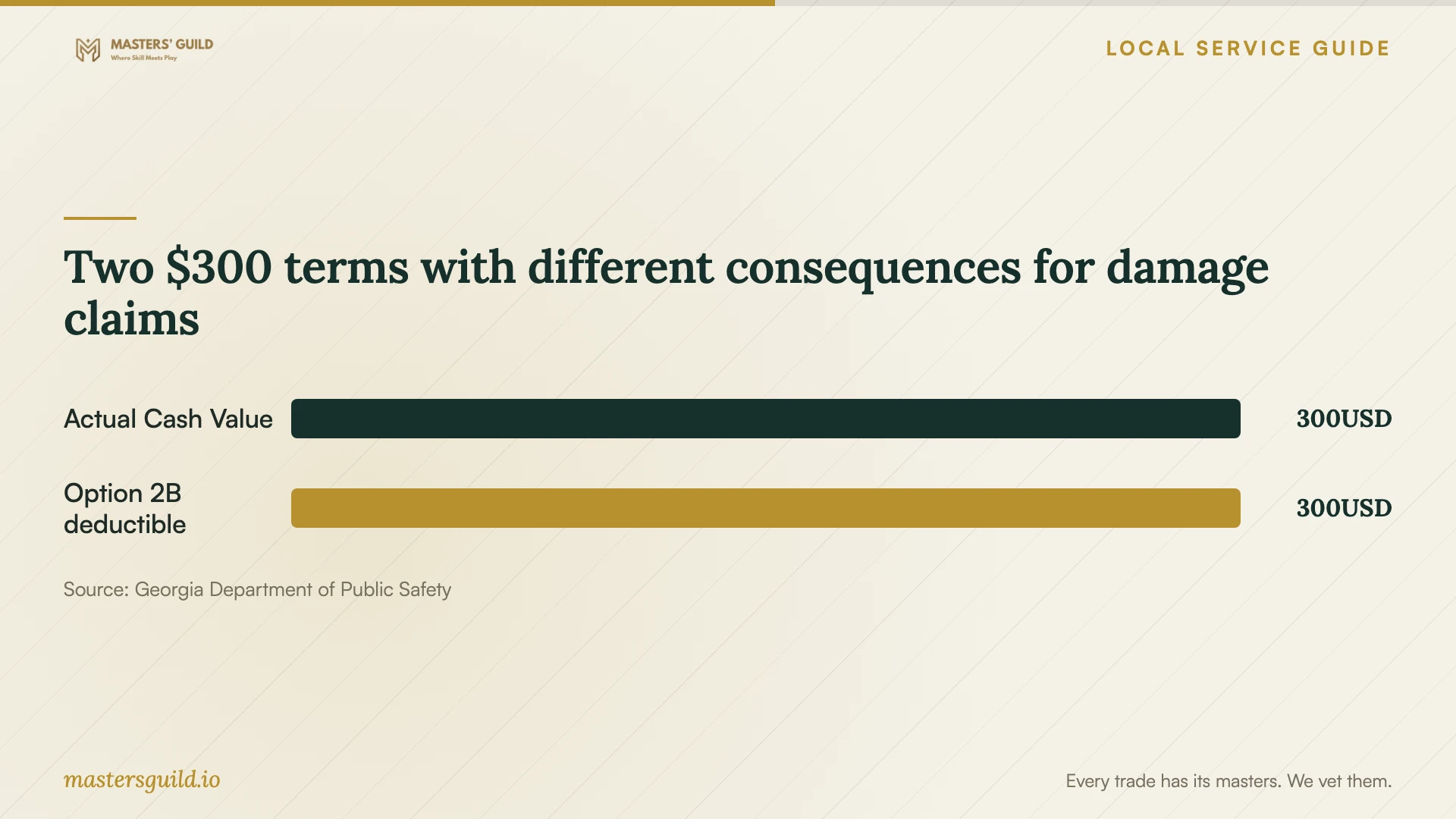
Read the liability addendum before accepting protection for a valuable item. The DPS guide distinguishes carrier liability from insurance. Its no-charge Actual Cash Value option limits reimbursement to $300 per move based on depreciated value; its replacement-value options have different terms. Ask the mover to explain repair rights, deductibles and charges, and ask your insurance agent whether you need additional coverage. [1]
Prepare for loading and inspect delivery
Agree who will pack the item before you buy materials or wrap it yourself. The DPS guide says movers generally do not accept liability for customer-packed items unless the mover handles them negligently. For a fragile object, ask the carrier to specify packing responsibility and how that choice affects a claim. [1]
Photograph the item before loading and ask for an inventory that records its condition. DPS identifies the bill of lading as your contract with the mover and requires the mover to issue one. Read it, obtain your copy and resolve any disagreement with the inventory before signing. [1]
Be present for delivery and inspect the item while the mover is there. Record damage or loss on both copies of the inventory or bill of lading before signing the delivery receipt. The Georgia guide requires written claims to the carrier within 90 days of delivery. Keep damaged property and consult the carrier before repairing or replacing it. [1]
Two $300 terms with different consequences for damage claims
Local details that affect your job
Atlanta public-access closures need advance planning
ATLDOT requires a closure permit for activity that blocks or closes a lane, street or sidewalk, subject to its stated franchise-utility exception. If your mover proposes curbside lifting equipment or an obstructing loading operation, ask who will arrange the permit and confirm approval before scheduling that operation. This rule concerns public-access obstruction; the cited page does not establish a blanket permit requirement for all moves. [3]
Check whether the move stays within Georgia
Georgia DPS regulates household-goods moves with both origin and destination inside Georgia. Its guide excludes moves with either endpoint in another state and directs interstate complaints and claims to FMCSA. Confirm both addresses before choosing which authority to consult. For an in-state move, use the DPS household-goods page and contact the department to verify the carrier’s status. [1] [2]
Resolve these conditions before booking
| Your situation | Next step | Booking question |
|---|---|---|
| Both addresses are in Georgia | Verify the household-goods carrier’s DPS certificate status. | What legal name and certificate number will appear on the paperwork? |
| One address is outside Georgia | Use the interstate regulatory route identified by the DPS guide. | What interstate authority applies to the company carrying the item? |
| Loading blocks an Atlanta sidewalk, lane or street | Resolve the ATLDOT closure-permit requirement. | Who will arrange approval for the proposed obstruction? |
| You plan to pack a fragile item | Discuss the guide’s limits on liability for customer-packed goods. | Will you pack it, and how will that affect damage protection? |
| You choose a non-binding estimate | Review the guide’s 110% release-payment limit and later balance provisions. | Which services and access conditions does this estimate include? |
Your hiring checklist
- Send item photographs, dimensions, model details and any documented weight.
- Measure the route at pickup and delivery, including openings, turns and landings.
- Confirm loading access and any building reservations at both addresses.
- Ask the carrier to identify who handles packing, dismantling, transport and setup.
- Resolve public-access closure arrangements before committing to an obstructing operation.
- Keep the signed estimate, liability addendum, inventory and bill of lading together.
- Photograph the item before loading and inspect it with the mover at delivery.
Frequently Asked Questions
Does a short trip remove the need to check the mover?
No. The DPS guide requires household-goods carriers under its Georgia jurisdiction to hold a certificate. Check the actual carrier’s status even when you are arranging transport for a single item over a short distance. [1] [2]
Do I need an Atlanta permit for a piano or safe move?
Check the proposed loading operation. ATLDOT requires a closure permit when activity blocks or closes a public lane, street or sidewalk. Ask the mover to identify any obstruction and who will arrange approval. The cited rule does not say that moving a particular type of item alone triggers a permit. [3]
Will the mover pay the full replacement value after damage?
Review the liability option you select. The DPS guide’s no-charge option caps reimbursement at $300 per move based on depreciated value. It also describes replacement-value options and distinguishes carrier liability from insurance. Ask for the applicable terms in the liability addendum. [1]
What should I do if I find damage at delivery?
Write a specific description on both copies of the inventory or bill of lading while the mover is present. For moves covered by the Georgia guide, file your written claim with the carrier within 90 days of delivery. Keep the damaged item and consult the carrier before repair or replacement. [1]
Sources and scope
This guide combines the sources below with practical planning guidance. Figures apply to the stated geography and period; request a written quote for your property.