
Local service guide
Smart Appliance Setup in Atlanta, GA
Arrange Smart Appliance Setup in Atlanta by listing each appliance and separating app pairing from physical installation. Ask a setup provider to quote account setup, network troubleshooting, schedules, and a demonstration on your phone. If the work includes electrical or plumbing changes, check the relevant Georgia trade license before hiring. For new network cabling, ask the contractor to explain the applicable low-voltage license category. [1] [3]
Define the setup before comparing quotes
Send the provider model numbers, photos of the installed appliances, and a short description of the problem. Say whether you need first-time pairing, help after a router replacement, access for another household member, or coordination between appliances. Include the names of any apps or hubs you already use.
Ask for separate descriptions of physical installation and connected features. For example, specify whether a dishwasher already has its water, drain, and power connections, and whether you want help with its app. For an appliance awaiting installation, identify who will handle the connections and who will return to test its connected functions.
Request a written price for the agreed scope, plus the provider's method for charging extra troubleshooting time. Ask whether the quote includes network changes, additional equipment, subscriptions, and a follow-up visit. Compare equivalent written quotes so you can judge the price against the same tasks and completion requirements.
Choose the provider for the wiring involved
Check credentials when the job extends into a regulated trade. Georgia's Attorney General identifies electricians and plumbers among the contractors who must hold a Secretary of State license and directs consumers to the state's license search. Ask for the license holder's name and number, then check that the license remains current. [3]
Ask a contractor proposing new network wiring to explain the license scope. Georgia's low-voltage rules include local-area-network distribution wiring within their definition of general low-voltage systems. The state distinguishes alarm, telecommunications, general-system, and unrestricted license categories. Apply this credential check to the proposed wired work rather than assuming the same requirements cover wireless app pairing. [1]
Give the provider a clear stopping point. Require approval before adding a circuit, changing appliance connections, or running cable through walls. Agree on who will confirm permit requirements with the authority responsible for your property before starting any proposed wiring or connection changes.
Prepare your network and accounts
Have the appliance manuals, your phone, and access to the intended manufacturer accounts ready. Check the model's instructions for network and app requirements before the visit. Ask the provider to confirm compatibility before you buy a hub or replace your router.
Enter passwords yourself and keep recovery details under your control. Decide which household members should receive access. Ask the provider to explain any proposed router changes before making them, including the effect on devices already connected to your home network.
If pairing has failed, note the exact error and the step where it appears. Tell the provider whether other devices connect from the appliance's location. Agree on whether the visit includes investigating coverage, changing network settings, or attempting setup on the existing network.
Set schedules around your existing electricity plan
Check your bill before requesting energy-related automation. Georgia Power's optional residential Smart Usage plan adds a demand charge based on the highest single usage hour each month. The utility advises customers to spread out major appliance use, so ask your provider to avoid overlapping supported dishwasher and dryer schedules if you use this plan. [2]
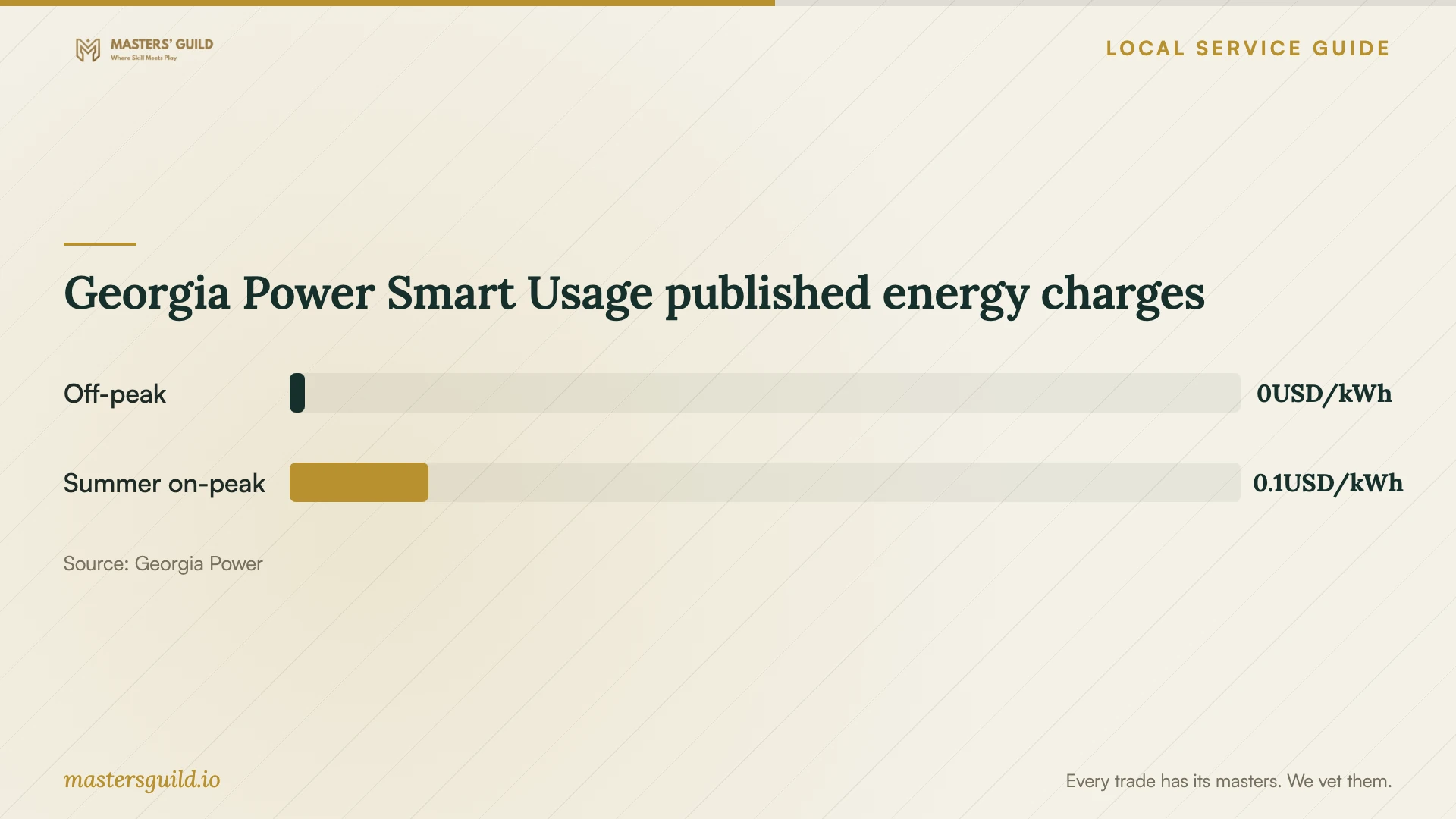
Georgia Power identifies Smart Usage summer on-peak hours as 2 p.m. to 7 p.m. on weekdays from June through September, excluding holidays. Its demand component applies throughout the year. Moving appliances outside the summer peak window addresses part of the scheduling decision; consider overlapping loads during other hours too. [2]
Ask for schedules that fit your household routine and the manufacturer's operating instructions. Check how to cancel a delayed start and resume manual operation. Georgia Power says it cannot predict savings for an individual Smart Usage customer and warns that some customers can pay more. Judge completion by testing the agreed features, rather than accepting a promised bill reduction as proof that the setup worked. [2]
Agree on a demonstration and handoff
Before the provider leaves, open the app on your own phone and test the features you requested. Check appliance status, an agreed notification, household access, and any supported schedule. Ask the provider to show you how to remove access and reconnect the appliance after a network change.
Keep a written record of completed work, unresolved problems, equipment purchased, and support terms. Georgia consumer guidance recommends putting guarantees and warranties in the contract and agreeing on start and completion dates. For a failed setup, ask the provider to explain what they tested and what remains necessary before agreeing to more work. [3]
Georgia Power Smart Usage published energy charges
Local details that affect your job
Georgia Power customers need plan-specific schedules
If your Atlanta home uses Georgia Power's residential Smart Usage plan, ask for staggered appliance schedules as well as summer off-peak timing. The utility bases demand charges on the highest usage hour in the monthly billing cycle. The plan requires a 12-month commitment, so review your usage with the utility before switching plans for a new appliance setup. [2]
Georgia treats network cabling as a licensing question
For a job that adds local-area-network distribution wiring, ask the contractor to identify the applicable Georgia low-voltage license category before accepting a combined network-and-appliance quote. State rules distinguish several low-voltage categories and include network distribution wiring in the general-system definition. Apply this check to the proposed wired work, without assuming it applies to wireless pairing. [1]
Match the job to the help you need
| Your situation | Help to request | Before agreeing |
|---|---|---|
| Installed appliance needs app pairing | A provider familiar with the exact model and app | Confirm pairing, account access, and demonstration are included. |
| Repeated pairing failures | Setup help with an agreed network troubleshooting scope | Define the charge and stopping point for unsuccessful troubleshooting. |
| New network cabling | A contractor who can explain the Georgia low-voltage license scope | Identify the applicable category for the proposed wired work. |
| Electrical or plumbing changes | The relevant Georgia licensed trade | Verify the license and separate connection work from app setup. |
| Smart Usage appliance schedules | Setup help using your existing rate-plan details | Stagger supported loads and review summer peak timing. |
Your hiring checklist
- List appliance model numbers and the features you want to use.
- State whether physical installation and utility connections are complete.
- Send any pairing error messages and describe previous attempts.
- Prepare your phone, manuals, account access, and network details.
- Ask for a written scope, price, extra-work terms, and support period.
- Check your electricity plan before requesting appliance schedules.
- Agree on the features you will test together before completion.
Frequently Asked Questions
Can I try setup myself before hiring?
For an installed appliance, follow the manufacturer's pairing instructions if you feel comfortable managing the app and accounts. Record any error rather than repeating the same attempt. If you hire help, explain what you tried and ask the provider to define the next troubleshooting step.
Does app setup include appliance installation?
Ask the provider to state that in the quote. Specify delivery, positioning, utility connections, app pairing, and testing as separate tasks. If the work includes electrical or plumbing changes, check the relevant Georgia contractor license. [3]
Will smart scheduling lower my electricity bill?
A setup provider should not promise a reduction. Georgia Power says it cannot predict individual savings on Smart Usage and that customers can face higher bills. For that plan, discuss both staggered major-appliance use and the summer on-peak window. [2]
What should I receive when the visit ends?
Ask for a demonstration on your phone, a record of completed work, instructions for the agreed features, and written support terms. Keep account ownership and recovery access. Put any promised warranty or return visit in the agreement. [3]
Sources and scope
This guide combines the sources below with practical planning guidance. Figures apply to the stated geography and period; request a written quote for your property.