
Local service guide
Senior Care Services in Atlanta, GA: Arranging Care
Arrange Senior Care Services in Atlanta by listing the help your family member needs, then matching those tasks to a qualified caregiver. Georgia distinguishes companion tasks, personal care, and nursing. For an agency, check its Georgia private home care license and request a written agreement covering services, hours, and charges. Investigate local financial assistance while arranging coverage for any immediate care needs. [1] [2] [3]
Match the caregiver to the work
Start with a task list rather than a job title. Georgia defines companion or sitter tasks as transport and escort services, meal preparation and serving, and household tasks essential to cleanliness and safety. Personal care includes help with bathing, toileting, dressing, grooming, and eating; it can also include assistance with walking and transfers. [2]
Explain the assistance in concrete terms: help getting out of bed, support during a shower, or an escort who stays through an appointment. Ask the provider to assess the tasks and identify who will perform them. Include the older adult in that discussion and record their preferences for privacy, meals, and daily routines.
For nursing services, Georgia requires an RN or LPN working within professional practice rules, with a Georgia RN supervising the provider's nursing services. Personal care assistants cannot provide nursing unless they hold the required nursing qualifications. Ask who will review discharge instructions and decide which tasks require a nurse. [2]
Check agency licensing and caregiver qualifications
Request the agency's legal name, licensed office location, and license or provisional license. Georgia requires each private home care office location to hold a separate license. The Department of Community Health's Private Home Care Program page provides access to GaMap2Care for finding facilities and lists the program's contact number as 404-657-5700. [1] [2]
A caregiver who provides services as an individual, without employees, agents, or the referral and contractor arrangements described in the rules, may qualify for the direct-individual exemption. That exemption concerns private home care provider licensing. Nursing services still require the professional qualifications specified in Georgia's rules. [2]
Ask an agency how it checks staff backgrounds and confirms competence for your family member's tasks. Georgia requires satisfactory fingerprint records checks for direct-access employees and task-specific training and competency for personal care assistants. For a direct hire, request references, relevant training, insurance information, and a written backup arrangement. [2]
Compare written costs and service agreements
Compare quotes using the same task list and schedule. Request the hourly or visit rate, minimum booking, assessment charge, transport costs, and any weekend or overnight charges. For overnight care, describe whether you need someone awake throughout the shift or available for specified assistance. Ask each provider to price that exact arrangement.
Georgia requires a written service agreement that identifies the services, expected frequency and duration, charges, billing arrangements, and provider and state complaint contacts. The rules also require authorization for access to personal funds or use of the client's vehicle when those activities form part of the service. [2]
Read cancellation terms before signing. Under Georgia's private home care rules, a client can cancel the service agreement at any time and owes charges for services rendered before notification. The provider may assess a reasonable travel and staff-time charge if notice arrives too late to prevent the worker from reaching the home. [2]
Plan supervision and missed-shift coverage
Ask for the supervisor's name and contact details, the process for reporting a change in condition, and the plan for a missed shift. Georgia requires sufficient qualified staff to deliver agreed services. If an unexpected shortage prevents delivery, the provider must advise the client and refer them to another provider if the client wants a referral. [2]
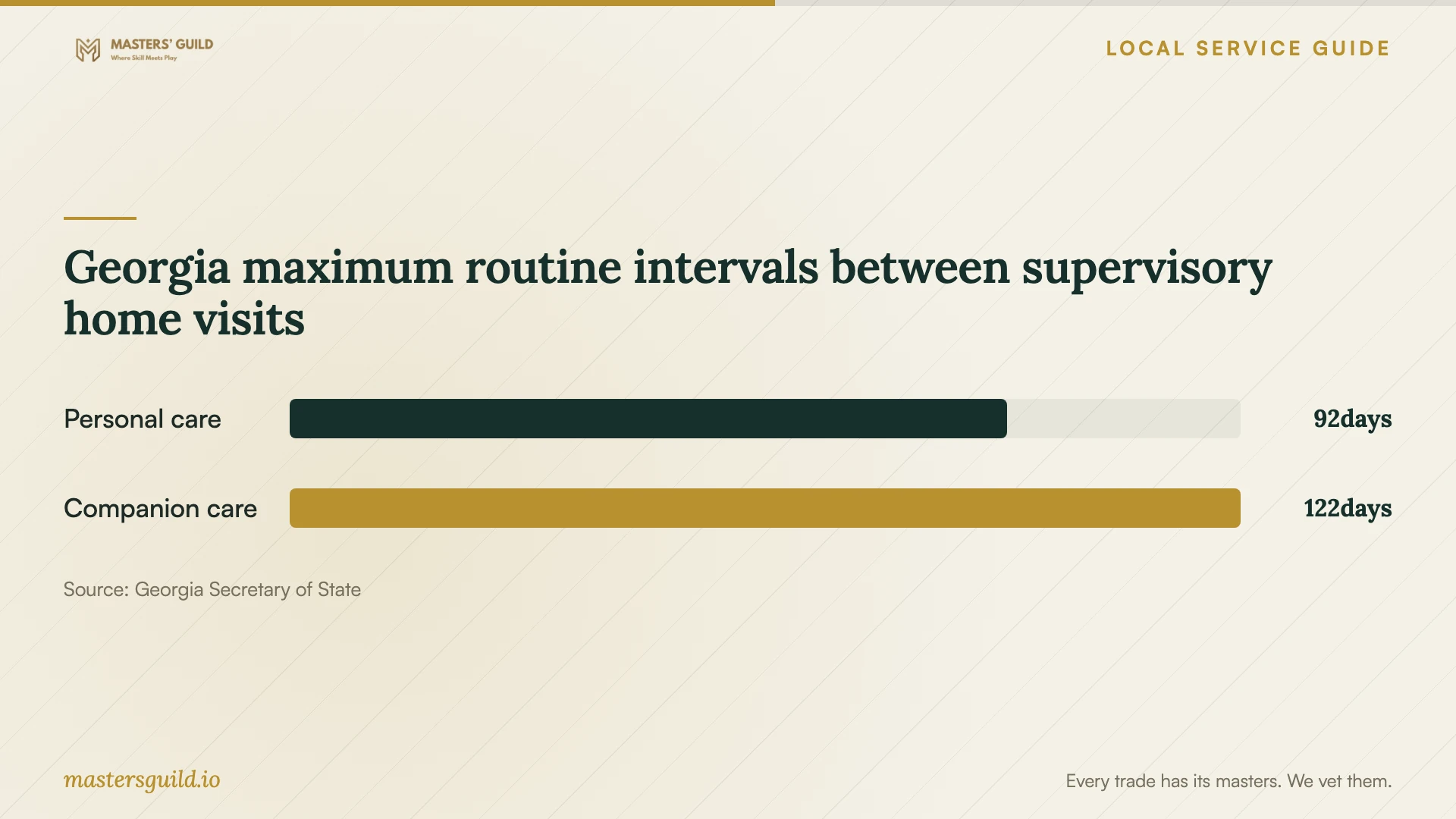
Georgia requires supervisory home visits at least every 92 days for personal care and every 122 days for companion care, with additional visits under the circumstances specified in the rules. For medically frail or compromised personal care clients, the rules require nursing supervision and an initial service plan completed by an RN. Discuss whether your family member needs more frequent review. [2]
Before the first visit, prepare emergency contacts, medication information, equipment instructions, and access details. Decide who receives visit updates and who can approve schedule changes. For a hospital discharge, ask the discharge team to clarify transfer assistance and clinical tasks before you commit to a caregiver schedule.
Explore help paying without leaving a care gap
Empowerline describes three payment routes: no-cost help for people who meet low-income requirements, reduced-cost assistance for some people who cannot afford full charges, and full-cost services. Eligibility depends on factors including age, residence, assets, and income. A counselor can discuss the options without charging for the consultation. [3]
For payment assistance, Empowerline describes a 30 to 45-minute screening covering finances, insurance, and daily activities that require help. Eligible applicants may join a needs-based waiting list. When funding becomes available, the process includes a final face-to-face assessment with a case manager. Keep a separate plan for care needed before assistance starts. [3]
Georgia maximum routine intervals between supervisory home visits
Local details that affect your job
Atlanta-region eligibility counseling
Empowerline serves the City of Atlanta and ten surrounding counties, including Fulton and DeKalb. Its number is 404-463-3333. Before speaking with a counselor, gather the older adult's date of birth, care goals, conditions, and obstacles. If you need public funding, prepare income and resource information. Confirm eligibility and timing before treating assistance as part of your available care budget. [3]
Fulton County homemaking and respite
Fulton County's In-Home Services program includes light housekeeping, personal hygiene assistance, and an aide who supervises a senior while the caregiver conducts business outside the home. STARLine is 404-613-6000. If the care recipient lives in Fulton County, ask about eligibility, availability, and the application process. The published page does not specify those terms, so confirm them before reducing private care hours. [4]
Choose the arrangement by the help needed
| Need | Care to discuss | Question before agreeing |
|---|---|---|
| Meals, household safety, or appointment escort | Companion or sitter services | Can the assigned worker cover the exact tasks and transport arrangement? |
| Bathing, dressing, toileting, or transfers | Personal care from a qualified assistant or nurse | Has the worker demonstrated competence for these tasks? |
| Nursing services at home | RN or LPN care with RN supervision | Who supervises nursing and coordinates the service plan? |
| Supervision while a family caregiver goes out | Fulton County respite, if accessible to the household | What eligibility, availability, and application steps apply? |
| Help paying for ongoing support | Empowerline eligibility counseling | What assistance could apply, and what care is needed during a wait? |
Your hiring checklist
- Write down the tasks, preferred visit times, and assistance needed between visits.
- Have the provider assess bathing, transfers, medication-related help, and clinical tasks.
- Request the agency's legal name, licensed office details, and assigned supervisor.
- Ask who covers an absence and how you will receive notice of a missed shift.
- Compare written quotes for the same schedule, including minimum bookings and extra charges.
- Review cancellation terms and permissions for shopping money or vehicle use.
- Prepare contact, financial, and care information for local assistance inquiries.
- Agree on visit updates and a process for reassessing care when needs change.
Frequently Asked Questions
Does a companion-care agency need a Georgia license?
Georgia's private home care licensing requirement covers providers offering companion or sitter tasks as well as personal care and nursing. Defined exemptions include individuals providing care directly under the conditions in the rules. Ask the business to identify its license or the exemption it relies on. [1] [2]
Can a personal care assistant help with medication?
Georgia includes medication reminders and assistance with self-administration among medically related activities that may fall within personal care. The definition excludes professional services governed by professional licensing laws. Describe the exact medication task and ask the supervisor to confirm the worker's authorized role. [2]
Can publicly funded care start as soon as we need it?
Do not assume a start date. Empowerline says high demand can lead to a needs-based waiting list even for eligible applicants. Ask about the assessment process and arrange coverage for immediate needs while you await a funding decision. [3]
Can I see an agency's inspection report?
Georgia gives clients the right to request the provider's most recent completed licensure inspection report in writing. The provider can first submit its plan of correction for any violations and may charge reasonable photocopying costs. Ask how it addressed any findings relevant to your care. [2]
Sources and scope
This guide combines the sources below with practical planning guidance. Figures apply to the stated geography and period; request a written quote for your property.