
Local service guide
Roof cleaning and repair in Atlanta, GA
Arrange roof cleaning and repair by describing your concern and requesting separate cleaning and repair proposals. Prioritize a repair assessment if water enters your home. Before approving chemical cleaning, review the contractor’s wash-water plan: Atlanta prohibits polluted discharge into storm drains, roadside ditches, streams and other natural outlets. [1]
Decide what you need assessed
Describe the location and timing of the problem. For a ceiling stain or water entry, note which room it affects and whether you noticed it during rain. For appearance concerns, identify the roof sections you want assessed. Take reference photos from the ground or inside your home, and leave roof access to the contractor.
Ask the contractor to distinguish your observations from findings they confirm. Before approving a repair, request an explanation of the suspected cause, the area involved and the proposed work. If the contractor recommends replacement, request the reasons and a separate proposal so you can review that decision without committing to it during the inspection.
Choose a cleaning method with clear limits
Have the bidder identify your roof material and describe the proposed product, application method and treatment area. Share installation records and warranty documents if you have them. Request the applicable manufacturer instructions and ask the bidder to explain how the proposed work follows them.
Agree on the expected appearance at completion and any follow-up assessment. Include protection for adjacent surfaces and planted areas. Establish who can authorize extra work if the crew discovers a concern after arrival, and require a written price before they expand the job.
Make runoff handling part of contractor selection
Atlanta’s Department of Watershed Management identifies cleaners spilled on streets or poured into catch basins, along with outdoor washing equipment using chemicals, as pollution concerns. The city prohibits polluted-water discharge into natural outlets, including storm drains and roadside ditches. Use that restriction when reviewing a chemical-cleaning proposal. [1]
During a ground-level walkthrough, trace the accessible downspout outlets with the bidder and point out nearby drains, ditches or creeks. Have the contractor explain where wash water will travel, how the crew will contain it and how they will arrange disposal. Request a revised method if they cannot explain how their plan will work at your property.
Compare quotes and arrange the visit
Give bidders the same requested scope. Compare inspection, cleaning, repair, gutter work and debris removal as separate items. For repair work, require the location, materials and extent of the proposed work. Review exclusions, access arrangements, cleanup and any return visit before comparing totals.
Request proof of insurance and identify who will perform the work. Have the contractor address applicable licensing and permit requirements for the proposed scope, including who will handle them. Agree on payment stages, written warranty terms, access, water use and weather rescheduling. At completion, compare the work with the agreement and record unresolved concerns.
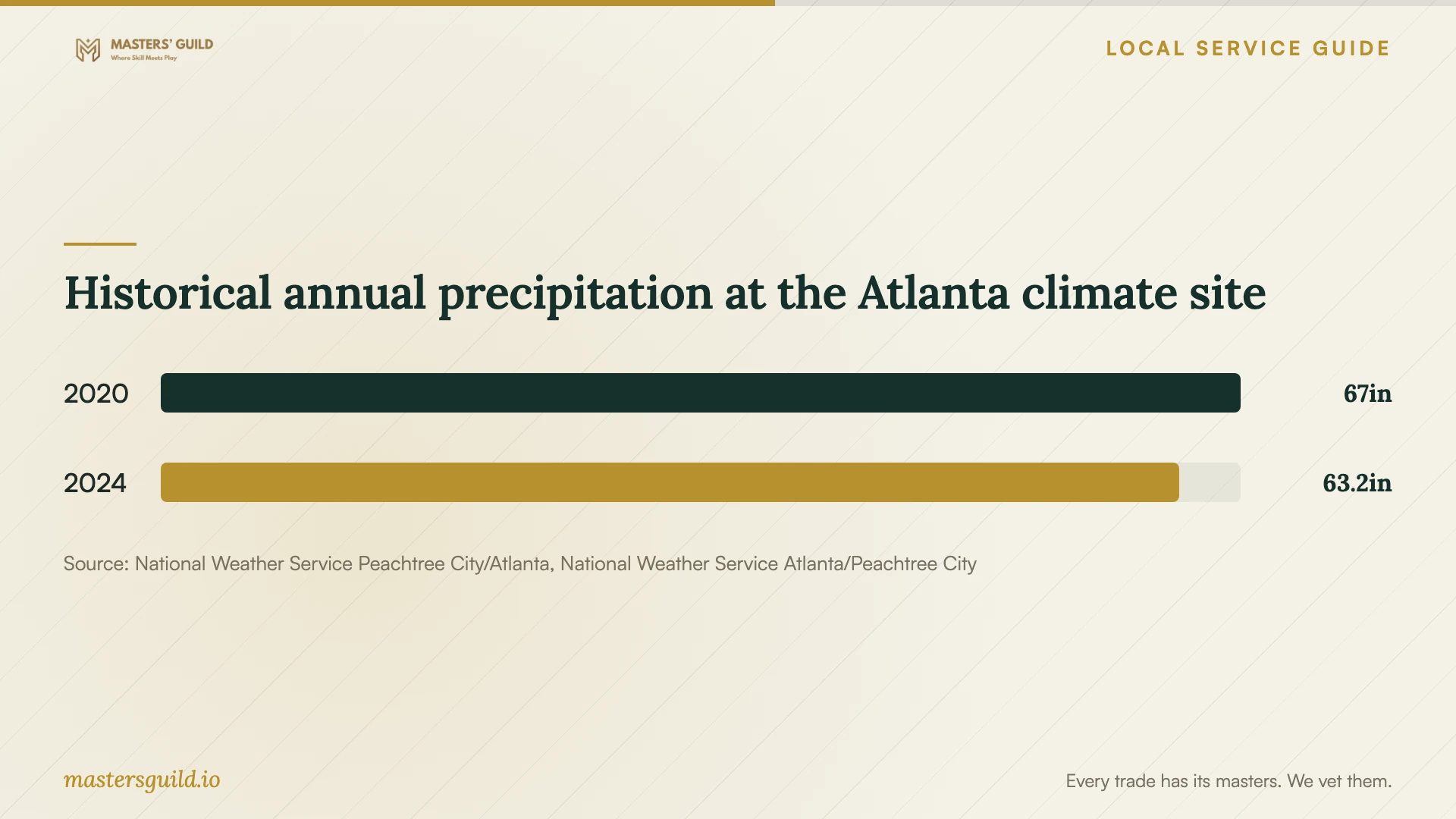
NWS reported 66.99 inches of precipitation at its Atlanta climate site in 2020 and 63.18 inches in 2024. These historical observations offer context for a drainage discussion. Use the current forecast and the contractor’s stated working conditions to arrange your visit. [2] [3]
Historical annual precipitation at the Atlanta climate site
Local details that affect your job
Confirm who maintains the drainage structure
Atlanta distinguishes city-maintained stormwater infrastructure from portions that private owners or homeowners’ associations maintain. Its guidance lists location and formal acceptance criteria when describing city responsibility. Before adding repairs to an inlet, ditch or pipe to your roof-work agreement, confirm responsibility for that specific structure with the city or your association. [1]
Use Atlanta’s drainage and pollution reporting route
Report drainage problems or illicit discharges through 311 from within Atlanta city limits. From outside city limits, call 404-546-0311. The city requests the incident date, time, location and source or type of pollution if known. If you observe a discharge during the job, record those details for the report. [1]
Match your concern to the next step
| Your concern | Request | Approval condition |
|---|---|---|
| Staining or debris | A cleaning assessment | A defined method, treatment area and expected result |
| Water entering the home | A repair assessment | An explanation of findings and a specified repair |
| Chemical washing near a drain | A containment and disposal plan | A plan that addresses Atlanta’s polluted-discharge prohibition |
| A nearby inlet, ditch or pipe | Confirmation of maintenance responsibility | Confirmation for the particular structure before authorizing work |
Your hiring checklist
- Record the problem’s location and timing before the assessment.
- Gather installation records and available warranty documents.
- Compare itemized proposals for the same requested work.
- Resolve drainage ownership before approving repairs to shared or nearby structures.
- Agree on parking, water access and areas to clear for the crew.
- Record the process for changes, weather delays and completion review.
Frequently Asked Questions
Can I request cleaning and repairs during one assessment?
Request both, but keep the proposals separate so you can approve each scope on its merits. Tell the contractor about water entry before discussing appearance work, and request findings that explain the proposed repair.
How should I compare prices?
Compare quotes for the same treatment area and repair scope. Check whether each total includes access, property protection, wash-water handling, cleanup and follow-up. Resolve allowances and exclusions before choosing a contractor.
Does a city-owned location guarantee city drainage maintenance?
Confirm the particular structure’s responsibility with Atlanta. The city distinguishes public maintenance from private-owner and homeowners’ association responsibilities and lists location and formal acceptance criteria. Avoid assuming that one location detail settles responsibility. [1]
Does the rainfall chart show that my roof needs repairs?
NWS reports annual precipitation observations for selected historical years in the chart. Those totals do not diagnose your roof or establish rainfall at your property. Base a repair decision on an assessment of your concern and the contractor’s documented findings. [2] [3]
Sources and scope
This guide combines the sources below with practical planning guidance. Figures apply to the stated geography and period; request a written quote for your property.