
Local service guide
Pressure Washing in Atlanta, GA: Hiring and Planning
Arrange Pressure Washing in Atlanta with a written scope that names the surfaces, cleaning methods, total price and wash-water handling. Choose a contractor who can explain how the crew will protect your property and contain dirty runoff. Atlanta prohibits polluted discharges into storm drains, roadside ditches and streams, so resolve disposal before accepting an offer. [1]
Build a scope you can compare
List the areas you want cleaned and mark their boundaries in photos. Include close-ups of stains and damaged finishes, plus approximate dimensions where you can measure them. Specify whether steps, railings, garage doors and porch undersides belong in the job. Give each bidder the same description.
Separate the main cleaning price from optional stain treatments or additional surfaces. Have the contractor identify exclusions, water-supply arrangements, furniture moving and cleanup responsibilities. For an oil mark or another stain you care about, get the expected result in writing and agree on how you will authorize extra treatment.
Use matching written quotes to set your budget. Compare the complete scope before choosing a total, including collection and disposal of wash water. Record payment timing and any deposit terms so you can resolve differences between offers without guessing what each contractor includes.
Review the method and property protection
Have the contractor identify each surface material and describe the proposed pressure, product and application method. If an estimate says soft wash, get an explanation of the treatment and rinse process. For a finish that concerns you, agree on a test area and inspect it before authorizing the rest.
Photograph existing damage together. Decide whether to exclude loose paint, damaged mortar, open siding joints or questionable seals until you arrange repairs. For roof or upper-storey work, discuss access and protection of adjacent areas. Avoid approving a method you do not understand.
Review liability insurance documentation and worker coverage with the provider. Establish who will supervise the crew and handle a damage concern. Keep the written scope and before-work photos for your completion inspection.
Resolve runoff at the property
Atlanta's Department of Watershed Management prohibits polluted water, oil and other material entering natural outlets, including storm drains, catch basins, roadside ditches and streams. The department lists cleaners spilled on streets or poured into catch basins among reportable concerns. [1]
Walk the cleaning area with the contractor and locate downhill drains, street gutters and nearby waterways. Discuss containment equipment, collection and the proposed disposal destination. Require the provider to explain any approval needed for that destination before work starts; do not accept a sewer connection or landscaped area as an approved route without checking.
Check water-use rules for the work date
Georgia EPD reports that its director declared statewide Drought Response Level 1 on April 27, 2026 and maintained that level in August 2026. Under Level 1, public water systems must conduct an information campaign. Those dated announcements do not establish the restrictions for your appointment; check subsequent EPD and water-supplier notices. [2] [3]
Georgia's non-drought 4 p.m. to 10 a.m. limitation concerns irrigation for plants. The rule excludes outdoor uses for other purposes from that time limitation. Use the rules for the actual cleaning activity rather than assuming a lawn-watering schedule determines washing hours. [2]
At Drought Response Level 2, Georgia restricts hard-surface washing except when necessary for public health and safety, and noncommercial building washing except for immediate fire protection. The rule exempts commercial pressure washing from its outdoor water-use restrictions. Local authorities can impose emergency restrictions or obtain variances, so verify applicable supplier requirements before proceeding. [2]
Prepare for arrival and completion
Set the parking location, gate access and water source before arrival. Clear the agreed areas, move vehicles, close windows and keep pets away from the work. Point out fixtures or equipment you want the crew to inspect before washing.
Agree on a weather postponement policy, including when the provider will contact you and whether a deposit carries over. If you plan to paint or seal afterward, let the coating installer specify drying requirements before you schedule both jobs.
Inspect the included surfaces with the contractor before closing out the job. Compare the result with the agreed stain-treatment expectations and exclusions. Record missed areas or concerns and settle who will address them and when.
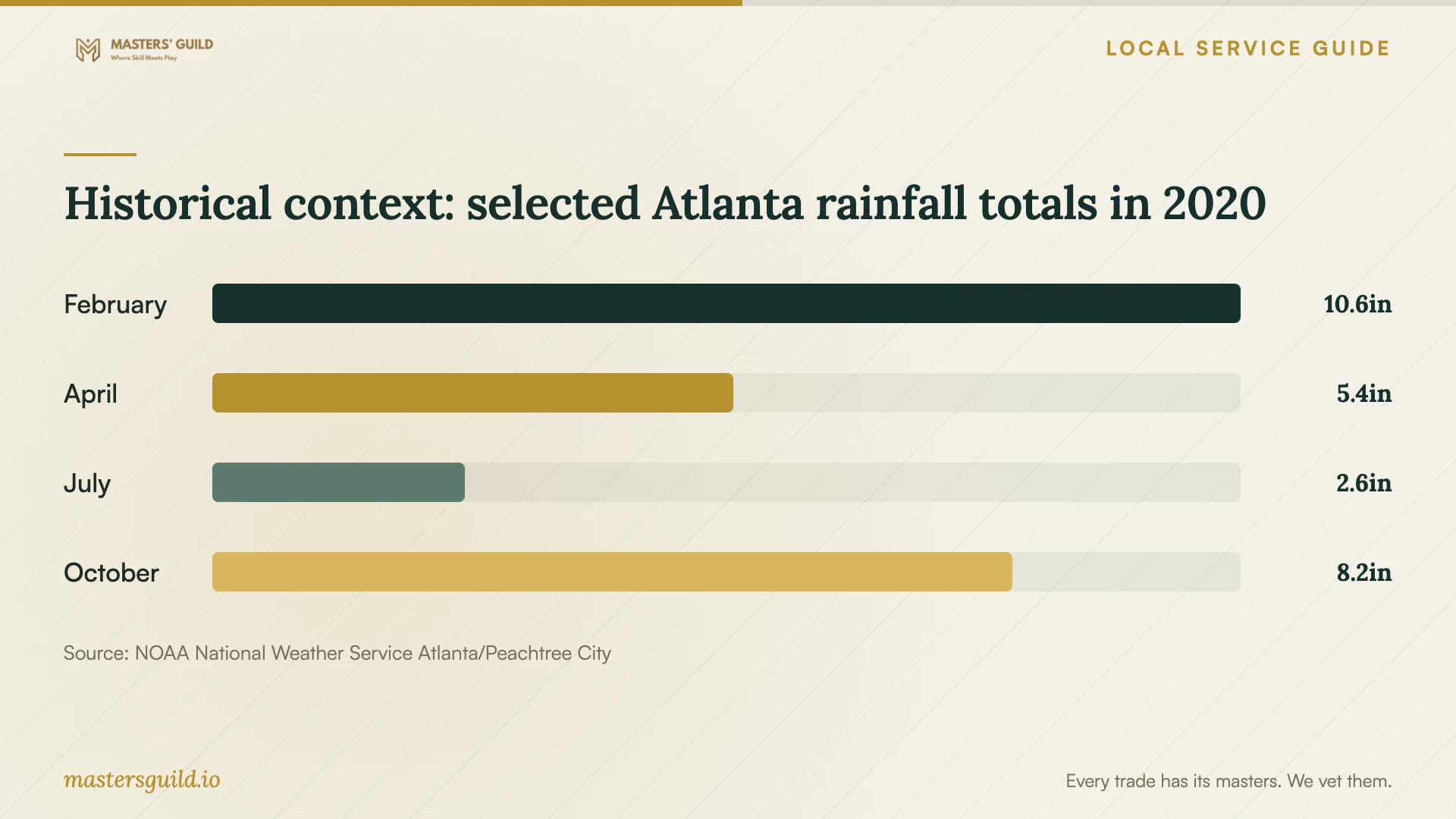
Historical context: selected Atlanta rainfall totals in 2020
Local details that affect your job
Atlanta: report suspected polluted discharge
For a property within Atlanta city limits, include nearby storm drains and roadside ditches in your runoff discussion. The city prohibits polluted discharges into these outlets. If you see a suspected illicit discharge, dial 311 within the city or call 404-546-0311 from outside city limits. Provide the incident location, time and pollution type if known. [1]
Georgia: recheck a DIY plan if drought levels change
Before renting equipment during Level 2 drought response, check whether your planned washing falls under the hard-surface or noncommercial building restrictions. Georgia gives commercial pressure washing a professional exemption, which can change your choice of how to arrange the work. That exemption concerns water use; Atlanta's polluted-discharge prohibition still applies. [1] [2]
Resolve the issue that affects your next step
| Your situation | Next step | Reason or agreement needed |
|---|---|---|
| Driveway drains toward a street catch basin | Resolve containment before accepting the scope | Atlanta prohibits polluted discharges into catch basins |
| DIY washing during Level 2 drought response | Check the activity against the restrictions | Hard-surface and noncommercial building washing have limited exceptions |
| Commercial pressure washing during drought | Review supplier notices and runoff arrangements | Georgia's professional exemption concerns water use; Atlanta discharge rules still apply |
| Finish or existing damage concerns you | Agree on inspection, exclusions and a test area | Approve the proposed method before full-surface work |
| Painting or sealing follows cleaning | Coordinate appointments with the coating installer | Set drying requirements and a postponement window |
Your hiring checklist
- Send overview photos, dimensions and close-ups of stains or existing damage.
- Compare the included areas, exclusions and optional treatment prices.
- Review cleaning methods, property protection and insurance documentation.
- Resolve the wash-water collection method and approved disposal destination.
- Read current water-supplier notices before the work date.
- Clear access and agree on postponement, payment and completion terms.
Frequently Asked Questions
How should I budget for the job?
Obtain written quotes for the same surfaces and boundaries. Keep optional treatments separate, and compare water supply, runoff handling, cleanup and correction terms alongside the total. Set your budget from those matching offers.
Does a commercial drought exemption allow dirty runoff into a drain?
Georgia's commercial pressure-washing exemption concerns outdoor water-use restrictions. Atlanta prohibits polluted discharge into storm drains, catch basins, roadside ditches and streams. Resolve both water use and wash-water disposal before work begins. [1] [2]
Must I wash during the lawn-watering hours?
The non-drought 4 p.m. to 10 a.m. rule applies to plant irrigation and excludes outdoor uses for other purposes from that time limitation. Check the declared drought level and applicable supplier notices for your cleaning activity. [2]
What if a stain remains after cleaning?
Use the result you agreed on during the estimate as the starting point. During the walkthrough, identify whether the contractor missed an included area or whether the stain needs an optional treatment. Approve any added work and price before the crew continues.
Sources and scope
This guide combines the sources below with practical planning guidance. Figures apply to the stated geography and period; request a written quote for your property.