
Local service guide
Pest Control in Atlanta, GA: Hiring and Planning
For Pest Control in Atlanta, choose a company with Georgia credentials for the specific work, then agree on the target pest, treatment scope, follow-up visits, and total charges in a written contract. Georgia requires contracts for structural pest control, including termite, general pest, and rodent services. Before booking, ask who will perform the work and verify the company and individual credentials through the Georgia Department of Agriculture. [1] [2]
Match the provider to the pest
Describe what you have seen before requesting treatment: the pest or suspected pest, affected rooms, outdoor locations, and signs such as droppings or damaged wood. Send photographs if you can take them without disturbing the pest. Ask the provider to explain its identification and proposed approach before you approve the work.
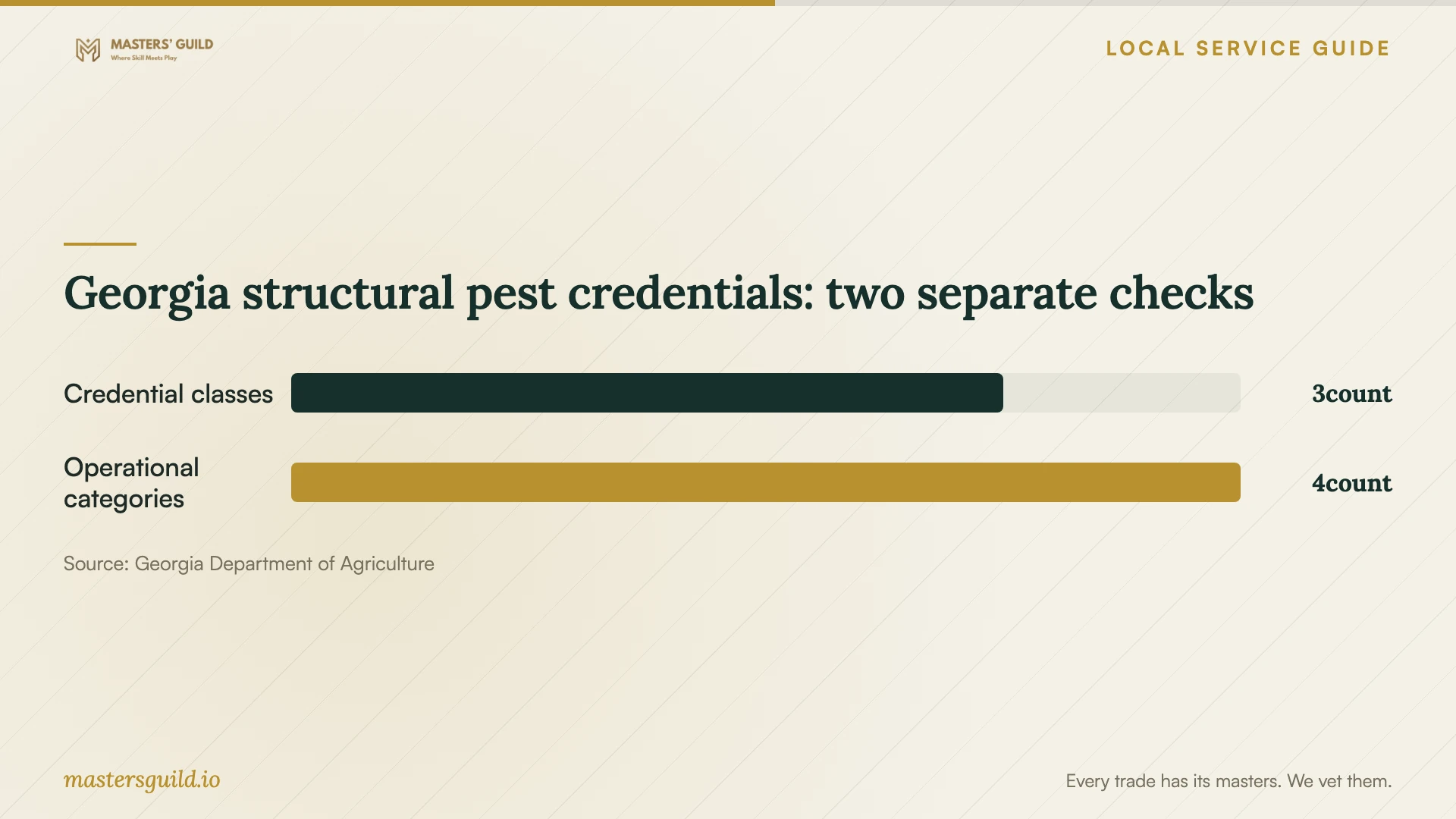
Georgia separates company licenses, certified operators, and registered employees. It also requires companies and individuals to hold credentials in the categories in which they work. Household Pest Control covers pests such as ants, cockroaches, rodents, and wasps by methods other than fumigation. Wood-destroying Organism Control covers termites and other specified wood-destroying organisms by methods other than fumigation. [2]
Clarify unusual jobs before accepting a general pest quote. Georgia's honey bee category covers removal of an established colony in a structure without pesticides; it excludes wasps and hornets. GDA also identifies separate licensing requirements for mosquito services and a Nuisance Wildlife Control Operators license for wildlife work, including squirrels. [2]
Compare the complete cost and contract
Request quotes for the same scope. Ask each provider to separate the initial visit, scheduled maintenance, included callbacks, and optional repairs or exclusion work. For rodents, ask whether the price includes sealing entry points and who will perform that work. For recurring service, request the payment schedule, cancellation terms, and conditions for additional charges.
GDA requires contracts for structural pest control services, including rodent control. Ask the company to put its promises about treatment areas, follow-up, and coverage in the contract. For termite work, ask whether the agreement includes retreatment, damage repair, or both, and have the company explain exclusions before you sign. [1]
The supplied official sources do not establish local treatment prices. Use a property-specific written quote to set your budget. Tell each bidder about access constraints, previous treatments, and existing agreements so you can compare offers that address the same problem.
Prepare for treatment and keep the record
Ask for preparation instructions before the appointment. Discuss children, pets, food storage, aquariums, and any areas you want the technician to avoid. Have the provider specify whether anyone must leave, when occupants can return, and what cleaning or access restrictions apply to the proposed treatment.
At the time of service, Georgia requires the company to provide a record identifying the company, application date, technician, target pest, treated areas, and application method. The record must also include the pesticide name, EPA registration number, amount and concentration, and post-application information. Keep it with your contract and photographs. [1]
Agree on how you will assess progress and when you should report continued activity. Ask whom to contact, whether the company charges for another visit, and what evidence it wants you to collect. Avoid adding treatments on your own without discussing them with the provider.
Plan termite and mosquito work around the property
Tell the termite inspector about existing or planned crawlspace spray foam. In its 2018 advisory, GDA warned that foam can hide termite evidence and interfere with inspection, potentially affecting existing contracts or future coverage. Ask the pest company to review inspection access and explain any coverage conditions before you arrange insulation work. [3]
For a mosquito quote, ask the provider to identify water-holding containers and maintenance tasks alongside its treatment proposal. Fulton County's 2021 prevention guidance recommends emptying containers after rainfall, refreshing pet bowls daily, clearing gutters, and repairing screens. That historical guidance supports property preparation; it does not establish a current disease alert. [4]
Georgia structural pest credentials: two separate checks
Local details that affect your job
Georgia offers an inspection route for treatment disputes
If you suspect unsafe application, unlicensed work, conflicting pest identification, or an inaccurate termite letter, GDA accepts structural pest inspection requests through its webform or at 404-656-3641. Its inspector may request contracts, service tickets, and letters. Retain those documents so you can support a request. GDA describes a process that can take weeks to months; do not assume an immediate resolution. [1]
Crawlspace insulation can change termite coverage
For an Atlanta property with crawlspace spray foam, ask the termite company to review the contract and inspect accessible areas before you purchase or renew coverage. GDA's statewide 2018 advisory recommends contacting the pest company for both existing foam and planned installations because concealed termite evidence can affect coverage. [3]
Fulton County prevention guidance changes the mosquito scope
If your property is in Fulton County, use the county's prevention guidance to discuss source removal with the provider: empty rain-filled containers, refresh pet bowls, clear gutters, and repair damaged screens. Ask which tasks you will handle and which the quote includes. The county published this advice in 2021; its disease observations from that year are historical. [4]
Choose the credential check that fits the job
| Proposed work | Georgia credential distinction | Question before booking |
|---|---|---|
| Ants, cockroaches, rodents or wasps | Household Pest Control covers these structural pests outside fumigation. | Does your credential cover the proposed method? |
| Termites or wood-destroying organisms | Wood-destroying Organism Control covers this work outside fumigation. | What inspection access and coverage conditions apply? |
| Honey bee colony in a structure | Honey Bee Control and Removal covers established colonies without pesticides. | Does the proposal include colony removal and access repairs? |
| Mosquito service | GDA identifies other licensing requirements for mosquito management. | Which applicator credential covers this service? |
| Squirrels or other wildlife | Georgia requires a Nuisance Wildlife Control Operators license. | Can you provide the wildlife credential for this work? |
Your hiring checklist
- Record the affected locations and send useful photographs before requesting quotes.
- Ask for company and technician credential details for the proposed work.
- Compare initial charges, recurring charges, callbacks, and cancellation terms.
- Read termite coverage exclusions and disclose existing crawlspace insulation.
- Request written preparation and return instructions for occupants and pets.
- Keep the contract, treatment record, and agreed follow-up plan.
Frequently Asked Questions
How can I check a pest company's Georgia license?
GDA provides an online licensing lookup and verifies company or individual status by phone at 404-656-3641. A company must show its GDA pest control business license upon request and provide a copy if needed. Check the category against the proposed work. [1] [2]
Do I need a contract for a rodent treatment?
Yes. GDA requires contracts for structural pest control, including rodent services. Ask the provider to specify trapping or treatment, entry-point work, follow-up visits, and additional charges before you sign. [1]
Can spray foam affect my termite agreement?
It can. GDA's 2018 advisory warns that crawlspace foam may hide termite damage or live termites and could affect existing agreements or future coverage. Have your termite company review the installation and contract. [3]
What should I do before arranging mosquito treatment?
Use Fulton County's prevention advice to remove standing water after rain, refresh pet bowls daily, clear gutters, and repair screens. Ask the provider to inspect for breeding sites and explain the remaining treatment scope. [4]
Sources and scope
This guide combines the sources below with practical planning guidance. Figures apply to the stated geography and period; request a written quote for your property.