
Local service guide
Network Setup in Atlanta, GA: Hiring and Planning
For Network Setup in Atlanta, book a diagnosis before approving equipment purchases, and define whether you need router configuration, coverage troubleshooting, or new Ethernet wiring. For cabling, have the contractor explain their Georgia low-voltage license scope: state rules include local area network distribution wiring within general systems. Set a written scope, completion tests, and handover requirements before work begins. [1]
Give the technician a useful problem description
Describe what interrupts your day: a video call disconnects in the office, the television loses its connection, or several devices stop working together. Note the room, device, time, and whether someone else was using the network. Include your provider, plan, and modem or router model in the job description.
Agree on a diagnostic charge and an approval point for further work. Have the technician compare a wired connection at the router with Wi-Fi in the affected rooms, then explain the results. If they suspect a provider-side fault, get a short written account of the tests and decide who will pursue the issue with your provider.
Plan the provider and equipment appointments
For a move or provider change, confirm the activation arrangements before scheduling network configuration. Give the technician the proposed gateway model and intended equipment location. Clarify who handles the provider’s equipment and whether a return visit would carry another charge if activation happens after the appointment.
Use the Georgia Broadband Program’s location-level mapping resources as a starting point for investigating service at your address. The program describes matching home and business locations with provider availability statewide. Confirm the current offer and installation requirements with the provider before committing to equipment. [3]
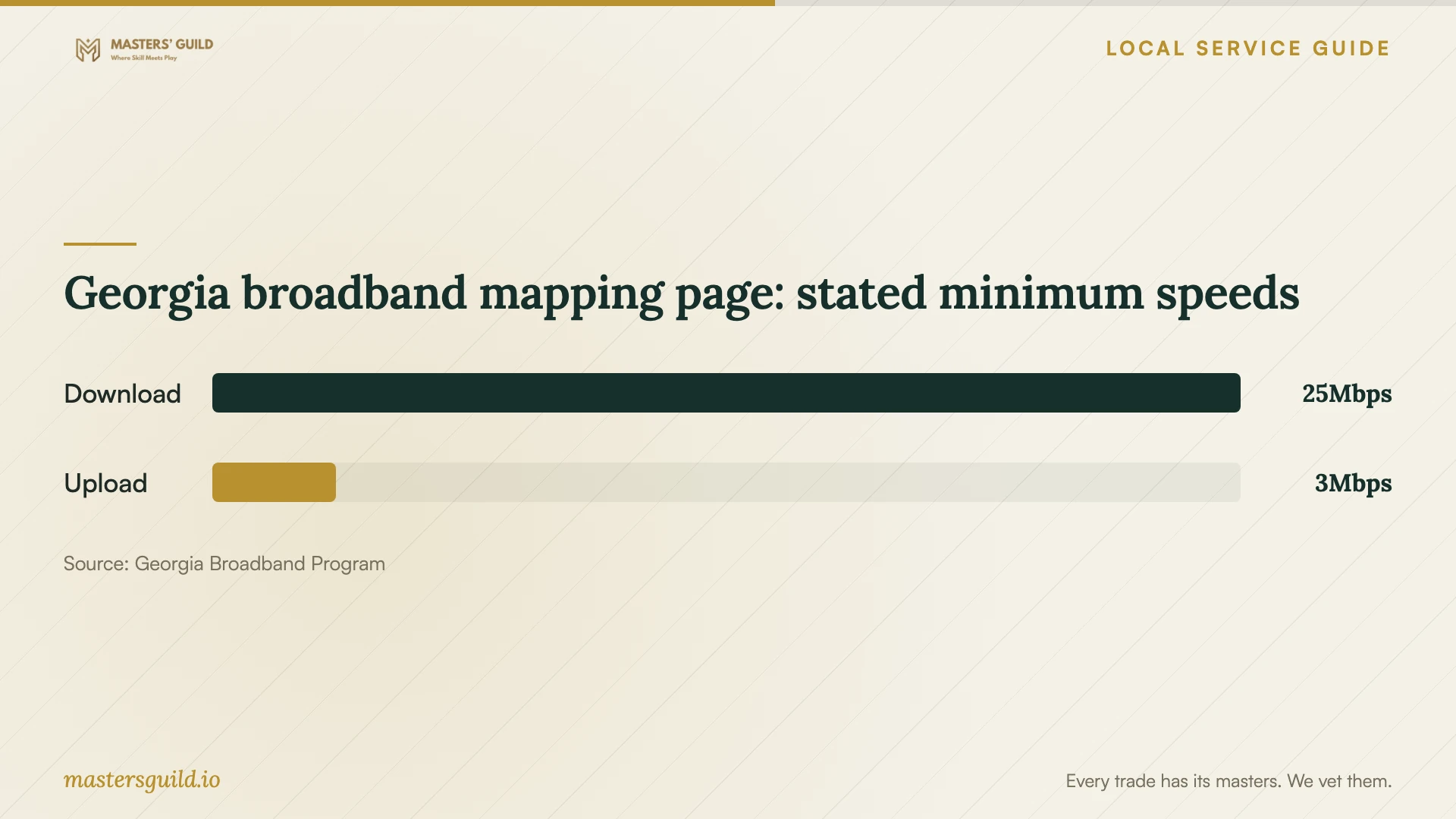
The program says it published the map on June 15, 2022, and describes broadband using minimum speeds of 25 Mbps download and 3 Mbps upload. Those values provide context for the chart and mapping resource. Choose a plan around your intended activities rather than treating the mapping thresholds as a home-network specification. [3]
Define the cabling work before opening walls
Put proposed Ethernet outlets and equipment locations on a simple floor plan. Have the installer describe the cable route, visible raceway, wall openings, and responsibility for patching and paint. For a rental or condominium, secure the relevant owner or building approval before authorizing work in shared spaces or penetrations.
Georgia’s rule distinguishes LV-A licenses for alarm and general systems, LV-T for telecommunication and general systems, LV-G for general systems, and unrestricted LV-U licenses. Its general-system definition includes local area network distribution wiring. Review the contractor’s category and number against the proposed work, along with insurance information. [1]
The licensing rule establishes categories and scope; it does not decide the permit requirements or exemption status of your particular installation. Have the contractor identify any exemption they rely on and confirm applicable requirements before work starts. Include responsibility for that confirmation in the proposal. [1]
Compare written quotes for the same job
Obtain a written quote based on your layout and access conditions. Give bidders the same room list and deliverables: equipment supply, configuration, cable termination, labeling, testing, cleanup, and wall repair. Include the diagnostic charge, equipment-return terms, additional-work approval, and follow-up support so you can compare the complete proposed job.
Georgia’s Department of Revenue excludes itemized repair and installation labor charges from sales tax. It also requires service providers who sell tangible personal property to collect and remit tax as appropriate. Have the seller distinguish equipment sales from labor and explain the tax calculation, including any bundled charge. [2]
Make completion something you can check
Choose acceptance tests that reflect how you use the house, such as a call from the office and streaming in the living room. Include the devices you want connected. For Ethernet runs, specify the test deliverable: a connectivity check or a documented performance test. Review the results with the technician before accepting the work.
Keep the administrator account and recovery details under your control. At handover, collect equipment models, cable labels, network names, configuration changes, and support terms. Practice signing in while the technician is present. Agree on the purpose and duration of any remote access, then confirm how to remove it.
Georgia broadband mapping page: stated minimum speeds
Local details that affect your job
Georgia cabling credentials need a scope check
Georgia includes local area network distribution wiring within general low-voltage systems. General systems fall within the listed LV-A, LV-T, LV-G, and unrestricted LV-U categories. For an Ethernet proposal, review the actual category rather than assuming that a telecommunication label is the only relevant credential. [1]
Itemized labor changes the tax comparison
Georgia’s Department of Revenue says itemized repair and installation labor charges are not subject to sales tax. When comparing bids, look for a distinct labor line and an explanation of equipment tax. Resolve unclear bundled charges with the seller before accepting the total. [2]
State mapping supports an address check
The Georgia Broadband Program uses individual home and business locations with provider service availability in its statewide mapping method. Apply that approach to your Atlanta address when considering a provider change, then confirm current service with the provider before arranging setup. [3]
Match the proposed scope to your situation
| Your situation | Scope to discuss | Settle before approval |
|---|---|---|
| Several devices lose connection | Diagnosis with wired and Wi-Fi tests | Who follows up on a suspected provider fault |
| Problems concentrate in particular rooms | Coverage assessment using your devices | Proposed equipment locations and acceptance activities |
| You want new Ethernet outlets | Cabling routes, terminations, and test results | Georgia low-voltage license scope and wall-repair responsibility |
| You plan to change providers | Address-level availability investigation and setup sequence | Provider confirmation, activation date, and gateway equipment |
Your hiring checklist
- Prepare a fault log with affected rooms, devices, activities, and times.
- List the provider, plan, equipment models, and any planned activation date.
- Mark proposed outlets and equipment locations on a floor plan.
- Arrange access to work areas and relevant property approvals.
- Identify who will approve extra work and the maximum authorized scope.
- Set aside time for completion tests and an account-access demonstration.
Frequently Asked Questions
Should I buy a mesh system before the visit?
Wait for the diagnosis unless you have already agreed on an equipment plan. Have the technician explain the proposed purchase using tests in the rooms you use. If you own equipment, provide its model information and include configuration of that equipment in the scope.
Does Georgia require a particular license for my Ethernet job?
Georgia’s rule includes local area network distribution wiring within general low-voltage systems and describes several license categories covering general systems. It does not resolve every installation or exemption. Have the installer explain which category covers the work and the basis for any claimed exemption. [1]
What if the connection problem returns after installation?
Agree on follow-up terms before booking: what the technician will investigate, any visit charge, and how equipment returns work. Keep the original fault description and completion results so you can explain whether the same problem has returned or a different device or room now needs attention.
Does the broadband map predict my home’s speed?
The Georgia program describes mapping locations against provider availability. Its stated 25 Mbps download and 3 Mbps upload values define broadband in that mapping context. Confirm current offers with the provider and use tests at your home to assess the connection you receive. [3]
Sources and scope
This guide combines the sources below with practical planning guidance. Figures apply to the stated geography and period; request a written quote for your property.