
Local service guide
Mold Removal in Atlanta: Hiring and Cleanup Planning
For Mold Removal in Atlanta, hire a contractor with mold-cleanup experience and ask for a written scope that addresses the water problem, affected materials, and cleanup method. EPA says homeowners can handle areas under about 10 square feet in most cases, but sewage damage needs an experienced professional. Before approving tear-out, ask how the contractor will address Georgia’s asbestos inspection requirements. [1] [3]
Choose the right cleanup scope
Measure the visible affected area before discussing the job. EPA’s homeowner guidance uses less than about 10 square feet as a size that homeowners can handle in most cases. For larger growth or extensive water damage, EPA directs readers to its more detailed remediation guidance. Size alone does not settle who should do the work: contaminated water and suspected HVAC involvement require separate decisions. [1]
Tell each contractor where you see growth, when you first noticed it, and whether a plumbing leak or other water event preceded it. Share photographs without disturbing materials. Ask the contractor to distinguish the visible cleanup area from any proposed investigation behind walls or under flooring, and require your approval before expanding removal.
If you know or suspect that mold contaminates the HVAC system, EPA says not to run it because it could spread mold through the building. For sewage or other contaminated-water damage, choose a professional with experience cleaning and repairing buildings affected by that water. [1]
Compare written proposals
Ask contractors for references from mold-cleanup work and check them. EPA recommends choosing someone with cleanup experience and asking them to follow EPA, ACGIH, IICRC, or other professional or government guidance. Have the contractor name the guidance in the proposal and explain how it applies to your rooms and materials. [1]
Request separate descriptions and prices for investigation, cleanup, material removal, moisture-source repairs, and rebuilding. Ask who will perform each part, what the quoted price excludes, and how the contractor will price additional damage found after opening a surface. Compare proposals using the same boundaries rather than choosing from totals alone.
Agree on completion criteria before work starts. Ask for photographs of removed materials and repairs, a record of drying checks, and a walkthrough before rebuilding conceals the work. If a contractor proposes testing, ask what question it answers and how the result would change the cleanup scope.
Resolve moisture and material damage
EPA advises fixing plumbing leaks and other water problems, then drying items completely. Homeowners can scrub mold from hard surfaces with detergent and water and dry them. Porous materials such as carpet and ceiling tiles may need disposal because mold can occupy spaces that cleaning cannot reach. [1]
Ask the contractor to identify which materials they plan to clean, remove, or retain. Discuss belongings separately from building surfaces, especially valuable or sentimental items. EPA suggests consulting a specialist when you are unsure how to clean an item or want to preserve something valuable. [1]
Clean and dry surfaces before painting or caulking. EPA warns that paint over moldy surfaces can peel. For recurring bathroom growth, EPA recommends improving ventilation and increasing cleaning frequency. Ask whether the proposed repair addresses the damp conditions you observe between cleanups. [1]
Prepare for access and possible tear-out
Before the crew arrives, agree on work hours, access routes, where you can keep belongings, and which rooms you can use during cleanup. Ask how workers will separate the work area from occupied rooms and move removed materials out of the home. Give the contractor a contact who can approve scope changes while work is underway.
Address asbestos before approving renovation. Georgia EPD says renovation or abatement needs an inspection unless all material is presumed asbestos-containing and handled as such. You cannot presume that material lacks asbestos. Ask the contractor to document the inspection or presumed-asbestos approach before cutting or removing affected materials. [3]
If you have health concerns, EPA recommends consulting a health professional before cleanup. Raise those concerns when discussing access and occupancy with the contractor, and ask for a work plan you can review before deciding where to stay during the job. [1]
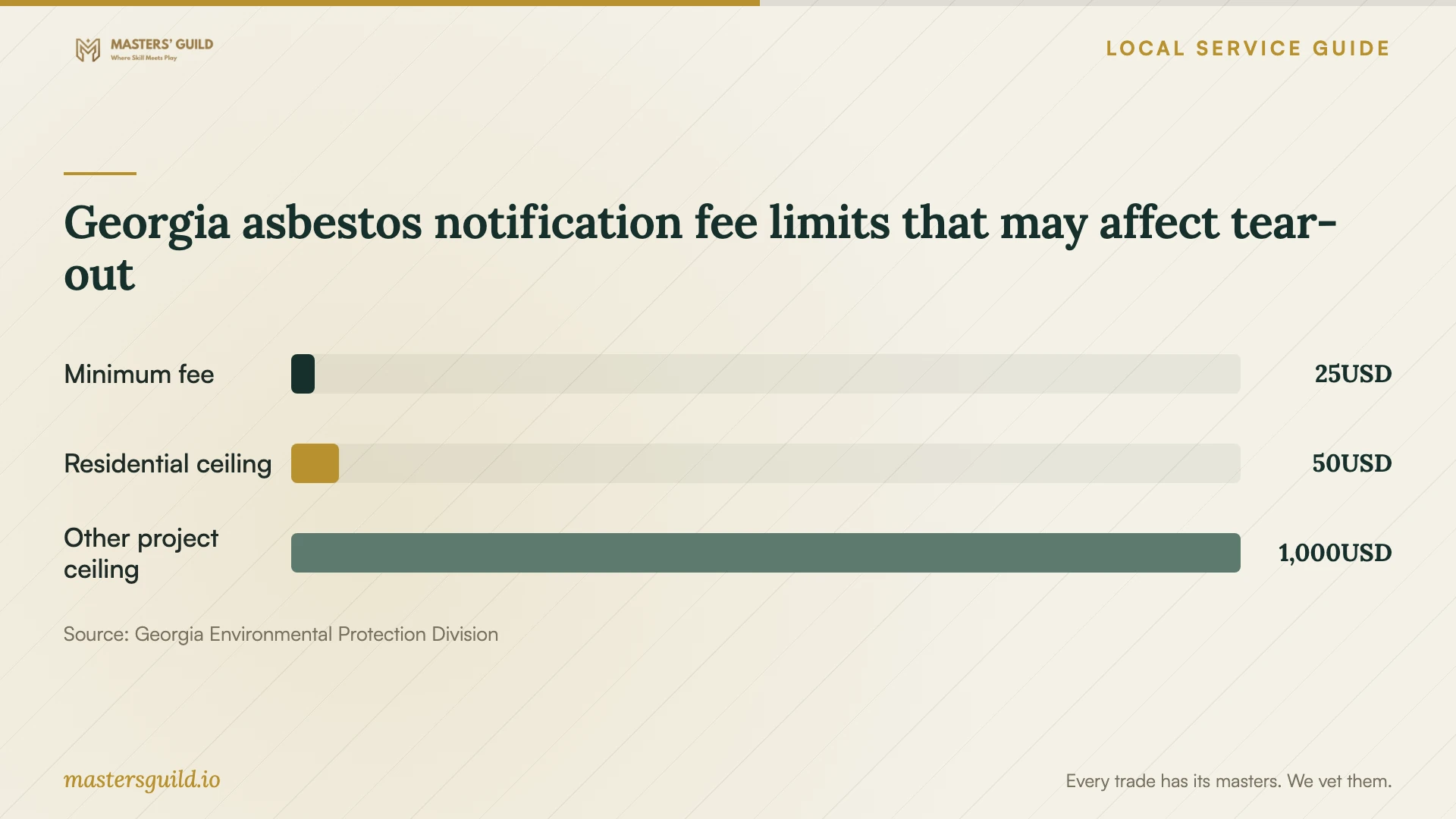
Georgia asbestos notification fee limits that may affect tear-out
Local details that affect your job
Georgia’s mold complaint limits
For an Atlanta private residence, Georgia DPH’s Environmental Health Section serves as an information resource and offers no specific services for indoor mold growth. Its regulated segment is tourist accommodations. For rental housing, DPH advises contacting city or county officials to determine whether a local housing code applies. If you rent, document the moisture problem and your repair requests rather than planning around a DPH mold inspection. [2]
Georgia credentials before asbestos-related removal
Georgia EPD does not license asbestos inspectors, but it requires inspectors to hold current training from an EPA-accredited provider. EPD licenses asbestos abatement contractor firms. If your cleanup involves suspect building materials, ask for the inspector’s training documentation and written report. EPD recommends an inspector unaffiliated with the abatement contractor to avoid a conflict of interest. [3]
Choose your next step
| Situation | Next step | Planning point |
|---|---|---|
| Under about 10 square feet | Consider homeowner cleanup under EPA guidance | EPA says this is possible in most cases; health concerns warrant medical advice. |
| Larger area or extensive water damage | Review EPA’s detailed remediation guidance and discuss professional scope | Do not decide from visible area alone. |
| Sewage or contaminated water | Hire an experienced professional | Ask about comparable contaminated-water cleanup work. |
| Suspected HVAC contamination | Do not run the HVAC system | Discuss the affected system before further action. |
| Renovation or material tear-out | Address Georgia asbestos inspection requirements | Inspection is required unless all material is presumed asbestos-containing and handled as such. |
Your hiring checklist
- Photograph visible growth and describe the water event or recurring dampness.
- Ask each bidder to define the cleanup area and any proposed exploratory opening.
- Check references from mold-cleanup projects.
- Separate cleanup, moisture repairs, disposal, and rebuilding in the quote.
- Resolve the asbestos inspection or presumed-asbestos approach before renovation.
- Agree on room access, belongings, work hours, and scope-change approval.
- Request completion documentation and a walkthrough before rebuilding.
Frequently Asked Questions
Can I clean a small patch myself?
EPA says homeowners can handle mold covering less than about 10 square feet in most cases. Fix the water problem, clean hard surfaces with detergent and water, and dry them. Sewage damage needs a professional, and health concerns warrant advice from a health professional before cleanup. [1]
Does Georgia DPH inspect mold in my home?
DPH says its indoor air quality program provides educational information and offers no specific services for indoor mold growth. For rental housing, ask city or county officials whether a local housing code applies. [2]
Do I need an asbestos inspection before removing damaged materials?
Georgia EPD says renovation or abatement requires an inspection unless all material is presumed asbestos-containing and handled as such. Ask how this requirement applies to the proposed removal before approving work. [3]
How should I compare cleanup prices?
Ask bidders to price the same affected area and identify exclusions. Separate cleanup from leak repairs and rebuilding. Require a written process for approving additional removal so you can assess the financial effect before the crew expands the job.
Sources and scope
This guide combines the sources below with practical planning guidance. Figures apply to the stated geography and period; request a written quote for your property.