
Local service guide
Atlanta lighting installation: plan your project
For lighting installation in Atlanta, choose a contractor whose Georgia license covers your electrical system, then request a written scope that separates fixture replacement from new wiring and controls. Georgia restricts Class I electrical contractors to single-phase installations that do not exceed 200 amperes at the service drop or service lateral; Class II licenses are unrestricted. Before buying fixtures, agree on brightness, mounting locations and dimmer compatibility. [1] [4]
Define the work before asking for a quote
Describe each location and say whether you want to replace a fixture, move it or add a new light. Include the fixture model if you have chosen one, and identify any proposed switches, dimmers or motion controls. Ask the contractor to inspect the existing wiring and mounting arrangement before committing to a fixed scope.
Send room photos, a ceiling-height measurement and a sketch of your preferred locations. For a pendant, mark the intended position relative to the table or counter. For outdoor work, identify the areas you want to illuminate and ask the installer to discuss glare toward neighboring windows.
Match the contractor’s credentials to the system
Georgia distinguishes restricted Class I electrical licenses from unrestricted Class II licenses. Class I contractors can undertake electrical contracting involving single-phase installations that do not exceed 200 amperes at the service drop or service lateral. Ask the contractor to explain how the license class fits your home’s system, especially if you plan lighting alongside other electrical alterations. [1]
Request the license number and license class, along with evidence of insurance. Ask who will perform the work and who will take responsibility for any permit and inspection requirements. Confirm those requirements for your address and proposed scope before setting the installation date.
For a low-voltage landscape-lighting proposal, ask which credential covers the work. Georgia’s licensing rules include low-voltage lighting within general low-voltage systems. Have the contractor distinguish that work from any proposed changes to the power supply feeding it. [1]
Choose brightness and controls before buying
Use lumens to describe the brightness you want. ENERGY STAR measures light output in lumens and recommends choosing the lowest wattage among bulbs that provide the needed output. Tell the installer whether you want to preserve your current brightness or change it, then record the agreed output in the fixture schedule. [2]
Choose light appearance as a separate specification. DOE’s guidance lists 2,700 K as warm and 3,000 K as soft, with both appearing among home applications. Try a sample in the room before ordering matching bulbs throughout the house, especially if you want to keep the appearance of existing lighting. [4]
DOE advises buyers to check dimming capability and compatibility with the dimming system. It also warns that heat in fully enclosed fixtures can affect certain LED products’ performance and life. Give the installer the bulb, fixture and dimmer specifications together, and ask for confirmation that the combination suits the intended use. [4]
Compare outdoor ownership and maintenance options
Georgia Power offers outdoor lighting for residential and other settings. Its monthly lighting service includes design, installation, maintenance and repair, with no upfront equipment or installation cost under that offering. The utility also describes direct-purchase options and says it provides outdoor-lighting services across Georgia, including outside its electric service area. [3]
For a proposed yard or driveway system, ask whether Georgia Power offers a suitable arrangement at your address. Compare its written terms with a contractor’s purchase-and-install proposal. Ask about fixture choice, electricity charges, maintenance responsibilities, contract length and removal costs. Request a separate quote for any indoor work.
Agree on price, access and completion
Ask each bidder to separate labor, fixtures, controls, wiring changes and any permit-related charges. Request a written allowance or approval process for problems discovered after removal of the old fixture. Also agree on who handles ceiling or wall repairs, disposal and any return visit. Compare quotes against the same locations and fixture specifications.
Before work starts, clear the installation area and arrange access to the electrical panel. Discuss the power interruption and any equipment you need to keep operating. At completion, test each light and control with the installer, confirm the agreed fixture locations, and keep model numbers, warranty documents and any applicable inspection records.
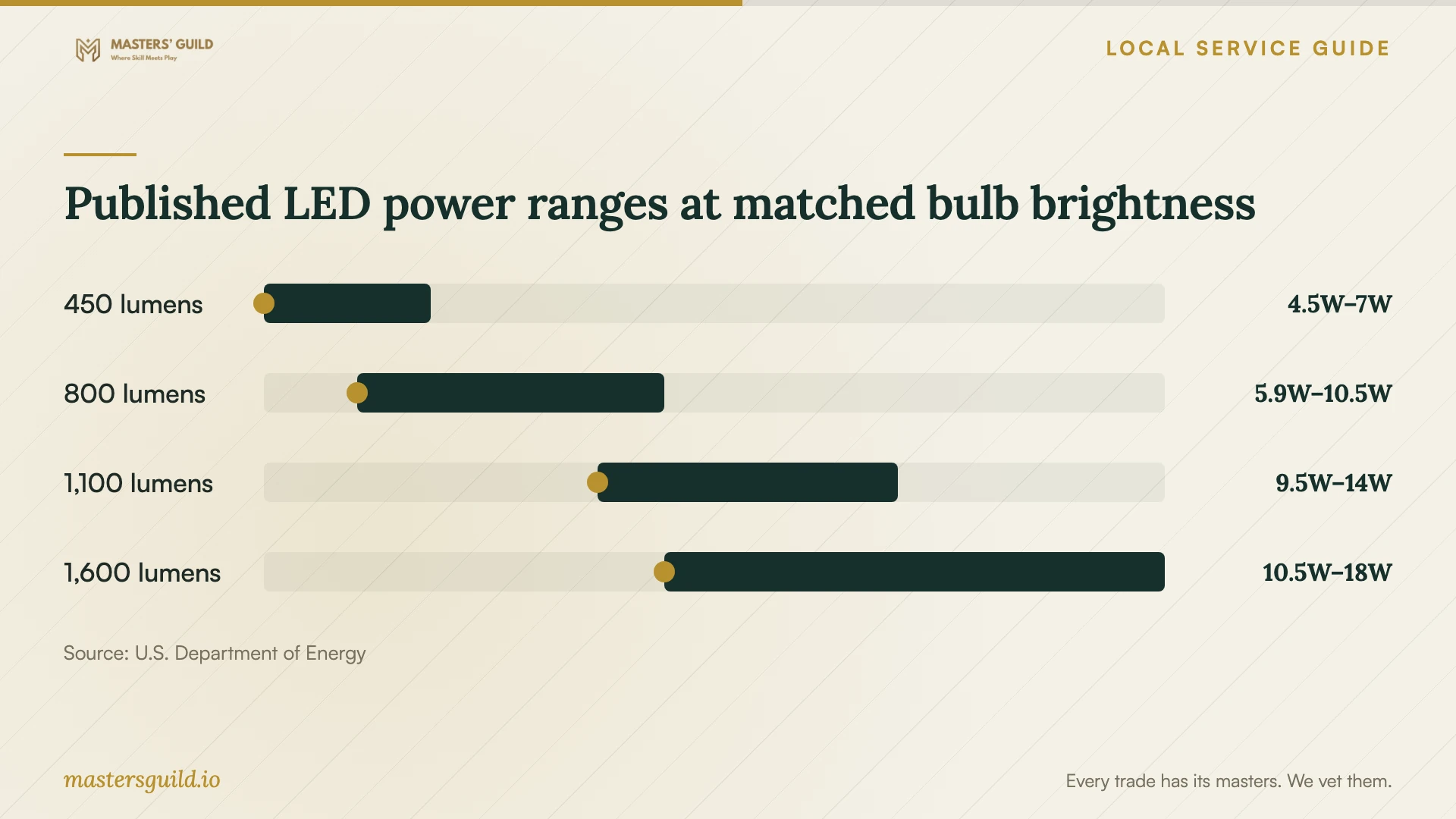
Published LED power ranges at matched bulb brightness
Local details that affect your job
Georgia license scope affects your shortlist
The statewide Class I limit applies to single-phase electrical installations that do not exceed 200 amperes at the service drop or service lateral; Class II licenses are unrestricted. For your Atlanta project, ask the contractor to identify the service size and explain whether the license covers the installation before accepting an offer. [1]
A statewide utility option changes the outdoor comparison
Georgia Power says it offers outdoor-lighting services throughout Georgia, even outside its electric service area. It includes residential applications and a monthly service covering design, installation, maintenance and repair. Ask whether your proposed installation qualifies, then compare ongoing contract charges and responsibilities with private ownership. [3]
Choose a next step for your lighting project
| Your project | Next step | Question to resolve |
|---|---|---|
| Existing fixture replacement | Provide the fixture specifications and request a mounting and wiring assessment. | Does the quote include any required mounting changes and disposal? |
| Lighting with electrical alterations | Match the contractor’s Georgia license class to the installation. | Does the work fit Class I’s single-phase limit of 200 amperes at the service drop or lateral? |
| Dimmable LED installation | Check the bulb and dimmer specifications together. | Has the installer confirmed compatibility with the dimming system? |
| Fully enclosed fixture | Check the bulb packaging or technical specifications. | Does the manufacturer permit this enclosed-fixture application? |
| Outdoor lighting system | Compare a private installation with Georgia Power’s monthly service and purchase options. | Which arrangement gives you acceptable maintenance duties and contract terms? |
Your hiring checklist
- List each fixture location and distinguish replacement, relocation and new installation.
- Provide fixture model numbers, room photos, ceiling height and preferred control locations.
- Ask for the contractor’s Georgia license number, class and evidence of insurance.
- Confirm permit and inspection responsibilities for your address and scope.
- Agree on brightness, light appearance, dimming and fixture compatibility before purchasing.
- Request itemized quotes and written approval terms for additional work.
- Test lights and controls at completion and retain product and project records.
Frequently Asked Questions
How much should I budget for installation?
Request an itemized quote for your fixture locations, wiring changes and controls. Ask bidders to separate fixture costs, labor and any permit-related charges. Have them specify how they will price additional work, and agree on an approval process before installation begins.
Does a small lighting job fit any Georgia electrical license?
Judge the license against the installation. Georgia limits Class I electrical contractors to single-phase installations that do not exceed 200 amperes at the service drop or lateral. Class II licenses are unrestricted. Ask the contractor to explain the fit for your system. [1]
Which LED replaces a traditional 60-watt bulb?
ENERGY STAR gives 800 lumens as the minimum brightness reference for a traditional 60-watt incandescent replacement. Check light appearance, physical fit and dimmer compatibility as well. Use the chart to compare bulb power requirements at matched brightness; plan the lighting for the whole room with your installer. [2] [4]
Can I include outdoor maintenance in a service arrangement?
Georgia Power describes a monthly outdoor-lighting service that includes design, installation, maintenance and repair. It also offers direct-purchase options. Ask whether your property and desired fixtures qualify, and review the contract before comparing it with a privately owned installation. [3]
Sources and scope
This guide combines the sources below with practical planning guidance. Figures apply to the stated geography and period; request a written quote for your property.