
Local service guide
Heavy Lifting in Atlanta, GA: Hiring and Planning
For Heavy Lifting in Atlanta, choose a crew after sharing the item dimensions, estimated weight, stairs, and loading route. Specify whether you need lifting at one property, loading your vehicle, or transportation. For a household-goods carrier handling a move within Georgia, check its DPS certificate; resolve any lane or sidewalk closure before booking. [1] [2] [3]
Define the lifting job before choosing a crew
Start with an item list and the exact destination for each piece. A sofa going upstairs, a refrigerator going into a rental truck, and furniture traveling to another home call for different arrangements. State who supplies and drives the vehicle, who secures the load, and whether the crew must return for unloading.
Send photographs of the items and the carrying route. Measure door openings, hallways, stair landings, and elevator interiors. Give a manufacturer’s weight if you have it; identify an estimate as an estimate. Ask the provider to choose the crew size and equipment after reviewing these details.
For a piano, safe, stone tabletop, or other item needing special handling, ask the provider to confirm that it accepts the item and explain its proposed method. Agree on disassembly, reassembly, floor protection, and final placement. For appliances, arrange any needed utility disconnection and reconnection as a separate part of the scope.
Match credential checks to transportation
Georgia DPS says household-goods carriers under its jurisdiction must hold a certificate. Its consumer guide covers moves with both origin and destination within Georgia; it directs interstate complaints and claims to the Federal Motor Carrier Safety Administration. Ask the provider whether it will act as the carrier, then verify the relevant authority for that arrangement. [2]
For a crew that shifts furniture inside your home or loads a vehicle you drive, describe the arrangement to DPS and confirm which requirements apply. Ask the provider for written terms, proof of applicable insurance, and an explanation of responsibility for item or property damage.
Compare written scopes and billing terms
The DPS guide says licensed professional movers must provide a free written estimate of probable moving cost. It distinguishes binding and non-binding estimates and advises you to disclose stairs, elevators, and other destination problems. For a regulated move, obtain the estimate before the carrier arrives and keep a signed copy. [2]
DPS describes worker-and-hour billing for moves under 50 miles and weight-and-distance billing for moves over 50 miles. Those categories concern regulated household moves. Ask the mover to identify the applicable billing method and explain how it will charge for your route. [2]
For lifting help, request an item-specific quote that names the crew size, minimum booking, included equipment, and work to complete. Ask when paid time starts and ends, how the provider handles waiting, and what happens if an item will not fit. Compare quotes for the same scope and request the total expected charge.
Arrange access before confirming the arrival time
Ask your building manager about loading areas, elevator reservations, moving hours, and any insurance documents it requires. Walk the route from the vehicle to the room. Tell the provider about steps, gates, low clearances, and carrying distance, then confirm who will meet the crew and open each access point.
If the loading plan would block a public lane, street, or sidewalk in Atlanta, consult ATLDOT’s right-of-way closure process. The city requires a closure permit for that activity, with an exception for certain franchise-utility maintenance. Obtain any building approval and resolve the city’s closure requirement; agree who will handle the permit before confirming the loading plan. [1]
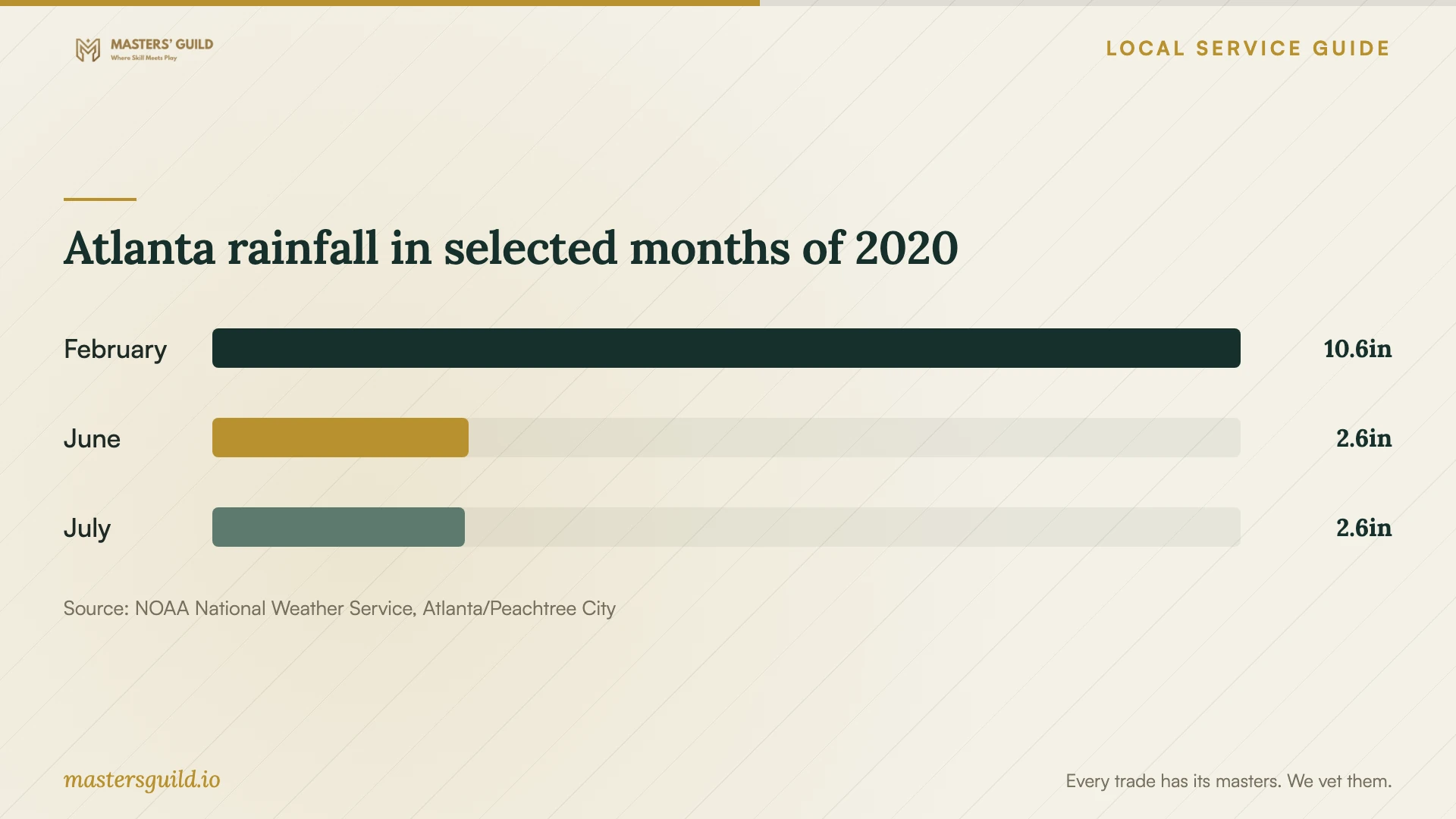
Check the forecast near the appointment and agree on a rain-delay plan. Ask how the crew will cover items and keep the carrying route usable. The chart shows rainfall variation in selected months of 2020. Use the appointment’s forecast to plan outdoor work. [4]
Agree on damage protection and inspect the result
For a regulated household move, DPS requires a bill of lading and a liability addendum. The guide warns that carrier liability and insurance are different and that liability can fall below the value of your belongings. Ask the mover to explain the protection you select, any deductible, and how it would handle damage to your heavy item. [2]
Photograph existing marks on the item, walls, and floors before the crew starts. Agree who will remove doors or detach furniture parts. After placement, inspect the item and carrying route with the crew. For a household move, DPS advises recording loss or damage on both copies of the inventory or bill of lading before signing the delivery receipt. [2]
Atlanta rainfall in selected months of 2020
Local details that affect your job
Public loading access in Atlanta
ATLDOT requires a closure permit for activities that block or close a lane, street, or sidewalk, apart from certain franchise-utility maintenance. If your crew proposes occupying that space, review the city’s right-of-way closure permit information before accepting the plan. Ask who will apply and confirm the approved arrangements before the truck arrives. [1]
Georgia carrier verification
For a household-goods move between Georgia addresses, request the carrier’s DPS certificate number and consult the official licensed-mover list. The DPS Household Goods page asks consumers to contact the department to verify carrier status. Complete that check before hiring a provider that will transport your belongings. [2] [3]
Choose the arrangement for your job
| Your job | Arrangement to request | Resolve before hiring |
|---|---|---|
| Furniture relocation inside one home | Lifting crew with an agreed route and placement | Item acceptance, equipment, disassembly, and damage terms |
| Loading a vehicle you will drive | Loading labor with explicit responsibility for securing items | Who supplies restraints and who checks the completed load |
| Household goods traveling between Georgia homes | Household-goods carrier with a DPS certificate | Carrier status, signed estimate, and liability addendum |
| Loading that blocks an Atlanta sidewalk or lane | Crew and vehicle plan with closure permission | ATLDOT closure permit responsibility before arrival |
| Piano, safe, or other special handling item | Provider that confirms acceptance and a handling method | Weight, route, equipment, and protection in writing |
Your hiring checklist
- List each item, its dimensions, known weight, and final placement.
- Send photos of doorways, stair turns, landings, and the loading route.
- State who supplies, drives, loads, secures, and unloads the vehicle.
- Ask the provider to confirm crew size, equipment, and item acceptance.
- Confirm building access and who will resolve public loading permissions.
- Get written pricing, timekeeping, waiting, and scope-change terms.
- Review damage responsibility and photograph existing condition.
- Clear the route and inspect the items and property with the crew afterward.
Frequently Asked Questions
How much should I budget for lifting help?
Request an item-specific quote for Atlanta lifting help, including the carrying route and final placement. Ask about minimum hours, crew size, equipment, and waiting charges. For regulated household moves, DPS requires a free written estimate from a licensed professional mover. [2]
Does moving one heavy item require a licensed mover?
DPS requires certificates for household-goods carriers under its jurisdiction. Ask whether the provider will transport your item or perform lifting at the property. For labor-only arrangements, describe who supplies and drives the vehicle, if any, and confirm the applicable requirements with DPS. [2]
Can the truck block the sidewalk while the crew loads?
Atlanta requires a closure permit for an activity that blocks or closes a sidewalk, lane, or street, subject to an exception for certain franchise-utility maintenance. Resolve the loading location and permit responsibility with the provider before the appointment. [1]
What should I do if the mover damages an item?
For a regulated Georgia household move, note the damage on both copies of the inventory or bill of lading. DPS says to file a written claim with the carrier within 90 days of delivery. Keep the damaged property and consult the mover before repairing or replacing it. [2]
Sources and scope
This guide combines the sources below with practical planning guidance. Figures apply to the stated geography and period; request a written quote for your property.