
Local service guide
Atlanta duct cleaning: Scope and Hiring
Arrange duct cleaning in Atlanta after a contractor shows you substantial contamination and gives you a written whole-system scope. EPA recommends considering cleaning for substantial visible mold, pests, or excessive debris, including particles coming from supply registers. Compare three written estimates, address the underlying cause, and separate cleaning from any proposed duct sealing or equipment repair. [1]
Choose inspection, cleaning, or repair
Start by asking the contractor to show you the problem inside your system. EPA identifies substantial mold on hard surfaces, pest infestation, and excessive dust or debris as reasons to consider cleaning. A contractor should distinguish ordinary dust on a return grille from contamination deeper in the ducts. For unexplained health symptoms, discuss your concerns with your doctor; EPA says duct cleaning has not been shown to prevent health problems. [1]
For a musty smell or suspected mold, ask where moisture enters the system and who will correct it. EPA recommends repairing leaks, checking condensate drainage, and examining insulation near cooling coils. If insulation is wet or moldy, arrange replacement rather than approving a cleaning-only proposal. An expert may need laboratory analysis to confirm that a substance is mold. [1]
Describe your goal when you request an estimate: removing documented contamination, investigating moisture, or correcting comfort problems. Ask for separate recommendations and prices for each task. That gives you a clear basis for choosing the work and deciding whether you need another contractor.
Get a quote with a defined scope
Ask each bidder to list supply and return ducts, registers, grilles, the air handler, blower, coils, and drain pans, with any exclusions. EPA advises choosing a qualified provider who agrees to clean all system components. A low quote for the visible vents gives you little information about the work inside the system. [1]
EPA's guidance lists a national reference range of $450 to $1,000 per heating and cooling system, depending on scope, size, access, region, and contamination. Treat that as background from its longstanding guidance, not a verified Atlanta price for October 2026. Request a total for your property after the contractor inspects it, and ask how additional systems or inaccessible sections affect the quote. [1]
Require a written total and approval before added work. If a contractor charges by the hour, ask for the expected hours and any interruptions. EPA recommends at least three written estimates and checking references. Ask about experience with your duct type, insurance, and any credentials relevant to the proposed work. [1]
Check the cleaning method and chemical add-ons
Ask how the crew will collect loosened debris and protect your furnishings. EPA recommends vacuum equipment that exhausts outdoors, or HEPA equipment when the exhaust stays indoors. It also recommends soft-bristled brushes for fiberglass duct board and fiberglass-lined metal ducts, plus sealing and insulating access openings after cleaning. [1]
Before approving a biocide, ask for the product label, the proposed application surfaces, and an explanation of why physical cleaning and moisture control will not suffice. EPA says no biocides are registered for fiberglass duct board or fiberglass-lined ducts. It also advises against routine coatings that encapsulate duct contaminants. Distinguish these coatings from sealing air leaks at duct joints. [1]
If the contractor suspects asbestos-containing material, pause the cleaning scope and ask for specialist assessment. EPA says crews should inspect for these materials before cleaning and leave disturbance or removal to trained, equipped contractors. [1]
Separate comfort work from contamination removal
For uneven room temperatures or concerns about wasted heating and cooling, ask for an HVAC assessment before choosing a cleaning package. EPA reports little evidence that cleaning ducts alone improves system efficiency, although cleaning dirty coils, fans, and heat exchangers may help. Georgia Power lists home energy assessments and duct sealing among its residential energy improvements. [1] [2]
Ask the assessor to explain whether you need cleaning, equipment maintenance, leak sealing, or a combination. Georgia Power's program page contains conflicting rebate amounts in different sections. Confirm the applicable amount and full requirements before including a rebate in your budget. [2]
Prepare access and review the finished work
Before the appointment, tell the crew where equipment and access hatches are, identify rooms with contamination concerns, and agree on furniture protection. Ask how long heating or cooling will be unavailable and where you should keep pets. If you also want dryer-vent work, request a separate written scope so both parties know which exhaust route the crew will address.
At completion, ask the contractor to show you the cleaned components and before-and-after photographs of inaccessible areas. EPA recommends a visual inspection, checking that registers are secure, access openings do not leak, and the system operates in heating and cooling modes. Record unfinished items before accepting the job. [1]
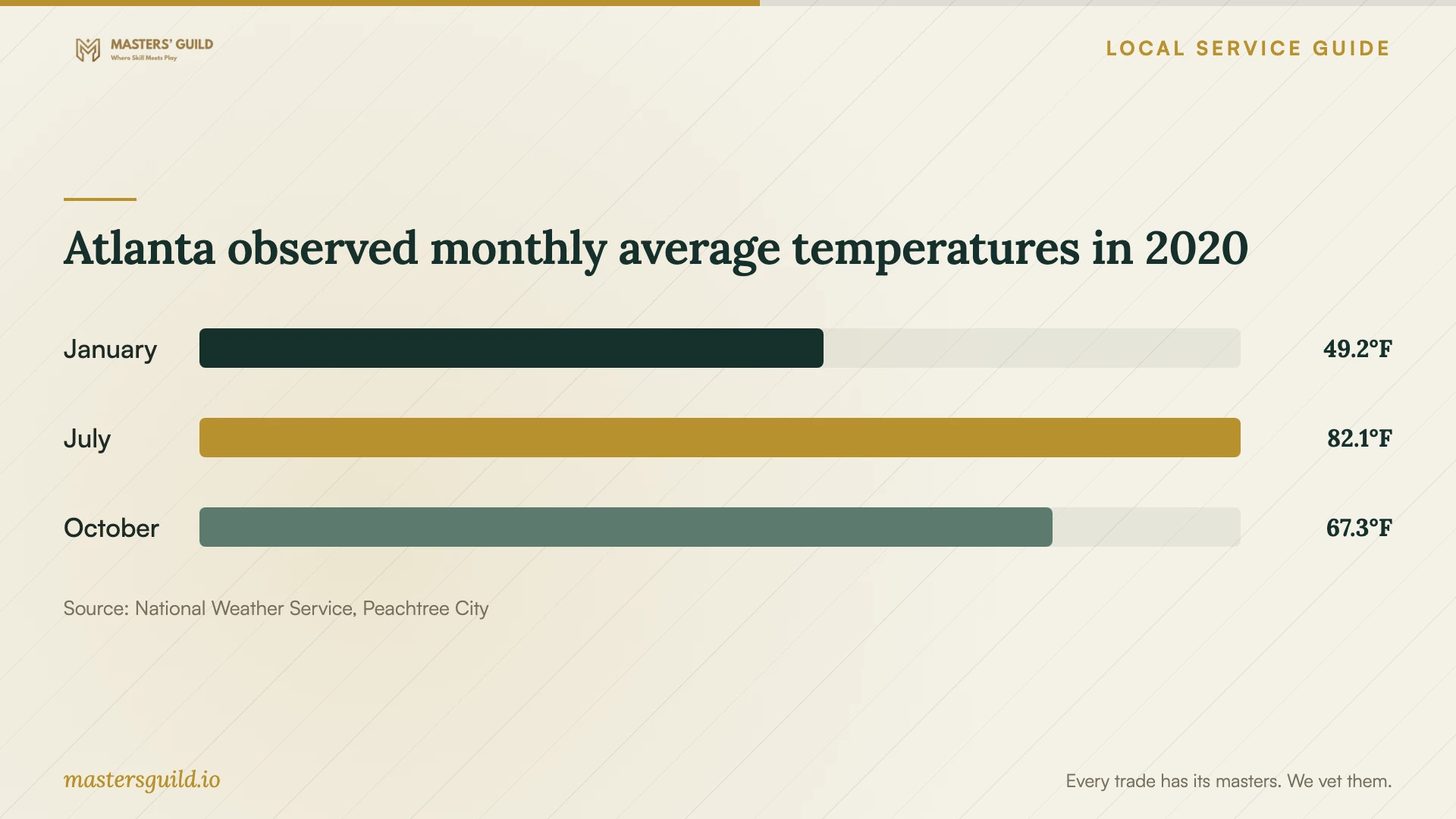
Atlanta observed monthly average temperatures in 2020
Local details that affect your job
Choose an installer who meets the utility requirements
For an Atlanta home served by Georgia Power, check credentials before arranging energy-related duct work. The utility requires a DET Verifier or Program Installer for duct sealing and a Program Installer for a home energy assessment. Ask the bidder which qualification they hold and whether the proposed scope meets the program requirements. These are program eligibility rules, not evidence of a duct-cleaning license. [2]
Plan the rebate paperwork around payment
Georgia Power limits this residential program to its residential customers and requires rebate applications within 60 days of the paid-in-full invoice or receipt date. Confirm your electricity provider before budgeting for an incentive. If you pursue eligible sealing or assessment work, keep the invoice and meter number and agree who will submit the application. The utility says complete applications typically take 6 to 8 weeks to process. [2]
Choose the next step for the problem you see
| Observation or goal | Next step | Question to ask |
|---|---|---|
| Dust on a return grille | Clean the grille and assess deeper contamination before booking whole-system work. | Can you show contamination beyond this grille? |
| Excessive debris or particles from supply registers | Request inspection and a whole-system cleaning scope. | Which components will you clean, and what caused the buildup? |
| Suspected mold or wet insulation | Confirm the contamination and correct moisture; arrange replacement of wet or moldy insulation. | Who will address the moisture source and damaged material? |
| Uneven temperatures or energy concerns | Request an assessment of equipment and duct leakage. | Does your recommendation address leakage, equipment, or contamination? |
| Georgia Power rebate-funded duct sealing | Check eligibility and use a DET Verifier or Program Installer. | Who will document the work and submit the application? |
Your hiring checklist
- Describe the observed problem and request photographs or a walkthrough before approving cleaning.
- Ask the bidder to identify duct materials and explain any replacement recommendation.
- Compare written scopes, exclusions, and total prices for the same components.
- Agree on debris collection, furniture protection, access openings, and system downtime.
- Request separate prices and approval terms for chemicals, sealing, repairs, and dryer-vent work.
- For utility-supported work, confirm eligibility and installer credentials before signing.
- Review cleaned components, photographs, access seals, and system operation before accepting completion.
Frequently Asked Questions
Should I schedule duct cleaning every year?
EPA recommends cleaning as needed. It does recommend regular filter changes and heating-system inspections. Ask for evidence of contamination before approving a recurring cleaning plan. [1]
Can a contractor promise allergy relief?
EPA says duct cleaning has not been shown to prevent health problems and advises against hiring providers who make sweeping health claims. Discuss unexplained symptoms with your doctor and investigate other indoor pollution sources. [1]
Does Georgia Power offer a rebate for duct cleaning?
Georgia Power lists duct sealing, energy assessments, and HVAC maintenance among eligible services. It does not list duct cleaning as a separate rebate improvement. Ask the utility to confirm eligibility for your proposed work before counting on a rebate. [2]
How should I handle a claim that a cleaner is EPA-certified?
EPA says it does not certify, endorse, or approve duct-cleaning companies. Ask for the actual credential, check references, and request a written explanation of the cleaning method. [1]
Sources and scope
This guide combines the sources below with practical planning guidance. Figures apply to the stated geography and period; request a written quote for your property.