
Local service guide
door and window repair in Atlanta, GA
Arrange door and window repair in Atlanta by asking a contractor to identify the damaged component, explain what they can retain and provide a written scope before you approve replacement. Share photos, symptoms and your home's construction year. For covered work disturbing lead-based paint in pre-1978 residential properties, Georgia requires certified firms, certified renovators and lead-safe practices. Resolve applicability before painted-surface work. [1] [2]
Describe the opening before requesting bids
Send a photograph of the whole opening and close views of damage, hardware and any manufacturer label. Identify the room, floor and number of affected openings. Describe where a door catches, whether a window stays open and when you notice moisture. Avoid forcing a damaged moving part or handling loose glass to demonstrate the problem.
For cloudy glass, ask the contractor to locate the moisture and identify the component they propose to replace. For rainwater entry, photograph the first wet spot and record the circumstances. Request an inspection of the surrounding opening before approving a sealant-only scope. Ask the contractor to explain the diagnosis in terms you can compare with another bid.
For broken glass or a door you cannot secure, discuss temporary protection at first contact. Agree who will remove debris, how occupants should avoid the work area and how the contractor will protect the opening while you wait for parts. Ask whether the initial charge covers temporary protection, permanent repair or both.
Resolve painted-surface work before approval
Give the contractor your home's construction year and existing paint-test records. Georgia's regulations list painted window repair, modification of painted doors, sanding, scraping and planing thresholds for weatherstripping as renovation examples. For covered compensated renovations, ask for the firm's certification and the responsible renovator's credentials, plus an explanation of containment and cleanup. [1] [2]
Georgia defines target housing as housing constructed before 1978, excluding zero-bedroom dwellings and certain housing for elderly people or people with disabilities. The latter exclusion does not apply when a child age six or younger resides or is expected to reside there. The rules also allow qualifying testing or written determinations that affected components lack lead-based paint. Have the contractor document the applicable housing category and any claimed exception. [2]
For an urgent repair, ask how the contractor will address lead requirements during the immediate response and remaining work. Georgia permits limited emergency exemptions to the extent necessary to respond to the emergency, but retains cleaning, cleaning verification and recordkeeping requirements. [2]
Compare complete repair scopes
Get written bids for your specific repair scope. For each opening, name the diagnosis, parts, labor, finishing and disposal. Distinguish glass replacement within an existing assembly from replacement of the whole window. For a door, identify whether the contractor proposes hardware work, adjustment, threshold repair or replacement of the door and frame.
Ask each bidder to explain what they propose to retain and why. Compare callout charges, deposits, access equipment and return visits alongside the repair itself. Agree on a process for hidden damage: the contractor should show you the condition, price the additional work and obtain your approval before proceeding.
Separate the parts arrival estimate from the installation appointment. Establish who takes final measurements and handles an incorrect part. Before final payment, operate the repaired door or window with the contractor, check the latch or lock and record unfinished items. Keep the invoice and written parts and workmanship warranty terms.
Decide whether to plan a broader energy project
If energy performance drives your replacement decision, discuss eligibility before counting a rebate in your budget. Georgia's Home Energy Rebates FAQ allows windows only within a Home Efficiency Rebate project and says window replacement alone will not achieve the required 20% energy savings. Ask a program-approved contractor to assess a broader project and explain the proposed measures. [3]
Keep urgent protection on its own timetable. Georgia advises households against using contractor-led HER or HEAR pathways for emergency upgrades because those pathways involve comprehensive, time-intensive work and do not offer immediate rebate payments. Ask for separate scopes if you need immediate repair and want to explore a planned energy upgrade. [3]
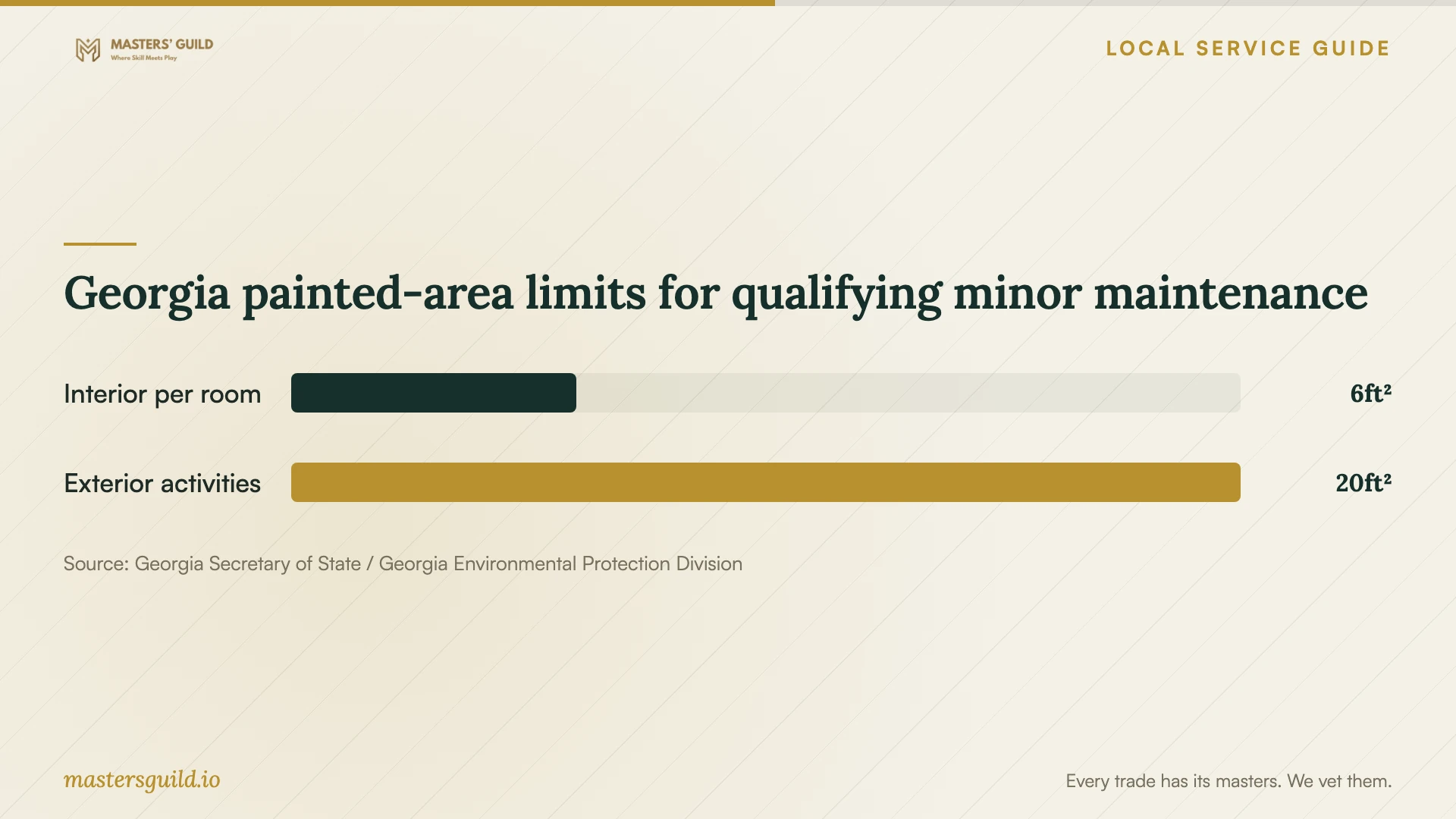
Georgia painted-area limits for qualifying minor maintenance
Local details that affect your job
Georgia's minor-maintenance rule affects component removal
Before accepting a minor-maintenance exception for an Atlanta repair, have the contractor document the work area and method. Georgia sets limits of 6 square feet or less of disturbed painted surface per interior room and 20 square feet or less for exterior activities. The exception excludes window replacement, demolition of painted surfaces and prohibited or restricted practices. When removing painted components or portions of them, count the entire surface area removed. Combine non-emergency jobs performed in the same room within 30 days. [2]
Georgia rebate participation changes contractor selection
For eligible Atlanta households pursuing a contractor-led Home Energy Rebate project, verify the contractor's program approval before allowing work to start. Georgia directs homeowners to its searchable directory or contact center to confirm participation. Repair credentials alone do not establish program approval. Ask the approved contractor to explain the application sequence before signing; Georgia requires contractor-led applications through its online portal, initiated by a program-approved contractor. [3]
Choose the next step for your opening
| Situation | Next step | Resolve before approval |
|---|---|---|
| Sticking door or window | Request a component-level inspection. | Identify the proposed adjustment or replacement part. |
| Broken glass or unsecured door | Arrange temporary protection. | Agree on debris removal and the permanent repair scope. |
| Rainwater at the opening | Show the first wet spot and request an inspection. | Define what the contractor will inspect before recommending sealant. |
| Paint disturbance in qualifying older housing | Determine Georgia RRP applicability. | Check firm and renovator credentials or documentation of an applicable exception. |
| Replacement planned around a Georgia rebate | Assess a broader HER project with a program-approved contractor. | Verify approval before work and address the required 20% energy savings. |
Your hiring checklist
- Photograph the whole opening, damaged parts and manufacturer label.
- Record when sticking, cloudiness or water entry occurs.
- Share the construction year and existing paint-test documents.
- Resolve lead-work applicability and document any claimed exception before paint disturbance.
- Compare parts, labor, finishing, disposal and return visits in a written scope.
- Agree on temporary protection and approval of additional work.
- Operate the completed repair with the contractor and retain warranty documents.
Frequently Asked Questions
Should I replace the whole window for one damaged part?
Ask for a component-level diagnosis and compare written repair and replacement scopes. Include finishing, disposal and warranties in both. Have the contractor explain which parts they can retain and what inspection findings support the recommendation.
What should I ask about a claimed lead-testing exception?
Ask which affected components the contractor tested, who performed the testing and what documentation supports the exception. Georgia permits specified component testing by a certified renovator using an EPA-recognized kit, or a qualifying written determination from a certified inspector or risk assessor. [2]
Can I assume a rebate will cover work I already completed?
Confirm eligibility with the program before relying on reimbursement. Georgia allows HER retroactive rebates under specified conditions, including a qualifying assessment before installation and other project requirements. Georgia does not allow retroactive HEAR rebates. [3]
Sources and scope
This guide combines the sources below with practical planning guidance. Figures apply to the stated geography and period; request a written quote for your property.