
Local service guide
Commercial Building Cleaning in Atlanta: Hiring Guide
Arrange Commercial Building Cleaning in Atlanta by giving bidders the same room-by-room task list, visit schedule and access rules. Request walkthrough quotes and separate prices for recurring cleaning, floor care and exterior washing. Before signing, check insurance, ask how the crew follows disinfectant label directions and agree on wastewater handling for outdoor work.
Write a scope bidders can price
Prepare a room list or floor plan showing the areas you want cleaned. Identify restrooms, break rooms, entrances, workstations and storage rooms. Note floor materials, opening hours and surfaces you want the crew to avoid. Ask each bidder to confirm the cleaning area during the walkthrough.
Assign tasks and frequencies by area. Specify restroom fixtures, bins, vacuuming, damp floor cleaning and interior entrance glass rather than requesting a general office clean. Decide whether staff will clear desks and whether cleaners may move furniture or touch equipment. Have bidders identify exclusions in writing.
For medical or dental premises, ask the responsible facility manager to provide cleaning and waste-handling requirements before seeking bids. Have the bidder identify the tasks it accepts and any work you should arrange with another provider. Obtain the manager’s approval of the proposed methods before starting.
Compare the full contract cost
Request walkthrough quotes for your premises. Ask for a recurring price tied to a stated number of visits and a written task list. Have bidders itemize the initial clean, carpet extraction, floor refinishing and exterior washing if you want those services. Decide who supplies paper products, soap, bin liners and cleaning products.
Compare totals for the same service period. Ask how the company charges for extra visits, missed access, holiday work and changes in cleaning area. Record cancellation terms, price-review dates and the approval process for additional work. Keep optional services separate until you choose them.
Choose a named supervisor and agree on how to report missed tasks. Set a correction deadline and ask who covers an absent cleaner. Consider an initial contract period with a review before making a longer commitment. Inspect agreed tasks together rather than relying on a broad promise of satisfaction.
Verify insurance and arrange access
Georgia requires most employers with three or more full-time, part-time or seasonal employees to carry workers’ compensation insurance. The state includes corporate officers and LLC members in that count even when they exempt themselves from coverage. Obtain the provider’s legal business name and use the state’s employer coverage-verification service. [2]
Request current liability-insurance documentation and ask who employs the people entering your building. For subcontracted work, ask whose insurance covers the crew and discuss the answer with your insurer. Have the provider resolve unclear names or coverage details before you arrange access.
Coordinate keys, alarm codes, restricted rooms and visitor logs with your building manager. In shared premises, agree on loading access, equipment storage and the boundary between tenant and common-area cleaning. Name the person who can authorize changes after closing and set an access procedure for replacement staff.
Check the disinfection method
EPA identifies disinfectants by registration number and approves label claims for particular microorganisms. Ask the cleaner for that number and the directions covering your intended surfaces and target microorganism. EPA has not reviewed effectiveness for a pathogen when the label lacks disinfection directions for it. [3]
EPA explains that label directions cover use sites, application or dilution and contact time. Users must keep the surface visibly wet throughout the required contact time and may need to reapply the product. Ask the crew to explain how it will follow those directions during your service window. [3]
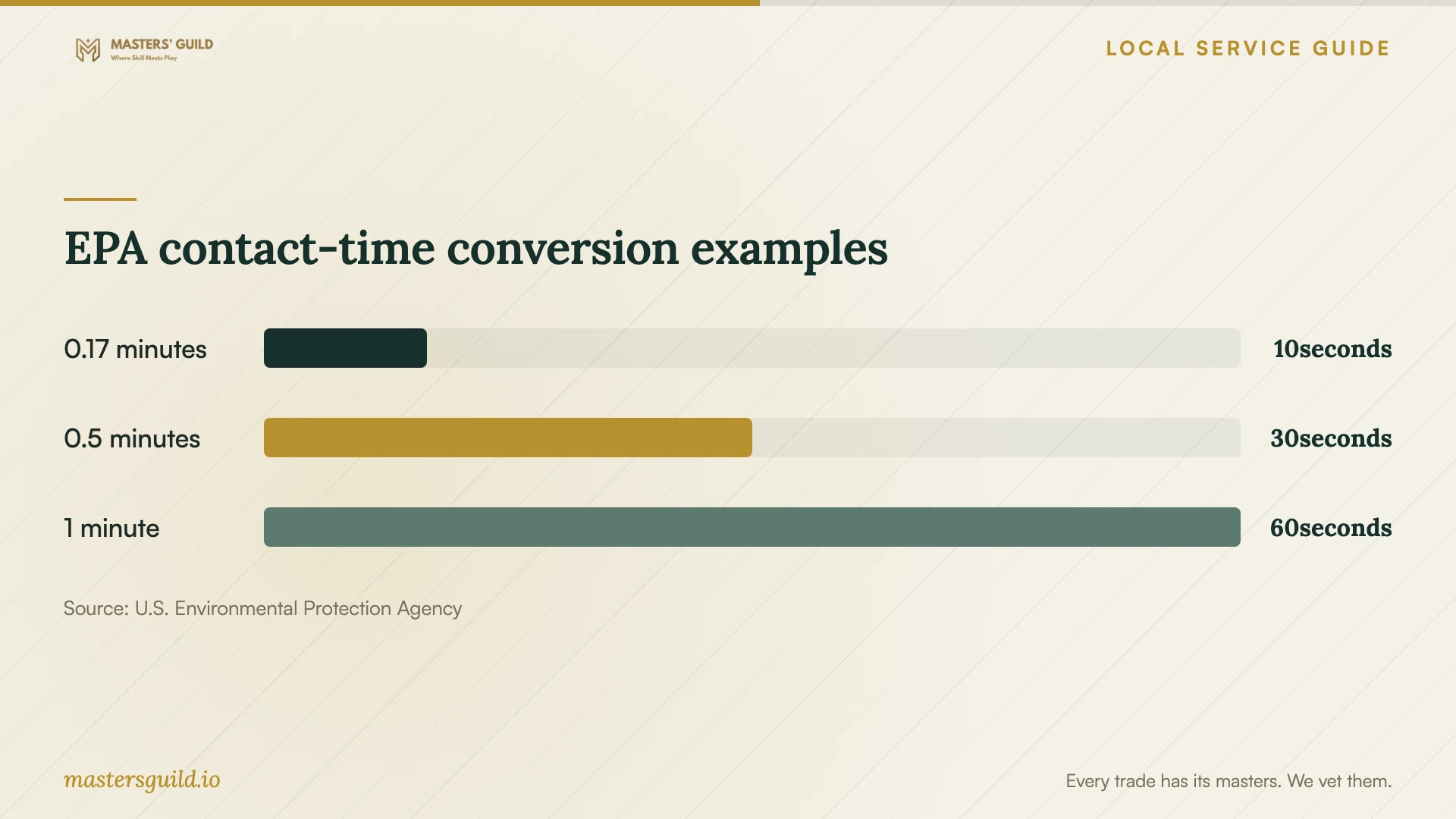
Use the chart to interpret EPA’s time-conversion examples while reviewing a product label. Choose the required contact time from that product’s directions. Agree with the cleaner on which surfaces need disinfection, who will manage access during application and how the supervisor will check the work. [3]
Approve wastewater handling before exterior work
Atlanta’s Department of Watershed Management prohibits discharging polluted water, sewage, oil or other material into natural outlets, including storm drains, roadside ditches and streams. The city lists cleaner spills and outdoor washing equipment using chemicals among examples of problems to report. [1]
For entrance, sidewalk or exterior washing, identify nearby drains during the walkthrough. Ask the bidder to describe containment, collection equipment and the proposed disposal destination. Have the contractor confirm an appropriate disposal route before starting. Reject a proposal that sends polluted wash water into a storm drain. [1]
EPA contact-time conversion examples
Local details that affect your job
City of Atlanta: polluted runoff restrictions
For premises within Atlanta city limits, include wastewater handling in the exterior-washing proposal. The city prohibits polluted discharges into storm drains and other natural outlets. Report suspected illicit discharges through ATL311 or dial 311 within the city. Call 404-546-0311 from outside city limits. Record the location, time and suspected pollution source to help the department investigate. [1]
Georgia: check the employer’s coverage record
Use Georgia’s employer coverage search under the cleaning provider’s legal business name. Most employers with three or more employees must carry workers’ compensation; the count includes part-time and seasonal employees and corporate officers or LLC members, even when officers or members exempt themselves from coverage. A missing record warrants follow-up. If you believe the employer requires coverage and cannot find a record, the board directs you to its Enforcement Division at 404-657-7285. [2]
Choose the scope before comparing bids
| Your task | Scope to request | Question before approval |
|---|---|---|
| Office or shop cleaning | Room-by-room tasks and visit frequencies | Which supplies and tasks does the recurring price include? |
| Carpets or finished floors | Separate proposal identifying materials and methods | Who approves the method and return-to-use arrangements? |
| Targeted disinfection | Product identification and label-based application | How will the crew maintain the required visibly wet contact time? |
| Exterior washing | Containment, collection and disposal arrangements | How will the crew prevent polluted discharge into Atlanta storm drains? |
| After-hours cleaning | Crew access rules and supervisor contact | Who handles alarms, replacement staff and missed tasks? |
Your hiring checklist
- Prepare a room list, cleaning-area measurement and floor-material inventory.
- Assign tasks and frequencies, including who clears desks and supplies consumables.
- Request separate prices for initial cleaning, recurring visits and optional work.
- Obtain the provider’s legal business name and insurance documentation.
- Agree on keys, alarms, restricted rooms and replacement-crew access.
- Ask for disinfectant identification and relevant product label directions.
- Require a wastewater-handling proposal before approving exterior washing.
- Set inspection arrangements, a correction deadline and approval rules for extras.
Frequently Asked Questions
How often should I arrange commercial cleaning?
Choose a schedule by area and task. Walk through the premises with bidders, identify priorities and agree on an initial frequency. Inspect the results during the opening contract period and adjust the scope or schedule before renewing.
Does a small cleaning company need workers’ compensation?
Georgia requires most employers with three or more full-time, part-time or seasonal employees to carry coverage. Corporate officers and LLC members count even when they exempt themselves from coverage. Ask about the company’s circumstances and check its legal name through the state verification service. [2]
Can cleaners rinse chemicals into a storm drain?
Atlanta prohibits polluted discharges into storm drains and other natural outlets. Ask the contractor to explain wash-water collection and confirm an appropriate disposal route before exterior work. Report a suspected illicit discharge through ATL311. [1]
How should I assess a disinfection add-on?
Ask for the EPA registration number and label directions for your surfaces and target microorganism. Review application or dilution instructions and contact time. EPA says users must keep the surface visibly wet throughout that time, which may require reapplication. [3]
Sources and scope
This guide combines the sources below with practical planning guidance. Figures apply to the stated geography and period; request a written quote for your property.