
Local service guide
Bricklaying and Masonry in Atlanta: Hiring Guide
Arrange Bricklaying and Masonry by having a contractor inspect the affected area, explain the proposed repair, and quote a defined scope. For wall building or exterior alterations within Atlanta city limits, confirm permits and exemptions with the Residential Permits Division. Check historic district requirements before approving visible changes, and settle who handles plans, applications, and approvals in your agreement. [1] [2]
Define the repair and the finish you expect
Give bidders photographs of the whole wall and close views of damaged joints or bricks. Describe access, height, and any water entry you have noticed. Identify whether you want mortar-joint repair, brick replacement, steps, chimney work, or a new wall. Request an inspection before accepting a repair method.
For mortar-joint work, have the mason mark the joints they propose to remove and refill. Request an explanation of mortar selection and how the crew will protect surrounding brick. Agree on a sample area for color and joint finish before authorizing the remaining work. For replacement bricks, review the proposed material and any visible difference you will accept.
Keep people clear of a leaning wall or loose overhead masonry and request an assessment. If cracks appear to be changing, have the contractor explain who will evaluate the cause and whether the project needs structural design input. Require that explanation before approving a surface repair.
Confirm the permit route and assign responsibility
Atlanta's Residential Permits Division lists exterior alterations, deck or patio additions, and retaining walls or modular block walls among its project categories. The city also recognizes permit exemptions. Describe the exact work to the division so staff can confirm the applicable route; these categories do not establish a permit rule for every mortar repair. [1]
Atlanta requires architectural, structural, and site plans for residential construction permits, plus additional documents according to permit type. Before signing, identify who will prepare the applicable documents, submit the application, pay fees, and coordinate inspections. Include those responsibilities and any excluded design work in the quote. [1]
The city directs applicants to submit permits online through Accela, except Express permits, which staff accept in person. Express review covers specific eligible residential and commercial projects. Confirm eligibility before booking a counter visit, and avoid tying the construction start date to an assumed approval date. [1] [3]
Resolve tree and preservation requirements before excavation
For projects that may affect trees, Atlanta requires applicants to complete an arborist meeting before submitting a permit application. The requirement took effect June 25, 2025. For a retaining wall near trees, contact the Arborist Division before committing to excavation dates and make the contractor's responsibility for this step explicit. [1]
Atlanta directs readers to the Department of City Planning GIS to determine whether a property lies within a landmark, historic or conservation district. The city says property changes must meet the applicable district requirements. Use the GIS for district membership, then contact Historic Preservation to confirm any individual property designation and discuss the proposed masonry work. [2]
For fence installation in a historic or landmark district, Atlanta requires a Certificate of Appropriateness from the Urban Design Commission or Office of Design staff and a building permit from the Office of Buildings. If you propose a masonry fence, resolve the design review before ordering materials. Confirm the requirements for repointing or other repairs as a separate scope. [2]
Compare contractors and written quotes
Georgia's Attorney General consumer guidance requires state licensing for residential and general contractors and directs homeowners to the Secretary of State's license search. It also names certain specialty occupations that do not require state licensing. Confirm the credentials for the proposed role and scope with the local permitting office rather than assuming a masonry-specific exemption. [4]
Request photographs and references from similar work, evidence of insurance, and the name of the person supervising your job. Discuss visible brick repairs, matching materials, and access arrangements with that person. For a designated property, have the contractor explain how they will incorporate the city's requirements into the proposed work.
Compare written scopes alongside the total price. Include repair quantities, material selection, sample approval, site protection, access equipment, debris removal, and payment milestones. Require photographs and your approval before the contractor expands the work to address concealed damage. Use site-specific bids to establish your budget.
Agree on weather arrangements and handover
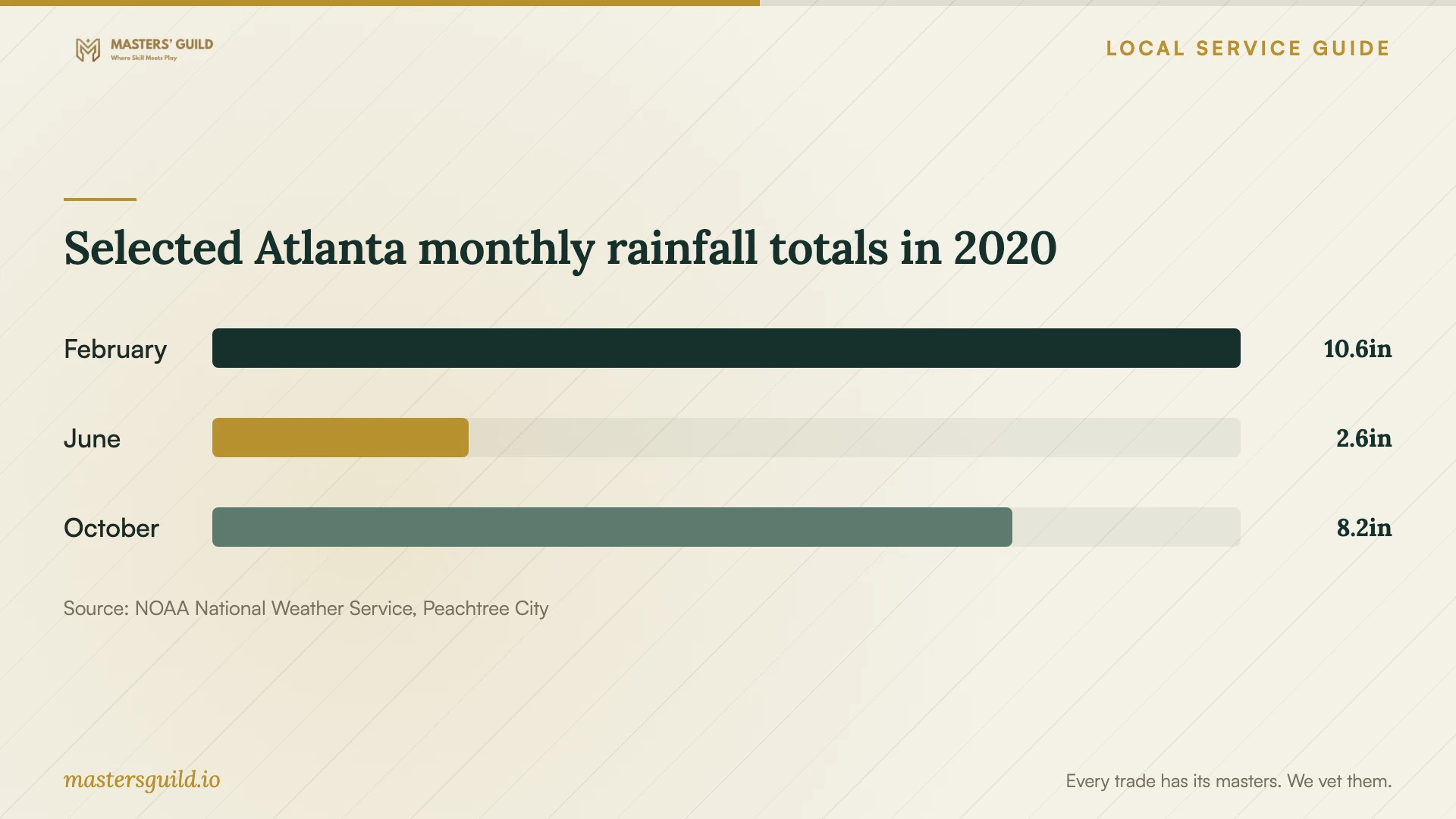
The National Weather Service recorded 10.58 inches of rainfall at its Atlanta climate site in February 2020, 2.64 inches in June, and 8.23 inches in October. These selected historical totals illustrate rainfall differences within that year. They do not identify a reliable construction month or predict conditions for your job. [5]
Have the contractor explain postponement criteria, protection for exposed work, and curing arrangements for the chosen materials. Agree on how they will communicate weather delays. Identify material storage and mortar-mixing areas, usable entrances, and protection for nearby windows and landscaping before the crew arrives.
At handover, compare the finished area with the scope and approved sample. Photograph the work, confirm cleanup, and obtain care instructions. Have the contractor document any drainage, flashing, or structural concerns outside the agreement. Keep approved changes and relevant permit records with the contract.
Selected Atlanta monthly rainfall totals in 2020
Local details that affect your job
Tree review precedes the permit application
Atlanta requires a completed arborist meeting before permit submission when a project may affect trees. For a retaining-wall proposal near trees, contact the Arborist Division at 404-330-6874 before scheduling excavation. Assign someone to schedule the meeting and incorporate its findings into the application. [1]
Check district membership and property designation
Use the Department of City Planning GIS to check landmark, historic or conservation district membership. Contact Historic Preservation at 404-546-0134 to confirm any individual property designation and requirements for the work. Fence installation in historic or landmark districts requires both a Certificate of Appropriateness and a building permit; confirm how staff classify your proposed masonry boundary work. [2]
Confirm eligibility before visiting the permit counter
Contact the Residential Permits Division at 404-330-6906 to discuss the residential scope and exemptions. If city staff identify an eligible Express permit, submit it in person at 55 Trinity Ave. SW, third floor, Suite 3900. The Express division publishes walk-in hours of Monday through Friday, 8:15 AM to 3:00 PM. [1] [3]
Choose the next step for your masonry project
| Project or concern | Next step | Resolve before committing |
|---|---|---|
| Mortar-joint repair | Request an inspection and sample area | Repair boundaries, mortar selection, and joint finish |
| Leaning wall or loose overhead brick | Keep people clear and request an assessment | Who evaluates stability and the underlying cause |
| New retaining or modular block wall | Confirm the residential permit route and exemptions | Who prepares plans and submits the application |
| Fence in a historic or landmark district | Arrange Certificate of Appropriateness and building-permit review | District design requirements before material ordering |
| Permit project that may affect trees | Complete the required arborist meeting before applying | Who schedules the meeting and addresses its findings |
Your hiring checklist
- Photograph the whole area and close views of damaged joints or bricks.
- Request an inspection and a written explanation of the proposed repair.
- Confirm permits, exemptions, tree review, and preservation requirements for the scope.
- Assign responsibility for plans, applications, fees, and inspections.
- Approve a brick and mortar sample for visible repair work.
- Compare repair quantities, exclusions, access costs, and cleanup arrangements.
- Confirm applicable credentials, insurance, and the site supervisor.
- Record weather arrangements, payment milestones, and approval steps for extra work.
Frequently Asked Questions
Does repointing require an Atlanta building permit?
Atlanta's residential permit guidance lists exterior alterations and recognizes exemptions, but does not establish a repointing-specific rule. Describe the repair area, method, and any associated wall work to the Residential Permits Division so staff can confirm the requirement. [1]
Does every mason need a Georgia general-contractor license?
Georgia's consumer guidance requires licensing for residential and general contractors while identifying exceptions for certain specialty occupations. It does not resolve masonry-specific eligibility. Confirm credentials for your contractor's role and scope, and verify any required state license through the Secretary of State's license search. [4]
How should I compare masonry quotes?
Give bidders the same repair boundaries and finish requirements. Request clear allowances or prices for access, matching materials, permit handling, and cleanup. Review exclusions and the process for approving concealed-damage repairs. Compare the proposed method and sample with the total price.
Can I use an Express permit for a wall project?
Atlanta limits Express review to specific eligible projects. Its Express guidance does not establish eligibility for your wall project. Confirm the scope with city staff before arranging an in-person application or setting a construction start date. [3]
Sources and scope
This guide combines the sources below with practical planning guidance. Figures apply to the stated geography and period; request a written quote for your property.