
Local service guide
Basement Remodeling in Atlanta, GA: Plan Before Hiring
Arrange Basement Remodeling in Atlanta, GA by checking floodplain restrictions, testing for radon and defining the intended room use before accepting a construction quote. Hire a remodeler who will document moisture concerns, permit responsibilities and trade work in writing. Atlanta requires permits for renovations to structures that touch a mapped flood zone, including interior remodeling and flooring changes. UGA Extension says testing is the only way to know whether your home has a high radon level. [1] [2]
Check whether the planned space is feasible
Tell each bidder whether you want a recreation room, office, bedroom, bathroom or separate living space. Ask the designer to review stairs, ceiling clearance, emergency escape, ventilation and access to equipment for that intended use. Treat a proposal for a bedroom or separate dwelling as a distinct design request. Ask the permitting authority to confirm what you may build before you approve the layout.
For a property inside Atlanta city limits, ask the Department of Watershed Management whether floodplain rules affect the building. The city says renovations to a structure touching a flood zone require a permit, and their value counts toward its ten-year cumulative substantial-improvement assessment. You can reach the Floodplain Administrator at 404-546-3291 for a property-specific determination. [1]
Confirm the jurisdiction for your address. The city's floodplain guidance identifies Decatur, DeKalb County and Fulton County as jurisdictions with their own floodplain management programs. Ask which authority handles your property before applying Atlanta's city rules to a home with an Atlanta mailing address. [1]
Resolve water concerns before enclosing the basement
Walk through the space with the contractor and record stains, damp areas, cracks and previous repairs. Share photographs from rain events and any history of water entry. Ask the contractor to explain the suspected cause, proposed repair and how you will check the result before installing walls or flooring.
Atlanta's watershed department describes urban flooding when drainage systems cannot keep pace with heavy precipitation. It also identifies historically modified floodplains where earlier development put streams into pipes. Request a property-specific floodplain review even if you cannot see a creek near the house. [1]
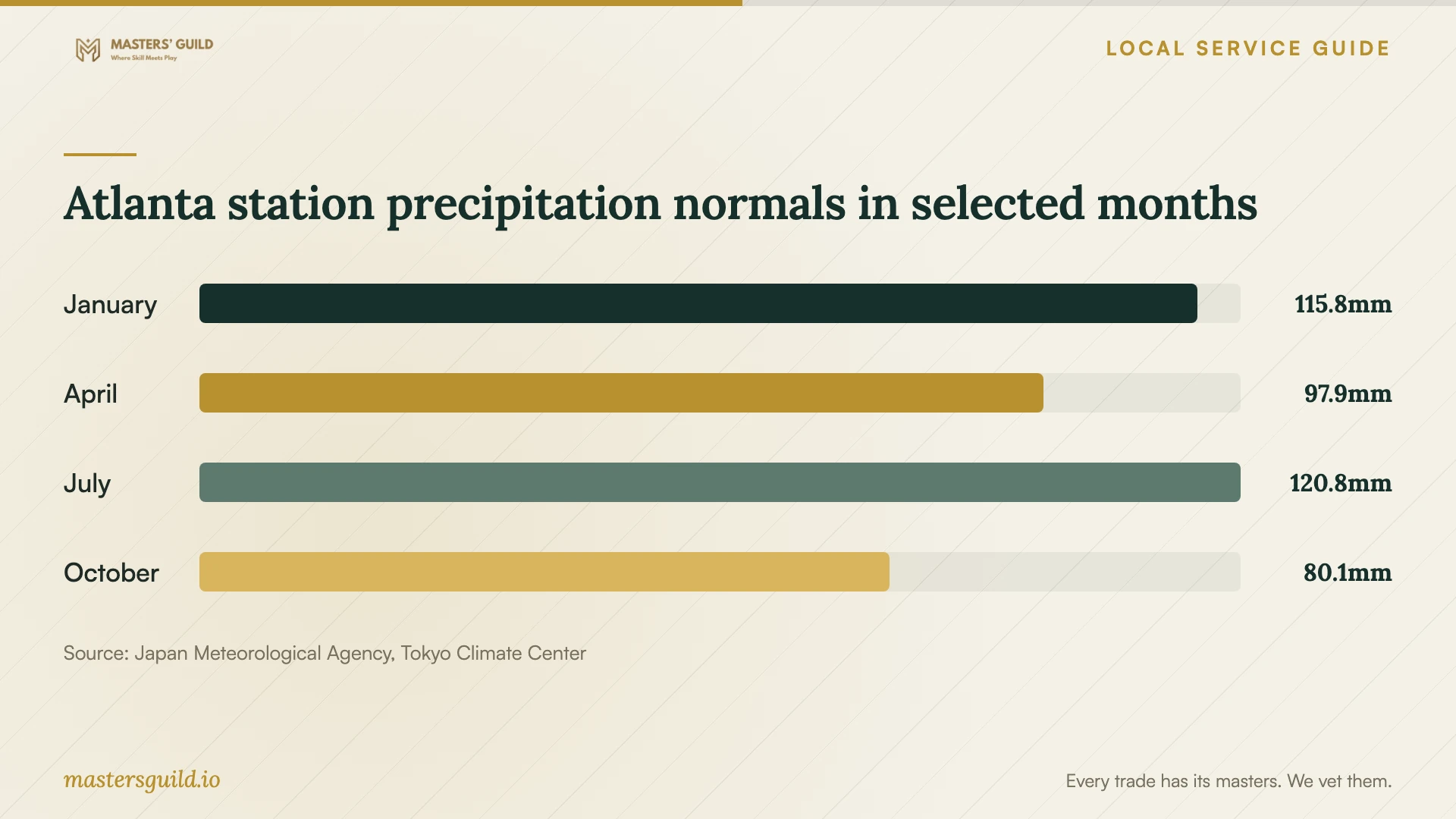
The precipitation chart compares selected monthly normals from an Atlanta weather station. The table records rainfall in winter, spring, summer and fall. Use it as a prompt to discuss drainage across seasons, then ask the contractor to assess your property. The station data does not establish whether your basement leaks or identify the repair it needs. [4]
Before accepting a residential floodplain conversion or waterproofing proposal, seek a property-specific ruling. Atlanta states that floodproofing does not replace required elevation of residential structures within the floodplain. Ask the Floodplain Administrator whether the intended remodel is permissible before choosing a waterproofing system. [1]
Include radon testing in the schedule
Order testing during planning and follow the test provider's instructions. UGA Extension offers a $15 radon kit with shipping, lab processing and follow-up information for testers with high results. Its testing page warns that Atlanta-area postal changes may delay arrival for up to four weeks. Allow time to receive the kit, complete the test and review the result before approving the enclosed-room scope. [2]
Discuss a high test result with a radon professional. Ask the remodeler to coordinate any proposed mitigation route with the room layout and equipment access. Keep the result and agreed follow-up steps with your project documents. Ask who will arrange any follow-up testing and how you will receive those results.
Compare complete scopes before signing
Give bidders the same sketch, room uses and finish preferences. Request separate line items for investigation, moisture repairs, demolition, framing, insulation, electrical work, plumbing, heating and cooling, finishes, debris removal and permit handling. Ask each bidder to identify exclusions and allowances, including who pays if concealed damage changes the work.
Georgia DCA lists the 2024 International Residential Code with Georgia Amendments 2026 among its current mandatory codes. It also lists the 2023 National Electrical Code with Georgia Amendments 2026. Ask your designer and permitting authority to confirm the requirements applicable to your project. Use the state listing to frame that discussion; ask the authority for a decision on your proposed basement work. [3]
Ask who will supervise the job, who will perform each trade and who will arrange inspections. Request insurance documentation and applicable credentials, then verify them before signing. Put payment milestones, written change approvals, cleanup and the final walkthrough in the contract. Ask for photographs and inspection records before workers cover concealed work.
For an unresolved item, ask the bidder to state what the allowance covers and how you will approve additional spending. Identify who will stop work and contact you if demolition exposes damage. Agree on the documents you will receive at completion, including the final scope, approved changes and any inspection records.
Atlanta station precipitation normals in selected months
Local details that affect your job
Atlanta counts floodplain improvements over ten years
Atlanta defines substantial improvement using a threshold of 50 percent of the structure's market value and applies a cumulative total over a ten-year period. The city excludes land value from that determination. If the building touches a flood zone, ask the Floodplain Administrator how prior renovations and the proposed basement work affect the assessment before setting your construction budget. Gather records of earlier work for that discussion. [1]
Allow time for Georgia radon-kit delivery
UGA Extension's Georgia testing program lists a $15 kit including shipping and lab processing. Its Atlanta-area postal-delay notice says kits may take up to four weeks to arrive. Order during planning, or ask about another testing arrangement if your proposed construction start leaves insufficient time for delivery, testing and review. [2]
Choose the next step before committing to construction
| Your situation | Next step | Ask for |
|---|---|---|
| The building touches a mapped flood zone within Atlanta city limits | Contact Atlanta's Floodplain Administrator before approving the remodel | Permit guidance and review of the ten-year improvement total |
| You have seen water enter the basement | Arrange an investigation before selecting wall and floor finishes | A cause-specific repair scope and a plan to check the result |
| You have no radon result | Arrange testing during planning | Testing instructions and time to review results before enclosure |
| You want a bedroom, bathroom or separate living space | Request design and code review for the intended use | A layout with permit and trade responsibilities identified |
| Quotes cover different work | Ask bidders to revise against one shared scope | Separate allowances, exclusions and change-order terms |
Your hiring checklist
- Confirm the permitting jurisdiction for the property address.
- Request a floodplain determination before committing to a finished-room design.
- Gather records of previous renovations for any floodplain improvement review.
- Record water-entry history and ask for a written investigation and repair scope.
- Arrange radon testing and retain the result.
- Give each bidder the same room uses, layout and finish specifications.
- Identify permit handling, trade responsibilities, exclusions and allowances in each quote.
- Agree on inspection milestones, written change approvals and completion documents.
Frequently Asked Questions
Does interior basement remodeling need a floodplain permit?
Atlanta says any renovation to a structure touching a mapped flood zone requires a permit, including painting, interior remodeling and new flooring. Ask the Floodplain Administrator for a determination for your building. For a property outside that area, ask the responsible permitting authority which permits your scope requires. [1]
Can waterproofing make a floodplain basement suitable for living space?
Get a property-specific ruling before proceeding. Atlanta states that floodproofing does not replace required elevation of residential structures within the floodplain. Ask the city to review the intended use and proposed work before accepting a waterproofing or finishing contract. [1]
How much should I budget for the remodel?
Build your budget from written quotes for the same inspected space and scope. Separate investigation and repair work from room finishes and optional features. Ask bidders to price unresolved items or identify them as allowances before you compare totals. Set your spending limit after reviewing those exclusions.
Can I order an inexpensive radon test in Georgia?
UGA Extension lists a $15 kit including shipping, lab processing and follow-up information for testers with high results. Its page warns that Atlanta-area delivery may take up to four weeks. Allow time for the test itself and review of the result as well as shipping. [2]
Sources and scope
This guide combines the sources below with practical planning guidance. Figures apply to the stated geography and period; request a written quote for your property.