
Local service guide
Mold Removal in Arlington, TX: Hiring and Cleanup
Arrange Mold Removal in Arlington, TX by identifying the water source and deciding whether you need a mold assessment before cleanup. For hidden growth, extensive water damage or suspected HVAC contamination, seek professional help. When hiring a Texas-licensed mold remediation contractor, plan for a protocol from a licensed mold assessment consultant, even for a small project. Ask each provider to separate assessment, removal, moisture repairs and rebuilding in the quote. [1] [3]
Choose the right first visit
Start by describing what you can see, the affected surfaces and any known leak. EPA says visible mold usually does not require sampling. If a provider proposes tests, ask what decision the results will change and how the assessor will interpret them. TDLR advises clients to establish interpretation criteria with a licensed consultant before paying for sampling. [1] [3]
For a musty smell without a visible source, ask an experienced professional to investigate before you open walls or remove wallpaper. EPA identifies concealed locations such as the backs of drywall, carpet padding and spaces around leaking pipes, and cautions that disturbing hidden growth can release spores. [3]
Tell the provider if you suspect contamination near an HVAC intake or inside the system. EPA advises against running a system that you know or suspect contains mold because it could spread mold through the building. For sewage or other contaminated water, choose a professional experienced in that cleanup. Discuss health concerns with a health professional before starting. [3]
Compare the full scope of each quote
Ask for separate prices for the assessment and protocol, remediation, moisture-source repair, completion assessment and rebuilding. Request the names of the people responsible for each stage. Keep the same affected rooms and materials in each quote request so you can compare the proposed work.
Require the contractor to identify which materials they will clean and which they propose to discard. EPA recommends detergent and water for hard surfaces, followed by complete drying. Moldy porous materials, including carpet and ceiling tiles, may need disposal because cleaners may not remove growth from their internal spaces. [3]
Ask how the crew will protect occupied rooms, handle removed materials and arrange access during work. Request references for similar projects and evidence of insurance. Do not accept painting over visible mold as the cleanup plan; EPA directs homeowners to remove mold and dry surfaces before painting. [3]
Prepare for removal and completion checks
Photograph the affected area, record when you noticed it and gather leak-repair invoices before the first visit. Ask the assessor whether to preserve any materials for inspection before moving or discarding them. Agree on access, furniture movement and the rooms you can use during the project.
Set the completion criteria before removal begins. TDLR says a consultant who did not prepare the remediation protocol in advance cannot declare that a project achieved clearance. Its FAQ distinguishes that clearance process from a later inspection that may support a certification of no evidence of mold damage. [1]
EPA says completion requires fixing the moisture problem and removing mold, with no visible growth or moldy odors remaining. Revisit the area after cleanup for signs of renewed water damage or growth. Ask the provider to explain the repair record, inspection findings and any remaining work before you authorize rebuilding. [3]
Check moisture after rain and during cooling
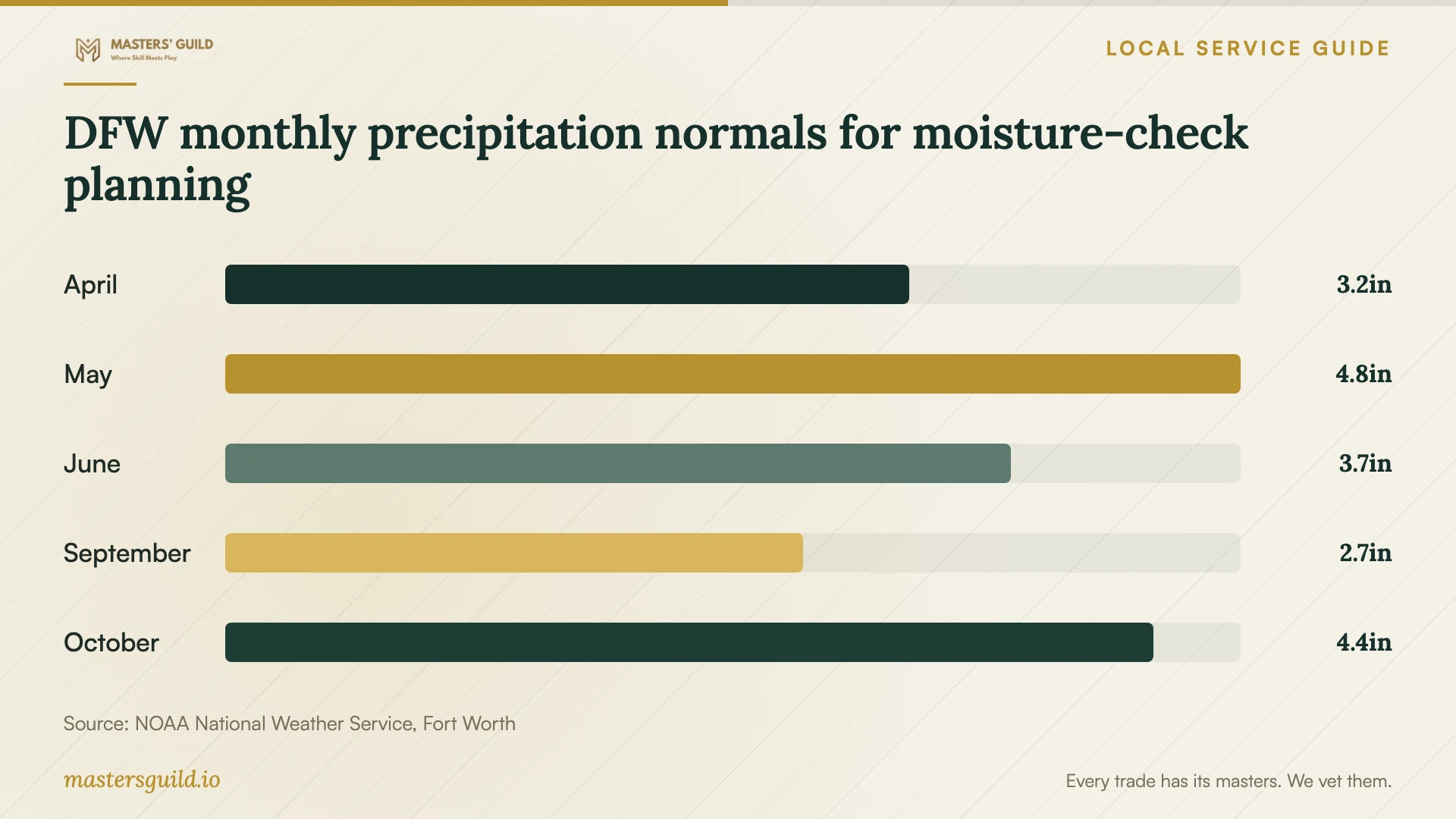
The National Weather Service's DFW regional normals report 4.78 inches of precipitation in May and 4.37 inches in October. Use those seasonal figures as a reminder to inspect previous leak locations after rain. They describe the regional climate, not rainfall at your address or evidence that your home contains mold. [2]
Include gutters, drainage and air-conditioning condensate handling in your prevention discussion. EPA recommends keeping gutters repaired, ground sloping away from the foundation, and air-conditioning drip pans and drain lines clean. Measure indoor humidity rather than assuming outdoor conditions reflect indoor moisture; EPA recommends below 60 percent, ideally 30 to 50 percent. [3]
DFW monthly precipitation normals for moisture-check planning
Local details that affect your job
Arrange separate assessment and remediation roles
Texas rules apply when you hire regulated mold professionals for your Arlington home. TDLR prohibits an individual or company from both assessing and remediating the same project, except for specified school-district work. Ask who will prepare your protocol and who will perform removal before accepting a bundled offer. Licensed assessors and remediators must provide the Consumer Mold Information Sheet before mold-related work begins. [1]
Clarify the small-project exemption before booking
TDLR says the exemption for less than 25 contiguous square feet of visible mold applies to unlicensed people. A licensed mold remediation contractor must follow the law and rules even on a smaller job, including a work plan based on a licensed consultant's protocol; that small project does not require project notification. Ask the contractor to explain which process your quote includes. Do not treat the exemption as a recommendation to tackle a difficult cleanup yourself. [1] [3]
Choose your next step
| Situation | Next step | Reason |
|---|---|---|
| Small visible patch under about 10 square feet | Consider EPA's homeowner cleanup guidance after checking water and health concerns. | EPA says homeowners can handle this size in most cases, with exceptions. |
| Extensive water damage or growth above 10 square feet | Seek professional guidance and ask about the assessment scope. | EPA directs readers to broader remediation guidance for these conditions. |
| Musty odor with no visible source | Consider an experienced professional before opening concealed spaces. | EPA cautions that investigating hidden mold can disturb growth and release spores. |
| Suspected HVAC contamination | Stop running the affected system and seek professional guidance. | EPA warns that a contaminated system could spread mold through the building. |
| Hiring a licensed Texas remediator for a small job | Arrange a consultant's protocol and the contractor's work plan. | TDLR says licensed contractors must follow these requirements even below 25 contiguous square feet. |
Your hiring checklist
- Photograph affected surfaces and record the leak or moisture history.
- Describe visible growth, odors and suspected HVAC involvement when requesting a visit.
- Ask providers for their Texas mold license details and confirm the assessment and removal roles.
- Request separate scope and prices for assessment, removal, repairs and rebuilding.
- Agree on occupied-room access, furniture movement and material disposal.
- Set completion criteria and document responsibilities before work begins.
- Keep the protocol, invoices, inspection findings and repair records together.
Frequently Asked Questions
Do I need mold testing before cleanup?
Usually not when you can see mold. EPA says sampling is unnecessary in most such cases. If you commission testing, ask the licensed assessor to explain how the results will affect the plan and establish interpretation criteria before sampling. [1] [3]
Can I clean a patch between 10 and 25 square feet myself?
Do not use the Texas licensing exemption as your cleanup decision alone. EPA recommends broader remediation guidance above about 10 square feet. Consider the water source, affected materials, hidden growth and health concerns before choosing who will do the work. [1] [3]
Will bleach solve the problem?
EPA does not recommend bleach or other biocides as routine mold cleanup. You need to remove growth and correct moisture. For hard surfaces, EPA recommends detergent and water followed by complete drying; moldy porous materials may require disposal. [3]
How much should I budget?
Request a written quote after the provider defines the affected area and work plan. Ask for separate assessment, removal, moisture repairs, completion checks and rebuilding prices. Compare exclusions and responsibilities alongside the total.
Sources and scope
This guide combines the sources below with practical planning guidance. Figures apply to the stated geography and period; request a written quote for your property.