
Local service guide
Lawn mowing in Arlington, TX: Plan the Right Cut
For lawn mowing in Arlington, TX, choose a provider who agrees on your grass type, cutting height, clipping handling, and rain-delay policy before you book recurring visits. Ask for a written quote covering mowing, trimming, edging, and cleanup. Schedule cuts around growth: Texas A&M AgriLife recommends removing no more than one-third of the green canopy at a time, so a fixed weekly or biweekly appointment needs room for adjustment. [2]
Set the cutting height before the schedule
Ask the provider to identify your turf before setting the mower. The North Central Texas Council of Governments lists different mower settings for common Bermuda, zoysia, and St. Augustinegrass. Treat that regional table as a starting point. For St. Augustinegrass, use AgriLife's species-specific guidance to discuss cultivar, shade, and mower capability. [1] [2]
AgriLife recommends maintaining St. Augustinegrass between 2 and 4 inches and choosing a taller cut in moderate shade. Its mowing example pairs a 2-inch target with a cut before or when the grass reaches 3 inches. Ask the crew to record both the agreed finished height and the height that should trigger the next visit. [2]
Choose weekly service if your observations show that the lawn reaches its mowing threshold within a week. Consider a longer interval when growth slows enough to stay below that threshold. Ask how the provider handles an extra visit, a skipped cut, or a schedule change, and put the billing arrangement in writing. [2]
Request a quote you can compare
Send each provider the same photos of the front, back, and side lawns. Include access points, gate width, steps, slopes, and areas you want the crew to avoid. Ask each provider to quote the same scope so you can compare the total charge without guessing what each offer includes.
Separate the initial visit from recurring maintenance. Describe the current grass height and any accumulated leaves or debris. Request approval before the crew adds bagging, hauling, extra passes, or other work. Keep fertilizer, weed treatment, irrigation repair, and aeration outside the mowing agreement unless you request separate written terms.
Ask for proof of liability insurance and a contact for reporting damage. Agree on arrival notifications, gate handling, payment timing, cancellation terms, and the process for correcting missed areas. After the first visit, inspect the cut and cleanup before committing to a longer arrangement.
Agree on rain delays and fall adjustments
Ask the provider to postpone mowing when the grass is wet or the ground cannot support the equipment. NCTCOG advises against mowing wet grass because clippings can clump and smother the lawn. AgriLife warns that heavy riding mowers on wet turf can cause ruts and soil compaction. [1] [2]
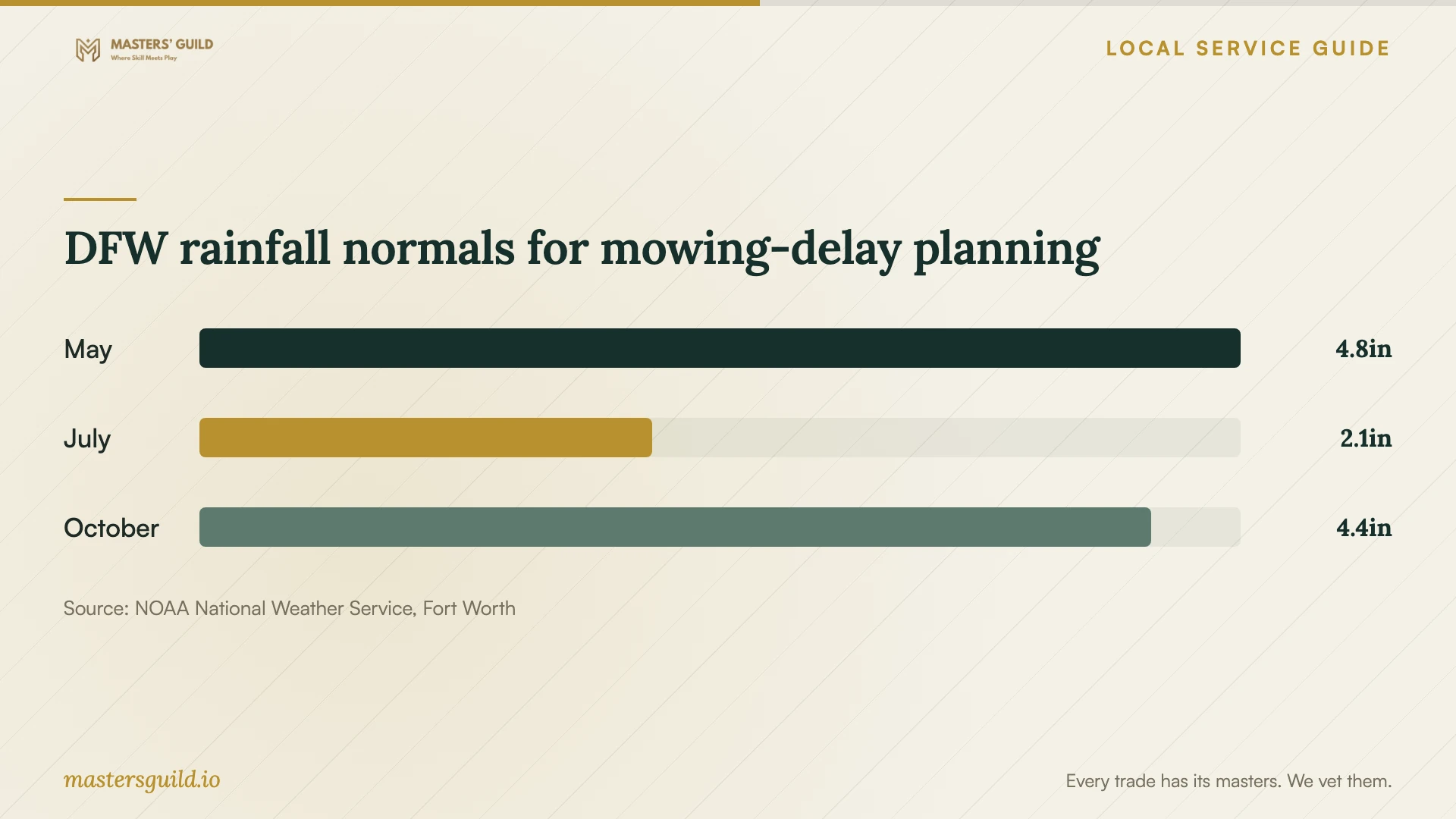
For an October booking, request a flexible return window instead of requiring the crew to mow on one calendar day. At the nearby DFW station, October normal precipitation is 4.37 inches, compared with 2.08 inches in July, using 1991–2020 normals. These regional averages support planning for rain delays; inspect your own lawn before deciding whether to proceed. [3] [1] [2]
Review the recurring plan as growth changes. AgriLife explains that mowing frequency varies with light, temperature, precipitation, irrigation, and fertilizer inputs. Ask the provider to contact you before a visit that would remove little growth, and agree whether leaf cleanup counts as a separate service. [2]
Specify clipping handling and inspect the finish
Ask the crew to return fine clippings to healthy turf and distribute them across the lawn. AgriLife supports returning clippings under those conditions but advises against doing so during active disease or when weeds are flowering. Request an assessment of suspicious patches before deciding on mowing and bagging. [2]
NCTCOG recommends mowing a light covering of fall leaves into the lawn, with a mulching mower providing the most effective result. For heavier accumulations, ask the provider to quote collection or another handling method before starting. Specify where the crew should place collected material and whether the quote includes removal. [1]
Walk the property after the first cut. Check for missed strips, torn grass tips, clumps, mower tracks, and damage around trees or irrigation heads. Photograph concerns and ask the provider to correct the work or adjust equipment before the next visit. AgriLife recommends sharp mower blades and cleaning between mowings. [2]
DFW rainfall normals for mowing-delay planning
Local details that affect your job
Include North Texas storm-drain cleanup in the scope
NCTCOG's regional yard-waste guidance explains that rain can carry clippings from streets, sidewalks, and driveways into storm drains and local waterways without treatment. Yard waste can also block drains. For your Arlington property, ask the crew to return stray clippings to the lawn or collect them before leaving, including along the curb. This is regional handling guidance, not a claim about a specific Arlington ordinance or fine. [1]
Arrange an October return window for dry conditions
The nearby DFW station records October normal precipitation of 4.37 inches for 1991–2020. For a fall service agreement here, ask who decides to postpone a wet visit, how the crew confirms the replacement appointment, and whether you pay for a skipped cut. Pair that agreement with a ground check: AgriLife advises avoiding heavy riding mowers on wet turf because of rutting and compaction. The station average does not describe today's conditions at your address. [3] [2]
Choose service terms for your lawn's condition
| Condition | Service decision | Terms to request |
|---|---|---|
| Grass reaches its mowing threshold within a week | Consider weekly visits | Record the cut height and adjust frequency to avoid removing more than one-third |
| Growth slows below the mowing threshold | Consider extending the interval | Agree on skip notices and billing before changing the schedule |
| Wet grass or wet soil | Postpone the cut | Set a return window and avoid heavy riding equipment on wet turf |
| Healthy turf with fine clippings | Consider returning clippings | Require even distribution and cleanup of paved areas |
| Suspected active turf disease | Request assessment before routine mowing | Discuss whether to pause mowing or collect clippings based on the diagnosis |
Your hiring checklist
- Send matching property photos and a written mowing scope to each provider.
- Ask the provider to identify the grass and record the agreed cutting height.
- Describe current overgrowth and request a separate initial-visit quote.
- Confirm trimming, edging, cleanup, bagging, and disposal inclusions.
- Agree on wet-weather postponements, return notices, and skipped-visit billing.
- Mark irrigation heads and obstacles; clear toys and pet waste before arrival.
- Confirm gate access, pet arrangements, insurance, and the damage-reporting contact.
- Inspect the first visit and approve adjustments before extending the agreement.
Frequently Asked Questions
Should I book weekly or biweekly mowing?
Choose the interval that keeps your lawn within its agreed mowing threshold. AgriLife bases frequency on growth and the one-third rule. Request a flexible schedule if a two-week gap would require the crew to remove too much green growth. [2]
How short should the crew cut St. Augustinegrass?
AgriLife recommends a mowing height of 2–4 inches, with cultivar and mower capability influencing the setting. It recommends taller mowing heights in moderate shade. Ask the provider to explain the selected height before the first cut. [2]
Should the provider bag grass clippings?
AgriLife supports returning fine, evenly distributed clippings to turf, but advises against returning them during active disease or when weeds are flowering. Ask the provider to explain any bagging recommendation and state the collection and removal charge. [2]
How can I compare mowing prices?
Request quotes using the same photos, lawn areas, visit interval, and work list. Compare the total charge with any initial-cut, bagging, disposal, or cancellation fees. Ask each provider to confirm what requires your approval before adding a charge.
Sources and scope
This guide combines the sources below with practical planning guidance. Figures apply to the stated geography and period; request a written quote for your property.