
Local service guide
Gardening in Arlington, TX: Plan and Hire
Arrange Gardening in Arlington, TX by separating cleanup, ongoing care, and new planting in your quote. Ask the gardener to assess sunlight, soil, and drainage before proposing plants, and identify who will water them after installation. For any pesticide application for hire, including weed treatment with general-use products, Texas requires a Texas Department of Agriculture license. Check the applicator's license and relevant category before approving treatment. [1] [2]
Choose the work you want completed
Write your request around the result you want: clear an overgrown bed while retaining marked plants, maintain existing beds, or replace a defined planting area. Include photographs and approximate bed dimensions. Mark plants you want to keep, and explain whether the gardener may remove unidentified growth without asking you.
For cleanup, specify hand weeding, shrub work, removal of unwanted plants, and debris disposal as individual items. For ongoing care, ask for the tasks included in each visit and the process for approving extra work. For installation, request plant names, quantities, container sizes, soil preparation, mulch, and an aftercare plan.
If you want to avoid pesticide treatment, put that instruction in the written scope. Ask the gardener to obtain your approval before changing the method. Keep irrigation repairs, major excavation, and large-tree work as separate proposals so you can assess the qualifications and terms for each job.
Inspect the planting site before buying plants
Texas SmartScape, a North Central Texas regional program, advises matching plants to light, soil, drainage, and available growing space. It describes clay as the most common soil in North Texas, alongside sand and loam mixtures. That regional description does not establish the soil in your yard; ask the gardener to inspect the planting area. [2]
Photograph any standing water after heavy rain and note how long it remains. SmartScape identifies water standing four to five hours after heavy rain as a reason to consider soil amendments, raised beds, drainage work, or a rain garden with suitable plants. Ask the gardener to explain the proposed remedy before you approve replacement planting. [2]
For shaded beds, record sunlight at different times of day instead of judging the site during one visit. SmartScape defines full sun as six or more hours of direct sunlight, partial shade as four to six hours, and full shade as less than four hours. Ask the gardener to match each proposed plant to the observed conditions. [3]
Compare planting plans and aftercare
Request a written plant schedule before paying for materials. Texas SmartScape's database lets you filter for North Central Texas, plant type, light requirement, water demand, and mature height and spread. Use those filters to discuss the gardener's choices rather than selecting plants from appearance alone. [3]
SmartScape recommends grouping plants with similar water requirements for efficient irrigation. Ask the gardener to show those groups on the planting plan and explain who will handle watering after installation. Request separate instructions for establishment care and later maintenance, plus written replacement terms for plants that fail. [2] [3]
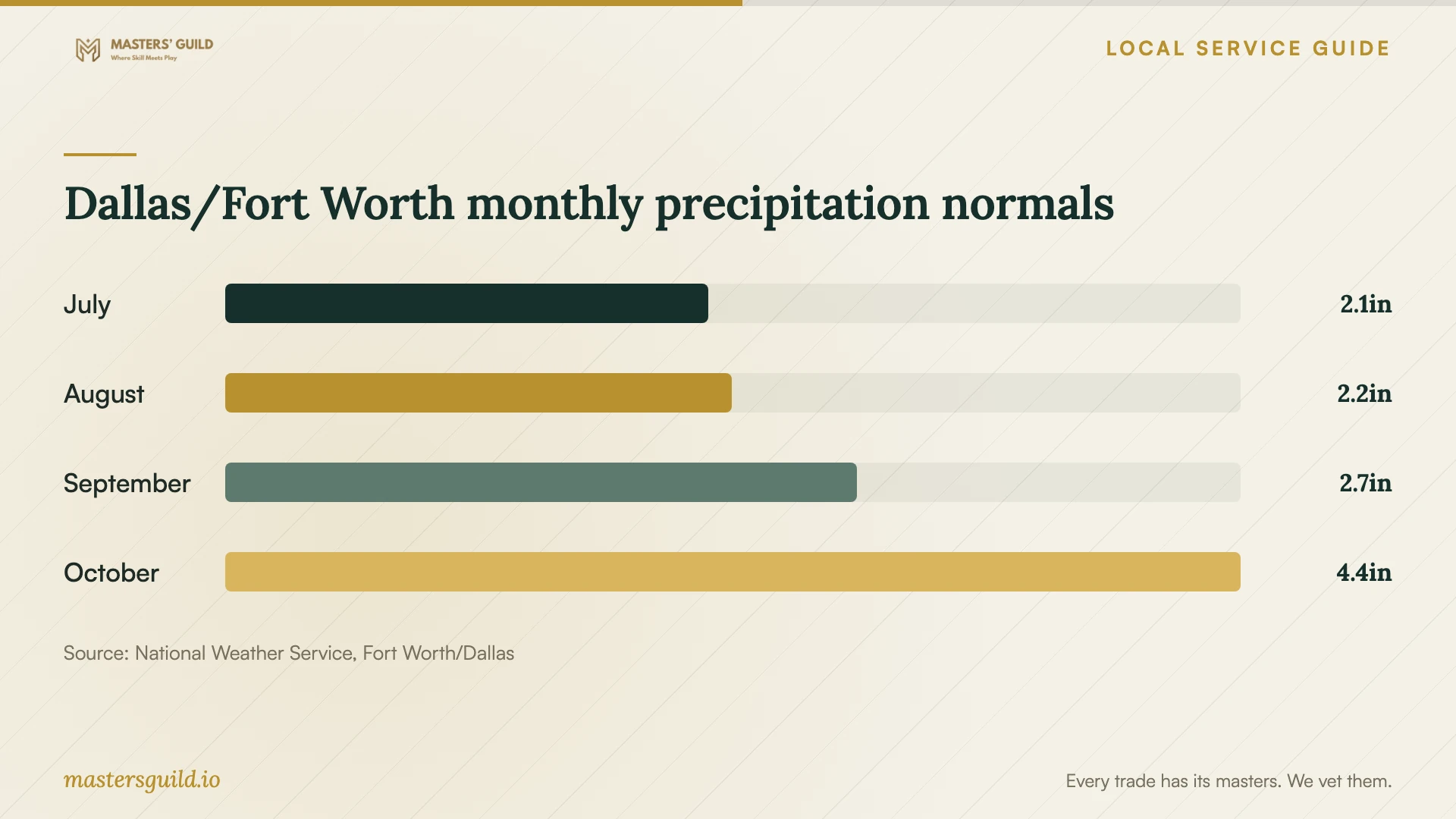
Use the regional rainfall chart to discuss seasonal care. National Weather Service normals for Dallas/Fort Worth show 2.08 inches of precipitation in July and 4.37 inches in October, based on 1991–2020 data. These regional averages do not measure rainfall at your property or prescribe a watering schedule. Ask the gardener to account for your plants, soil moisture, and recent weather. [4]
Check credentials for chemical treatments
The Texas Department of Agriculture requires a license for anyone applying pesticides for hire to ornamental plants, trees, lawns, or weeds, including general-use products. The agency allows Agricultural Pesticide or Structural Pest Control Service licensing routes, with the category depending on what and where the applicator treats. [1]
Relevant agricultural categories include 3A Landscape Maintenance and 5 Vegetation Management. Relevant structural categories include Lawn and Ornamental and Weed Control. Ask for the applicator's name, license details, and category, then confirm that the authorization covers the proposed work. [1]
TDA states that applicators who apply only fertilizer do not need its license. Ask whether a proposed fertilizer treatment contains any pesticide component, and request the product name before approval. For chemical treatments, ask the provider to explain label requirements affecting children, pets, edible plants, and return to the treated area. [1]
Approve a quote with clear limits
Compare written quotes using the same bed area, tasks, and disposal requirements. Ask whether the provider charges by the job or by time, whether a minimum charge applies, and how the provider will obtain approval for additional labor. Request an itemized total that identifies materials, delivery, disposal, and any applicable tax.
For recurring service, agree on visit frequency, access arrangements, weather rescheduling, and cancellation terms. Ask for proof of liability insurance and examples of comparable bed-maintenance or planting work. Before the first visit, walk through the garden together, identify retained plants, and agree on the completed work you will inspect.
Dallas/Fort Worth monthly precipitation normals
Local details that affect your job
Use North Texas drainage guidance before replanting
For an Arlington bed that retains water, use Texas SmartScape's regional assessment trigger: standing water four to five hours after heavy rain warrants considering changes to soil, bed elevation, drainage, or plant selection. Bring photographs and elapsed-time notes to the site visit. Ask for a diagnosis and proposed remedy before approving plants for that area. [2]
Select the North Central Texas plant filter
Texas SmartScape separates North Central Texas and West Texas plant selections. For this project, use the North Central Texas filter and compare the proposed plants' light needs, water demand, and mature dimensions with your beds. Ask the gardener to explain any selection that does not match those site conditions. [3]
Verify Texas authorization for weed spraying
A quote that includes pesticide application for hire requires a licensing check even when the provider proposes a general-use product. TDA recognizes agricultural and structural licensing routes with different categories. Ask which route and category cover your proposed treatment rather than accepting a general statement that the gardener is licensed. [1]
Match the request to your garden's needs
| Your situation | Work to request | Before approving |
|---|---|---|
| Overgrown beds with plants to retain | Defined cleanup with removal limits | Mark retained plants and agree on debris disposal. |
| Beds need regular attention | Recurring care with a task list | Agree on visit frequency and approval for extra work. |
| Water remains after heavy rain | Site assessment before replanting | Discuss regional guidance on soil, raised beds, drainage, or suitable plants. |
| You want new planting | Plant schedule and aftercare plan | Check North Central Texas suitability, sunlight, water needs, and mature size. |
| Provider proposes weed spraying | Treatment proposal with applicator details | Confirm TDA licensing and the relevant application category. |
Your hiring checklist
- Send photographs, approximate bed dimensions, and a list of desired tasks.
- Mark plants to retain and agree on approval before removal.
- Record sunlight and photograph any standing water after rain.
- Request plant names, quantities, sizes, and a site-specific planting plan.
- Separate cleanup, recurring care, materials, and disposal in the quote.
- Request applicator credentials if the proposal includes pesticide treatment.
- Agree on watering responsibility, replacement terms, and weather rescheduling.
Frequently Asked Questions
Can the gardener use a general-use weed killer without a license?
Texas requires TDA licensing for pesticide application for hire to ornamental plants, trees, lawns, or weeds, including general-use products. Ask for the applicator's license and category before approving treatment. [1]
Should I replace plants in a bed that stays wet?
Ask for a drainage assessment first. Texas SmartScape's North Texas guidance identifies standing water four to five hours after heavy rain as a reason to consider soil amendments, raised beds, drainage measures, or plants suited to poor drainage. Discuss the remedy before buying replacements. [2]
How can I check the proposed plants?
Use Texas SmartScape's North Central Texas filter, then compare light requirements, water demand, and mature height and spread with your site. Ask the gardener to explain spacing and watering responsibility in the written plan. [3]
How should I compare gardening quotes?
Give each provider the same photographs, dimensions, retained-plant list, and task list. Compare labor terms, plant quantities and sizes, materials, debris removal, and aftercare. Ask each provider to identify exclusions and obtain approval before adding work.
Sources and scope
This guide combines the sources below with practical planning guidance. Figures apply to the stated geography and period; request a written quote for your property.