
Local service guide
Duct cleaning in Arlington, TX: Scope and Hiring
Duct cleaning in Arlington should begin with an inspection, evidence of contamination and a written agreement covering the work. Have the provider show what needs cleaning, identify the system components included and separate cleaning from repairs or mold services. EPA recommends cleaning as needed rather than on a routine schedule. Before approving an expanded job, confirm which Texas HVAC or mold credentials apply to the proposed work. [1] [2] [3]
Confirm that cleaning addresses your problem
Have the inspector distinguish surface dust from contamination inside the system. EPA identifies substantial visible mold on hard surfaces, pest infestation and excessive debris clogging ducts or escaping through supply registers as reasons to consider cleaning. Request photographs with component names and locations so you can understand the recommendation. [1]
Describe recent renovation work, leaks, musty odors and the rooms where you notice debris. Have the provider investigate the cause before proposing treatment. EPA warns that contamination can recur when homeowners leave the underlying problem unresolved. EPA recommends removing and replacing wet or moldy duct insulation because cleaning cannot address it. [1]
Avoid choosing a provider on promises to cure allergies or deliver energy savings from duct cleaning alone. EPA says cleaning has not been shown to prevent health problems and finds little evidence that cleaning only ducts improves system efficiency. Discuss unexplained symptoms with your health care provider and equipment performance concerns with your HVAC provider. [1]
Compare the scope before comparing totals
Get written estimates from at least three providers, as EPA recommends. Give each bidder the same problem description and have them identify each heating and cooling system covered. Request a list of the supply ducts, return ducts, registers, blower, coils, drain pans and air-handler components they will clean. EPA advises cleaning all components of a contaminated system. [1]
Discuss how the crew will collect debris and protect your duct materials. EPA calls for equipment that exhausts particles outside the home or HEPA vacuum equipment when exhausting indoors. It recommends soft-bristled brushes for fiberglass duct board and fiberglass-lined metal ducts. Have the provider describe how they will seal and reinsulate access holes after cleaning. [1]
Request separate line items for cleaning, repairs, chemical treatments and any dryer-vent work you want. Check inspection charges, access charges and charges for additional systems. Set a written approval requirement for extras. Use inspected quotes to set your budget; this guidance does not provide a current Arlington price or a local job-duration estimate.
Keep repairs and mold services separate
Have the company explain the licensing basis for any work beyond the agreed cleaning scope. TDLR identifies non-exempt duct work and biomedical remediation without a license as violations. Its enforcement guidance also lists missing license numbers on contractor proposals or invoices and failure to provide insurance information to consumers upon request as violations. [2]
For suspected mold, have the provider show the affected material and explain the moisture source. TDLR regulates mold assessment and remediation, with exemptions that depend on the circumstances. Its FAQ says licensed mold assessors and remediators must provide the Consumer Mold Information Sheet to the client and property owner before mold-related activity begins. [3]
Before accepting a chemical treatment, request the product label, proposed application and reason for using it. EPA advises homeowners to understand the benefits and drawbacks before permitting biocides or sealants. Ask why physical cleaning and moisture correction would not address the problem, and keep any treatment authorization separate from the cleaning agreement. [1]
Arrange access and the shutdown window
Walk through the work areas with the contractor before the appointment. Point out the air handler, attic entrance, returns and furniture near registers. Agree on equipment placement, floor protection, pet arrangements and who can approve changes. Have the crew identify access needs before you move furniture or clear storage.
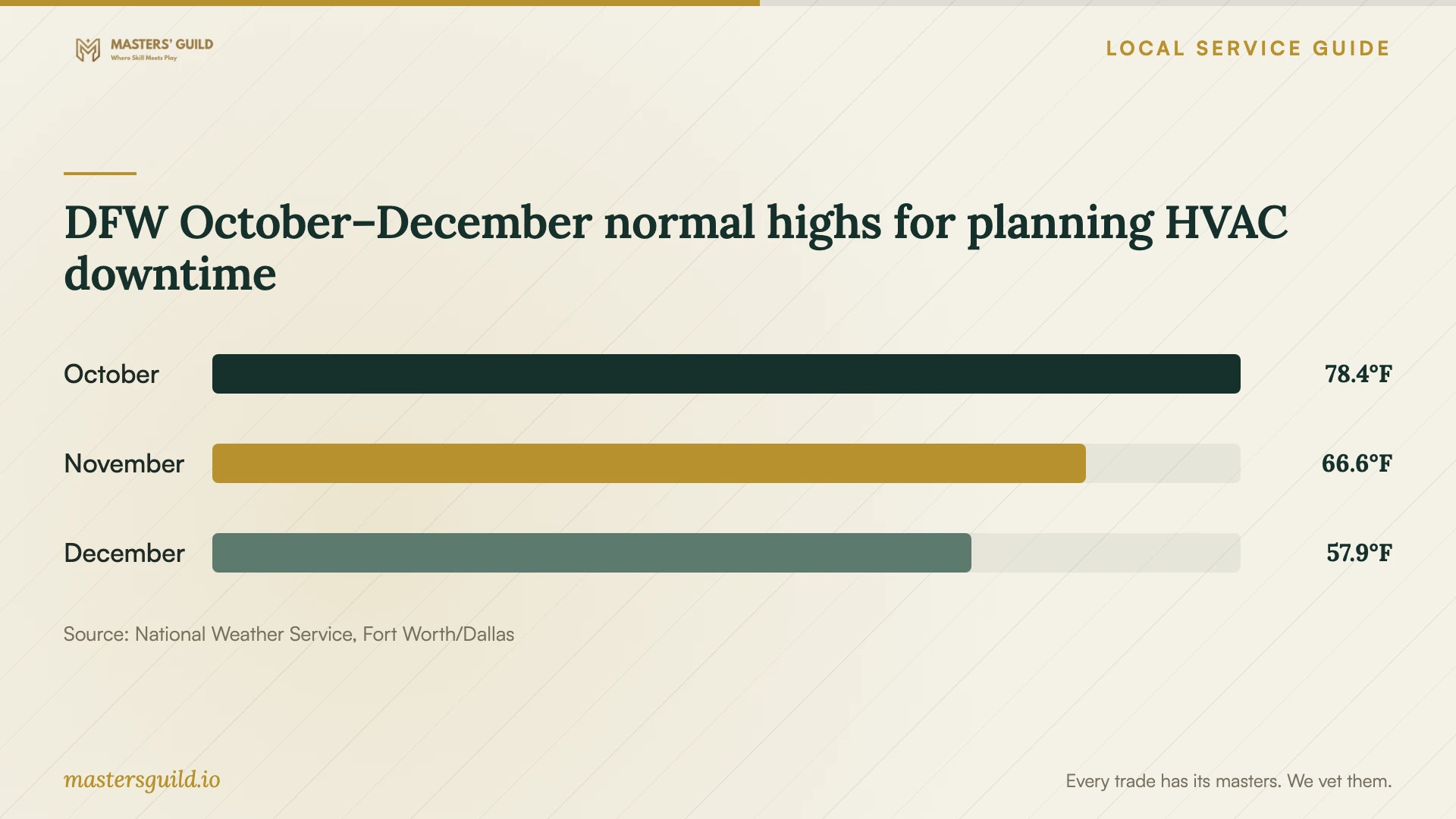
Confirm how long you should expect heating or cooling to be unavailable. The National Weather Service reports DFW normal highs of 78.4°F in October and 66.6°F in November for 1991–2020. Use these regional averages to discuss comfort during the shutdown, then check the forecast for your appointment. They do not establish a preferred cleaning season or justify delaying attention to active contamination. [4]
If you have fuel-burning heating equipment, check whether its inspection requires a separate appointment. EPA recommends inspection and service before each heating season to protect against carbon monoxide poisoning. Have the provider state whether the duct-cleaning agreement includes that service. [1]
Review the work before signing off
Agree on the completion review before work starts. EPA recommends visual inspection and asks homeowners to have the provider demonstrate clean system components. Request matching before-and-after photographs of supply and return sections. Have the crew identify areas they could not reach and any work that remains. [1]
Have the provider show reattached registers, secured access covers and completed access-hole repairs. EPA's checklist also covers fiberglass condition, drain-pan drainage, filter fit and operation in heating and cooling modes. Keep the scope, invoice, photographs and repair recommendations together so you can follow up on unfinished items. [1]
DFW October–December normal highs for planning HVAC downtime
Local details that affect your job
Texas HVAC credentials depend on the proposed work
For an Arlington quote involving duct alterations or biomedical remediation, request the responsible HVAC contractor's name and license number, then ask what license requirement or exemption applies. TDLR lists unlicensed non-exempt duct work and biomedical remediation as violations. The enforcement page does not define cleaning exemptions, so it does not support a blanket claim that every duct-cleaning task requires the same credential. [2]
A small mold area does not exempt a licensed remediator
Before approving a mold add-on, confirm who will assess the problem and who will perform remediation. TDLR says a licensed Mold Remediation Contractor must follow the mold rules even for a project affecting less than 25 contiguous square feet. That contractor must develop a work plan following a licensed Mold Assessment Consultant's protocol. Request these arrangements before accepting an informal spray treatment as the complete job. [3]
Choose the next step from the inspection
| Finding or proposal | Next step | Question for the provider |
|---|---|---|
| Dust on a return grille | Clean the accessible grille and assess the concern | Can you show contamination inside the system? |
| Excessive debris or particles leaving registers | Consider cleaning and investigate the cause | Which components need cleaning, and what caused the buildup? |
| Wet or moldy duct insulation | Discuss replacement and moisture correction | Who will replace the material and address the moisture source? |
| Duct alterations or biomedical remediation | Confirm the Texas licensing basis | Who holds the responsible license, or what exemption applies? |
| Mold assessment or remediation | Check the applicable Texas mold requirements | Who will assess, who will remediate, and what protocol applies? |
Your hiring checklist
- Describe the problem and request inspection photographs with component locations.
- Give each bidder the same system count, access information and requested work.
- Have providers explain credentials for proposed repairs or mold services.
- Get the total, exclusions and approval process for extras in writing.
- Agree on debris collection, duct protection and access-hole repairs.
- Confirm equipment access, pet arrangements and the HVAC shutdown window.
- Review photographs, unfinished items and system operation before signing off.
Frequently Asked Questions
How often should I arrange duct cleaning?
EPA recommends cleaning as needed rather than on a routine schedule. Request evidence of substantial contamination before booking. Dust on a return grille alone does not establish that the ducts need cleaning. [1]
Does every duct cleaner need the same Texas license?
Ask about the exact scope and any applicable exemption. TDLR identifies unlicensed non-exempt duct work and biomedical remediation as violations. Its enforcement page does not define all cleaning exemptions. [2]
Should I approve mold testing during the cleaning visit?
Ask what the provider intends to test and how the results would change the work. TDLR says routine mold sampling is generally unnecessary and advises asking a licensed consultant to establish interpretation criteria before paid sampling begins. Confirm applicable credentials and exemptions before authorizing assessment. [3]
How can I check the completed cleaning?
Have the provider demonstrate clean components through visual inspection and matching photographs. Review supply and return sections, registers and access repairs. EPA's checklist includes filter fit, drainage and system operation after cleaning. [1]
Sources and scope
This guide combines the sources below with practical planning guidance. Figures apply to the stated geography and period; request a written quote for your property.