
Local service guide
Wall painting in Anchorage: hiring and prep
Arrange wall painting in Anchorage by asking painters to quote the same rooms, repairs, paint products, and cleanup responsibilities. Check your home's construction year before agreeing to sanding or scraping: EPA rules generally require certified firms for paid work that disturbs paint in pre-1978 housing, subject to exemptions. Put leftover-paint handling in the agreement so you know what the painter will remove and what you will keep. [3]
Request a room-by-room painting scope
Give each painter the same room list and photographs. Identify walls you want painted, surfaces you want left alone, and any ceilings, doors, baseboards, or window trim you want included. Ask for a site visit before accepting a firm price if the photographs do not show the full condition or access.
Ask the painter to describe cleaning, patching, sanding, priming, and the proposed finish coats. Have them name the paint product, sheen, and colors in the agreement. For cracks, stains, or damaged wall surfaces, request a repair description rather than accepting a general promise to prepare the room.
Compare the total against the written scope. Ask who supplies paint, moves furniture, protects floors, removes coverings, and returns the room to use. Request a written change price before authorizing extra work. The sources here do not establish Anchorage painting labor rates, so use project-specific quotes to set your budget.
Resolve older-paint questions before preparation
EPA's Renovation, Repair and Painting rule generally covers paid work that disturbs paint in houses, apartments, and child-occupied facilities built before 1978. Painters fall within the covered contractor types. Ask a firm proposing covered work for its firm certification and its plan for lead-safe preparation, containment, and cleanup. [3]
EPA does not require paint testing under this rule. Unless you have documentation that the paint is not lead-based, the rule's requirements apply to covered work. If you choose testing, EPA requires an appropriately qualified professional to test the surfaces that the work will affect. Ask the painter to explain which documentation or exemption they intend to rely on. [3]
EPA lists a minor repair and maintenance exemption for work disturbing six square feet or less of paint per interior room. Window replacement and demolition of painted surfaces remain covered regardless of area, and prohibited activities remain prohibited regardless of area. Do not use room floor area to judge this exemption; discuss the painted surface the preparation will disturb. [3]
Agree on room access and completion
Choose a work sequence that lets you keep necessary rooms available. Tell the painter where children and pets will stay, which furniture you can move, and which belongings need protection. Ask them to identify any time you must stay out of the work area and how they will manage ventilation.
Request separate milestones for preparation, painting, inspection, and returning furniture. Ask the painter to follow the selected product's application, recoat, and return-to-use instructions, and to explain those instructions before starting. Avoid setting your move-back date from a verbal promise that the paint will feel dry.
Before final payment, walk through the rooms together. Check the agreed surfaces, edges, repair areas, and cleanup. Record any touch-ups and their completion date. Ask for labeled leftover paint and a record of the product, color, and sheen if you want material for future repairs.
Assign leftover-paint handling before hiring
Decide which usable leftovers you want to keep and which materials the painter will remove. Ask the painter to identify the disposal facility and include transport and disposal charges in the quote. Anchorage's code distinguishes residential hazardous-waste allowances from chargeable deliveries and business-generator categories. [1]
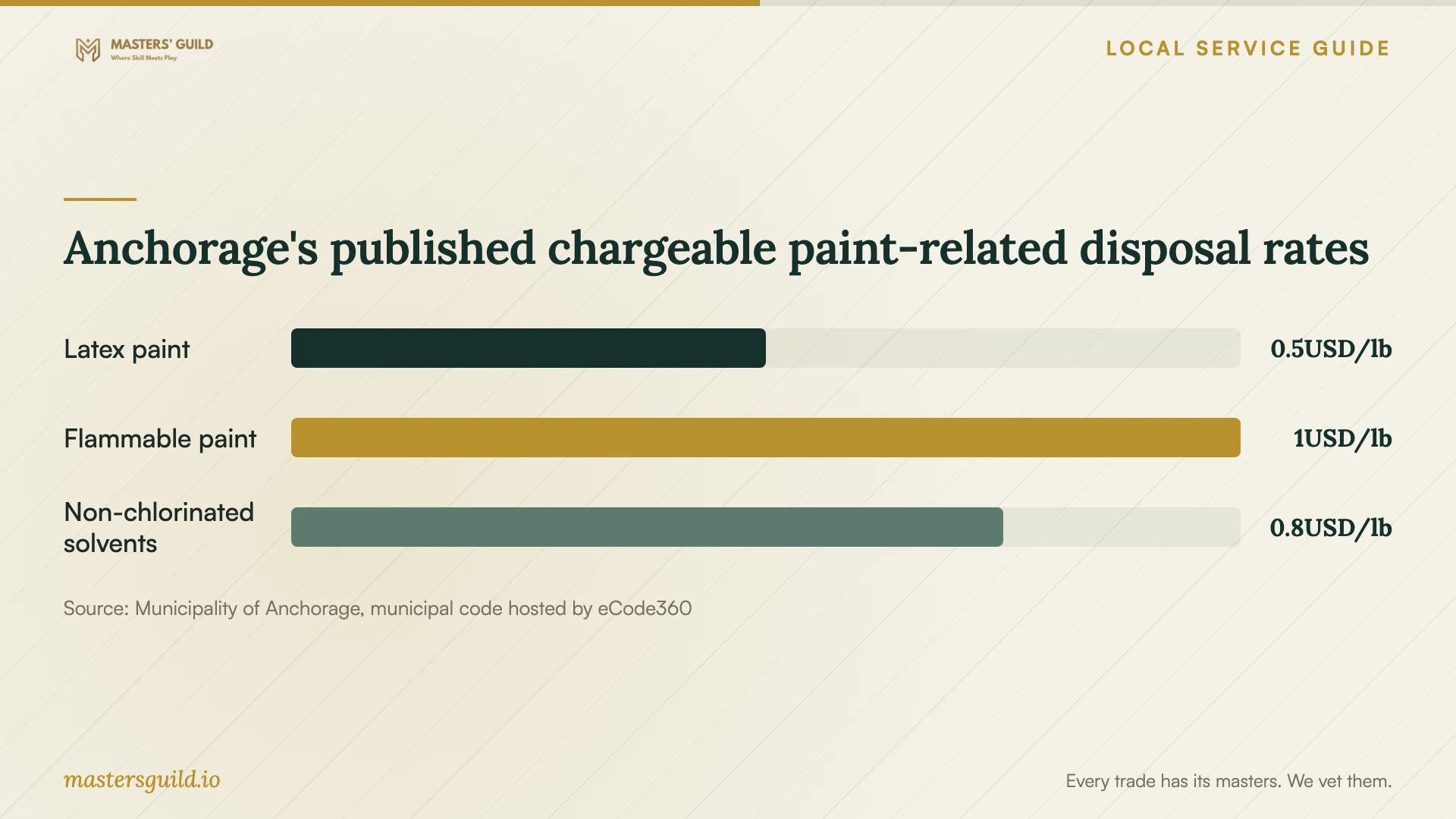
For chargeable hazardous-waste deliveries described in the code, the published schedule lists latex paint and related products at $0.50 per pound, flammable paint and related products at $1.00 per pound, and non-chlorinated solvents at $0.75 per pound. These are disposal rates, not painting prices. Ask Solid Waste Services to confirm the category, acceptance conditions, and total charge before transporting materials. [1]
Keep containers identifiable. The municipality and its contractor may reject unlabeled or improperly labeled containers of unknown content, or materials they consider too dangerous to handle. Ask about unfamiliar materials before adding them to a cleanup load. [1]
Anchorage's published chargeable paint-related disposal rates
Local details that affect your job
Use the household allowance within its limits
Residential users can deliver up to 40 pounds per day and 200 pounds per month of household hazardous waste, excluding electronic waste, without a charge at the Central Transfer Station or Anchorage Regional Landfill hazardous-waste facilities. If you plan to handle your household leftovers, check your quantity and arrange the trip before accepting responsibility. Do not assume the painter can use your residential allowance for business-generated waste. [1]
Choose the correct facility and entrance
Solid Waste Services identifies household hazardous-waste collection at the Central Transfer Station in Midtown and the Anchorage Regional Landfill in Eagle River. It lists the transfer station's residential entrance at 1310 E. 56th Avenue and commercial entrance at 1050 E. 56th Avenue. Commercial waste goes only to the landfill or Central Transfer Station; Girdwood's station serves residential users and does not accept liquids. Confirm hazardous-material procedures before the trip rather than taking leftover liquid paint to a general disposal area. [2]
Choose the next step for your painting project
| Situation | Next step | Clarify before hiring |
|---|---|---|
| Sound walls with a cosmetic color change | Request matching room-by-room scopes | Repairs, paint product, coats, and excluded surfaces |
| Pre-1978 home with paint-disturbing preparation | Discuss EPA coverage and firm certification | Testing documentation, applicable exemptions, and lead-safe work practices |
| You will dispose of household hazardous leftovers | Check the residential allowance and facility procedures | Daily and monthly weight limits, container identification, and acceptance |
| The painter will haul business-generated waste | Ask for the generator category and disposal route | Eligible facility, acceptance conditions, and included charges |
Your hiring checklist
- Send each painter the same room list, photographs, colors, and surface exclusions.
- Check the home's construction year and ask how the painter will assess preparation that disturbs old paint.
- Request relevant certification documentation when the proposed work falls under EPA's renovation rule.
- Get repairs, primer, finish coats, paint product, and sheen in writing.
- Agree on furniture moving, floor protection, ventilation, and room access.
- Assign responsibility for retained paint, unwanted leftovers, transport, and disposal charges.
- Inspect the completed rooms with the painter and record outstanding touch-ups.
Frequently Asked Questions
How should I compare painting quotes?
Give painters the same scope and compare the included preparation, surfaces, products, finish coats, protection, and cleanup. Ask them to price uncertain repairs separately and explain exclusions. A total without those details gives you little basis for choosing.
Does every older-home repaint require lead testing?
EPA does not require testing under its renovation rule. For covered work, the requirements apply unless you have documentation that the paint is not lead-based. Discuss the proposed preparation and any applicable exemption with the firm before work starts. [3]
Can I take unwanted paint to the Central Transfer Station?
The Central Transfer Station offers household hazardous-waste collection. Anchorage's code provides a residential allowance of 40 pounds per day and 200 pounds per month, excluding electronic waste. Confirm hazardous-material acceptance and collection arrangements with Solid Waste Services before traveling. [1] [2]
Can my painter use the free household disposal allowance?
Do not assume that allowance applies to the painter's business-generated waste. The code identifies separate rules for business generators, including chargeable acceptance for very small quantity generators at the Anchorage Regional Landfill and exclusion of small and large quantity generators from municipal hazardous-waste facilities. [1]
Sources and scope
This guide combines the sources below with practical planning guidance. Figures apply to the stated geography and period; request a written quote for your property.