
Local service guide
Anchorage Tree Cutting: Hiring and Cleanup Guide
Arrange tree cutting in Anchorage by checking utility involvement first, asking for a tree-health assessment, and getting a written scope for removal, stump work and wood handling. For trees threatening Chugach electrical equipment, contact the utility before approving private work. Chugach asks residents to report trees touching overhead lines at 907-762-7227 and warns against touching or moving them. [1]
Contact Chugach before arranging work near its lines
For a tree on your private property that could fall onto a power line or electrical equipment, Chugach offers a danger-tree report followed by inspection and possible removal. The utility requires you to mark the trees before submitting its form and says it will cancel an unmarked request. Its stated response can take six or more weeks, depending on reported volume. [1]
If a tree touches an overhead line, call Chugach dispatch at 907-762-7227. The utility warns that the tree may carry electricity and tells residents not to touch or move it. Keep away rather than approaching it to mark it. For other nearby trees, ask Chugach which work it will handle before you sign a private removal agreement. [1]
Request a diagnosis before choosing removal
Ask the assessor to identify the species, explain the observed damage and recommend pruning, monitoring or removal. For spruce, UAF Extension lists reddish-brown boring dust, pitch at entrance holes and later needle-color changes as possible beetle signs. Green needles alone do not establish that a spruce is healthy: needle changes can lag a severe attack by a year or more. [3]
UAF Extension recommends professional assessment when the extent of beetle damage or treatment choices remain unclear. A few attack sites do not mean immediate tree death, while beetle-killed trees face advancing stem and root rot and a risk of falling. Ask the assessor to explain the risk to your house, driveway or occupied yard before choosing a work date. [3]
Match the work date to spruce management
For lower-branch pruning of fully crowned spruce, UAF Extension recommends fall or winter work and removal of the branches from the site. It advises avoiding pruning and thinning during the May–July adult flight period. This is spruce-beetle management guidance for Alaska, rather than a pruning calendar for all tree species. [3]
For heavily attacked spruce, UAF Extension recommends removal and processing before the following May to limit infestation of surrounding trees. Ask the contractor to connect the proposed schedule to the diagnosis and explain how the crew will process the wood. Do not choose a later date based only on convenience when the assessor identifies a hazard. [3]
Compare quotes for the complete job
Give each contractor the same photographs and identify the same trees during the site visit. Request separate descriptions for pruning or removal, branch cleanup, log hauling, stump treatment and ground restoration. Ask for proof of liability insurance and relevant tree-work qualifications, and ask who will supervise the crew.
Walk through access together. Point out gates, fences, sheds, planted areas and the place where you want retained logs stacked. Ask whether the crew plans to bring equipment onto the yard and how it will protect those areas. Put exclusions, weather rescheduling, payment terms and responsibility for any permissions in writing.
Separate utility clearing from your desired finished yard. Chugach says its easement crews leave two-foot pieces for firewood and either cut stumps within a few inches of the ground or use a mulcher or mower. Confirm what remains after its work before requesting a private cleanup or grinding quote. [2]
Choose whether to retain the wood
For removed spruce, ask for a processing plan before choosing to keep logs. UAF Extension advises splitting, debarking or chipping felled material to eliminate beetle habitat, and warns against stacking spruce firewood near living spruce. It also gives stump-processing guidance: debark below ground level or grind the stump. [3]
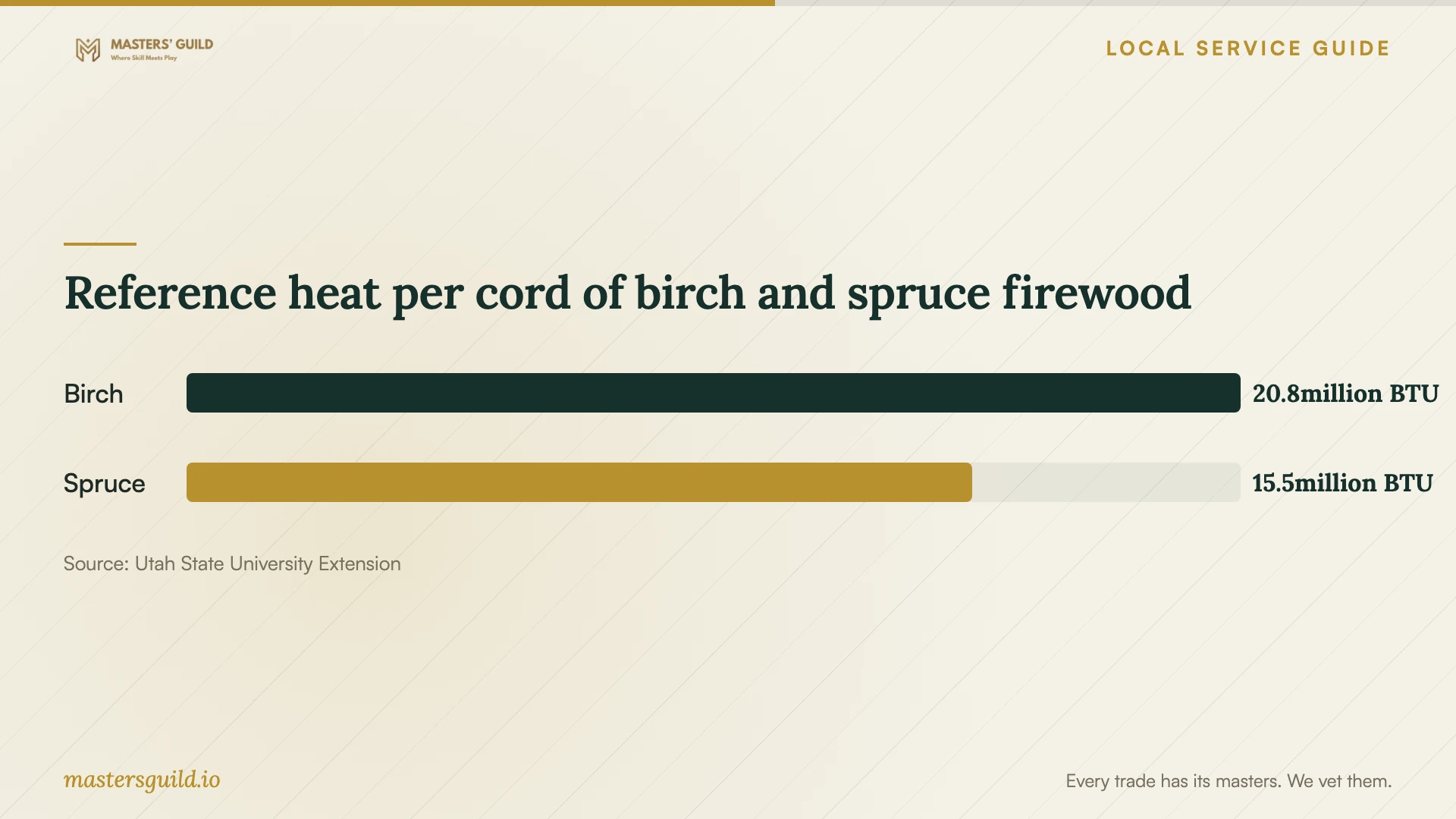
The reference chart compares published heat per cord for birch and spruce in Utah State University Extension's firewood table. Its birch value is higher than its spruce value. Use that comparison when discussing whether you want usable wood retained, while considering your storage space and willingness to split it. The figures do not establish the value or drying time of wood from your property. [4]
USU Extension advises drying wood before burning because green wood produces less heat and more smoke and creosote than dry wood. Ask the contractor to distinguish cutting logs into lengths from splitting and stacking them. State the lengths you want and who will remove unusable branches. [4]
Reference heat per cord of birch and spruce firewood
Local details that affect your job
Chugach easement work has a defined boundary
Chugach clears the full width of its easements, generally ten feet on each side for a twenty-foot span. It says crews do not remove trees outside its easements without the property owner's signed permission. Ask the utility to identify the applicable easement and trees before deciding which removals belong in your private contract. [2]
Alaska spruce guidance changes the disposal plan
UAF Extension says bark-covered downed spruce can host beetles and threaten nearby healthy trees. For an Anchorage spruce removal, include processing in the scope rather than agreeing only to felling. The regional guidance recommends prompt splitting, debarking or chipping, ideally before the mid-May–July flight period. [3]
Choose the next step for your tree
| Situation | Next step | Scope to confirm |
|---|---|---|
| Tree touching a Chugach overhead line | Call 907-762-7227 and do not touch or move the tree. | Ask the utility for instructions before arranging private work. |
| Private-property tree could fall onto Chugach equipment | Use the danger-tree request process; Chugach requires marking. | Confirm inspection timing and which work the utility will undertake. |
| Spruce has boring dust or pitch tubes | Request a professional diagnosis before approving removal. | Ask about damage severity and processing if removal is recommended. |
| Chugach has completed easement clearing | Inspect the remaining wood and stumps before requesting cleanup. | Specify hauling, desired stump treatment and ground restoration. |
| You want to keep removed spruce | Agree on prompt processing and a storage location away from living spruce. | Separate log cutting, splitting, debarking and branch disposal. |
Your hiring checklist
- Photograph the trees from a safe location and identify which ones you want assessed.
- Confirm your electricity provider and resolve utility involvement before approving nearby tree work.
- Request a written diagnosis and recommendation for each tree.
- Ask for insurance documentation and the supervising worker's qualifications.
- Compare the same removal, hauling, stump and restoration scope across quotes.
- Agree on equipment access, protected areas and the log-stacking location.
- Specify who will process retained spruce and remove branches.
- Record exclusions, payment terms and rescheduling arrangements before work starts.
Frequently Asked Questions
Will Chugach remove a tree that threatens a power line?
Chugach accepts danger-tree reports for trees on private property that could fall onto lines or electrical equipment, then inspects and may remove them. Mark the trees before submitting the form. The utility says response can take six or more weeks; a tree touching a line requires an immediate call to dispatch. [1]
Does green foliage rule out spruce beetle damage?
No. UAF Extension says needle-color changes can take a year or more after a severe attack. Ask a tree-care professional to examine boring dust, pitch tubes and other signs before deciding whether to retain or remove the tree. [3]
Should stump grinding appear in the removal quote?
Ask the contractor to state whether stump work is included and describe the intended finish. For spruce-beetle management, UAF Extension recommends debarking stumps below ground level or grinding them. Agree on chip removal and ground restoration as separate scope items. [3]
Can I keep beetle-affected spruce for firewood?
UAF Extension allows processing removed spruce by splitting, debarking or chipping. It advises burning split material with bark before the following spring and keeping spruce firewood away from living spruce. Ask the assessor which handling plan fits the tree's condition. [3]
Sources and scope
This guide combines the sources below with practical planning guidance. Figures apply to the stated geography and period; request a written quote for your property.