
Local service guide
Plan tile setting in Anchorage, AK
For tile setting in Anchorage, choose an installer who provides a written scope for removal, surface preparation, layout, wet-area work, and cleanup. Compare bids against that same scope. Anchorage exempts tiling and similar finish work from a building permit, but retains separate plumbing, electrical, and mechanical permit requirements unless those activities qualify for their own exemptions. Identify those responsibilities before demolition. [1]
Give bidders the same project description
Send installers room photographs, approximate dimensions, and the surfaces you want tiled. Identify a floor, backsplash, shower surround, or repair as separate work areas. Include the tile product and size if you have chosen them. Request an on-site assessment before accepting a final price, and ask the installer to explain any assumptions about the surfaces beneath the existing finish.
Have each bidder describe removal, backing or subfloor preparation, setting materials, grout, trim, and disposal. Assign responsibility for purchasing materials and checking deliveries. Agree on how you will approve visible cuts, grout color, edges, and transitions to adjacent flooring. Ask for matching spare pieces and decide where you will store them.
For a shower, request the proposed waterproofing system and a description of work at the drain, corners, curb, and wall penetrations. Ask for the manufacturer's installation instructions and photographs before the installer covers the work. Include responsibility for plumbing in the agreement, along with any proposed testing and inspection arrangements.
Check permits against the complete scope
Anchorage lists tiling among its building-permit exemptions for finish work. The municipality also states that permit exemptions do not waive licensing requirements or authorize work that violates the code. Ask the contractor to explain the requirements for your complete project rather than relying on the finish-work exemption alone. [1]
For regulated building and system alterations, Anchorage requires a permit unless a specific exemption applies. If you plan drain relocation, new floor-heating wiring, or structural repairs, have the contractor confirm requirements with the Building Official before starting. Record who will obtain permits and arrange inspections. [1]
The plumbing exemption has an important limit: replacing a defective concealed trap or drain pipe requires a permit and inspection. If removal reveals that condition, ask the contractor to document it and revise the plumbing scope before proceeding. [1]
Compare total bids and return-to-use plans
Compare totals for the same measured area, materials, and preparation scope. Request separate prices or allowances for work the installer cannot assess before removal. Agree on a written change-order process that records the condition, proposed repair, added price, and schedule effect before you authorize additional work.
Ask each installer for a schedule covering demolition, preparation, installation, and return to use. Request product-specific instructions for walking on the floor, using the shower, cleaning, and restarting floor heating. Arrange another bathroom if you need one during the work. For an occupied home, agree on dust containment, daily cleanup, tool storage, and access through shared rooms.
Request photographs of comparable projects and ask the installer to explain how they would handle your layout. Put the agreed pattern, edge treatment, and visible cuts in writing. Before final payment, walk through the room together, record any unfinished items, and collect care instructions and the written warranty terms.
Include a disposal destination in the agreement
Assign responsibility for carrying out old tile, mortar, and backing materials. Ask whether the quote includes route protection, loading, transport, disposal charges, and cleanup after hauling. Request a disposal receipt if you want a record of the destination and charges.
Solid Waste Services accepts commercial waste at the Anchorage Regional Landfill in Eagle River and the Central Transfer Station in Midtown. Its Girdwood station excludes commercial waste and demolition debris. Have the hauler confirm acceptance for your materials before choosing a destination. [2]
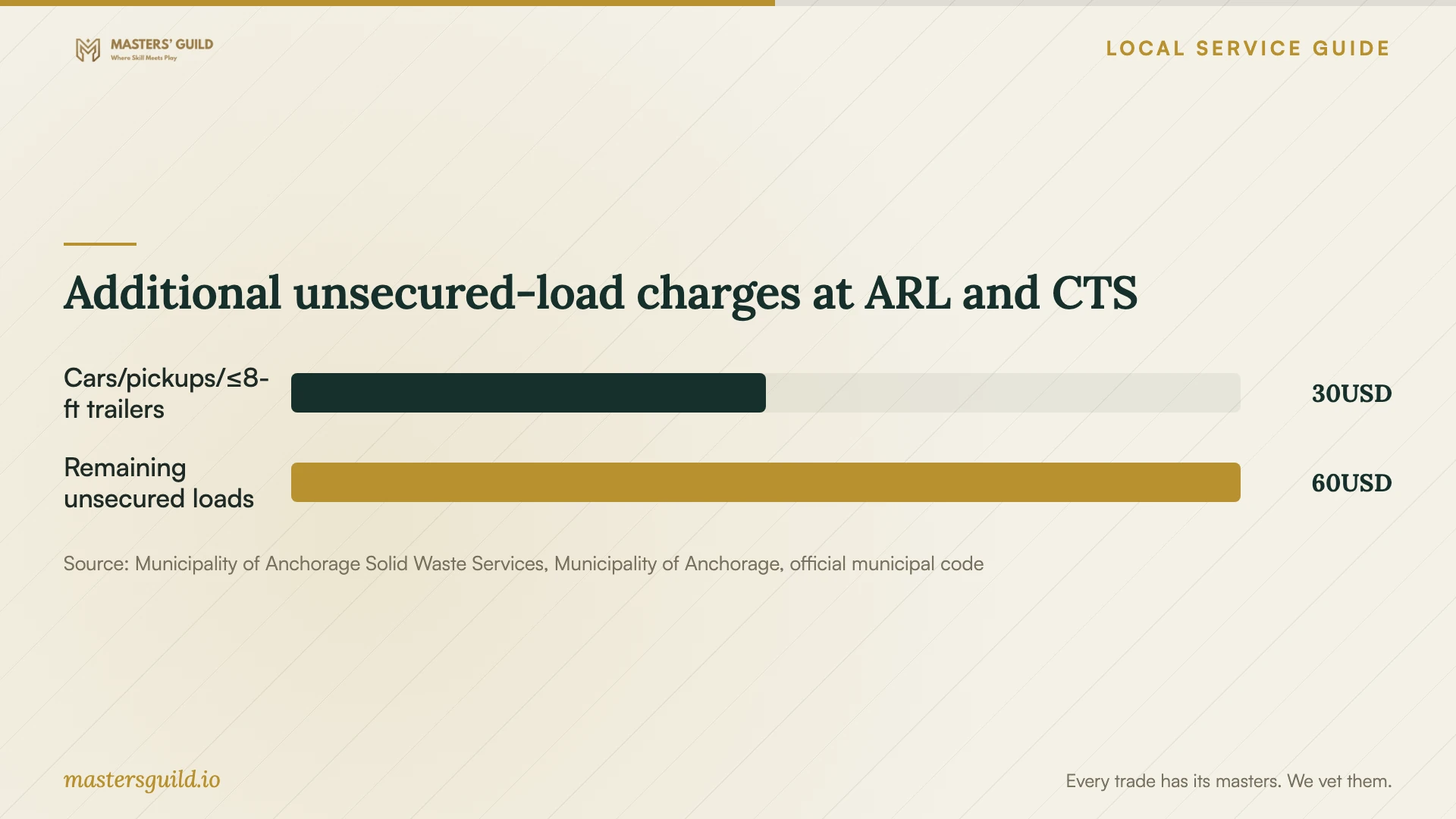
For the landfill and Central Transfer Station, Solid Waste Services publishes additional uncovered or unsecured-load charges of 30 to 60 dollars. The code distinguishes cars, pickups, and trailers eight feet or less in length from the remaining unsecured loads. Ask the hauler to cover and secure the load and include applicable disposal charges in the bid. [2] [3]
Additional unsecured-load charges at ARL and CTS
Local details that affect your job
Finish work and trade alterations need separate checks
Anchorage exempts tiling and similar finish work from a building permit while retaining separate plumbing, electrical, and mechanical permits unless those activities qualify for exemptions. For a bathroom quote, ask the contractor to separate tile installation from drain changes, wiring, and other regulated work, then assign responsibility for the permit check. [1]
Condominium approval can affect the start date
Anchorage requires a condominium association approval letter for permits involving common areas or structural changes. The code also requires a letter for construction affecting the building's appearance or structural integrity. If your project includes such work, obtain the letter before the permit submission and define the owner's and association's responsibilities. [1]
Girdwood is not a demolition-debris option
The municipal Girdwood Transfer Station serves residential users and excludes demolition debris and commercial waste. For contractor hauling through Solid Waste Services, confirm material acceptance at the Anchorage Regional Landfill or Central Transfer Station. Call the utility at 907-343-6250 if the disposal route needs clarification. [2]
Choose the next step for your project
| Project | Local requirement or planning issue | Next step |
|---|---|---|
| Finish-only backsplash | Anchorage exempts tiling and similar finish work from a building permit. | Confirm whether the scope includes other regulated alterations. |
| Floor with new heating wiring | The finish-work exemption retains separate electrical permit requirements unless an electrical exemption applies. | Have the contractor confirm the wiring scope with the Building Official. |
| Shower with a defective concealed drain pipe | Replacement requires a permit and inspection. | Include plumbing responsibility and inspection arrangements in the revised bid. |
| Condominium work involving structural changes | Anchorage requires an association approval letter for the applicable permit. | Arrange approval and define the owner's and association's scopes. |
| Contractor demolition hauling | SWS accepts commercial waste at the landfill and Central Transfer Station; Girdwood excludes demolition debris. | Confirm material acceptance and include the destination and charges. |
Your hiring checklist
- Photograph each work area and describe the surfaces you want tiled.
- Give bidders the same tile selection and removal scope.
- Request an on-site assessment and written preparation allowances.
- Document the shower waterproofing proposal before accepting a bid.
- Assign permit checks, inspections, and any association approval.
- Agree on layout, grout color, edges, and flooring transitions.
- Include the disposal destination, hauling charges, and load securing.
- Get change-order terms, return-to-use instructions, and warranty terms in writing.
Frequently Asked Questions
Do I need a building permit for tile installation?
Anchorage exempts tiling and similar finish work from a building permit. Separate plumbing, electrical, and mechanical permit requirements remain unless those activities qualify for exemptions. Have the contractor check the complete remodel scope, including any structural work. [1]
What should a shower bid include?
Request removal, preparation, the named waterproofing system, tile installation, grout, edges, and cleanup. Ask who handles the drain and plumbing work, how the installer documents concealed work, and when you can use the shower. Keep those answers in the agreement.
Can my contractor take removed tile to Girdwood?
The municipal Girdwood Transfer Station excludes demolition debris and commercial waste. Solid Waste Services accepts commercial waste at the Anchorage Regional Landfill and Central Transfer Station. Ask the contractor to confirm acceptance for the specific materials before hauling. [2]
Do the chart amounts cover hauling and disposal?
They cover additional unsecured-load charges at the landfill and Central Transfer Station. The code adds them to the secured-load disposal charge. Request a quote that identifies transport, base disposal charges, and other applicable fees. [2] [3]
Sources and scope
This guide combines the sources below with practical planning guidance. Figures apply to the stated geography and period; request a written quote for your property.