
Local service guide
Plan pressure washing in Anchorage safely
Arrange pressure washing in Anchorage by asking each provider for a surface assessment, a written wastewater plan and a weather cancellation policy before you accept a quote. A municipal civil-review advisory names mobile power-washing wastewater among prohibited storm-system discharges unless ADEC authorizes the discharge in writing. Ask the cleaner to explain how they will collect the water and confirm an acceptable disposal route. Include photos of painted surfaces, drainage paths and the areas you want cleaned. [1]
Choose a provider who can explain the full job
Request quotes for the same surfaces and the same result. Describe whether you want routine cleaning, stain treatment or preparation for another project. Ask each provider to name the proposed cleaning method for each material, identify areas they will exclude and explain how they will protect adjacent surfaces. Request a small test area before approving the full wash.
Send photographs of the whole work area and close views of cracks, loose coatings and existing damage. Show where the driveway meets the street and where water travels across the property. Ask whether the provider needs an inspection before quoting. Give them access information, the location of your water connection and any limits on parking or hose placement.
Ask for proof of insurance and an explanation of how the provider handles accidental damage. Request a written total with separate charges for additional stain treatment, wastewater handling or work outside the agreed area. Compare those scopes before comparing totals. Obtain property-specific quotes for the surfaces, cleanup and wastewater handling you need.
Settle runoff collection before booking
Anchorage's municipal civil-review advisory identifies storm drains, pipes and ditches as examples of the municipal stormwater conveyance system. It lists wash water from mobile power washing among discharges prohibited unless ADEC authorizes them in writing. The advisory appears in a commercial project review; treat it as a reason to confirm the requirements for your job rather than as a complete account of current law. [1]
Ask the provider to walk the drainage route with you. Have them identify where they will intercept wash water, what equipment they will use to collect it and where they propose to dispose of it. Request confirmation of the disposal route before work starts. Do not approve a plan that relies on washing everything toward the street without resolving the stormwater restrictions. [1]
Include loose-material removal in the quote. The same municipal advisory separately lists sediment, pet waste, vegetation clippings and other landscape or construction wastes among prohibited storm-system discharges. Ask the cleaner to collect those materials before using water, and agree who will remove the collected waste from the property. [1]
Assess painted surfaces before choosing the method
Tell the provider if the job involves loose paint or preparation for repainting. Ask them to establish whether the federal Lead Renovation, Repair, and Painting Rule applies before they choose a work method. EPA's pressure-washing guidance addresses work under that rule; it does not establish that every exterior cleaning job falls within its scope. [3]
For covered renovation work, EPA permits pressure washing but requires the firm to isolate the work area so dust and debris, including debris in wastewater, cannot leave it. EPA also requires the firm to maintain the containment and preserve emergency egress. Ask the provider to describe the containment, wastewater handling and access arrangements in the written scope. [3]
If the provider cannot resolve the paint question, pause that portion of the job. You can ask for a separate assessment while keeping the quote for other surfaces distinct. Photograph existing coating damage before work and agree how you will review the test area together.
Choose a date with a weather backup
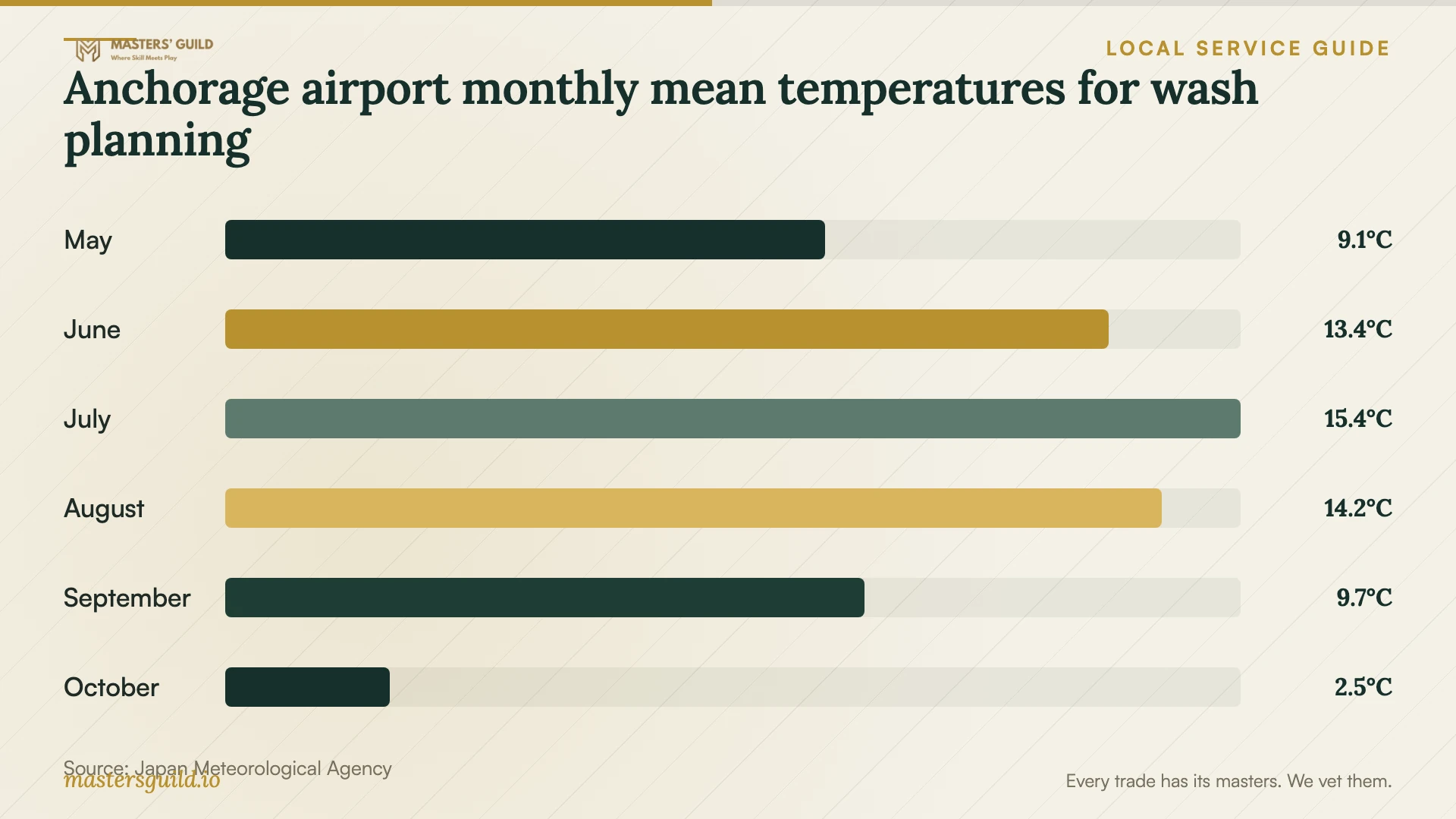
The Japan Meteorological Agency's Anchorage International Airport table gives a normal mean temperature of 9.1°C for May, 15.4°C for July and 2.5°C for October. November's mean is below freezing at minus 4.6°C. These monthly averages provide context for scheduling; they do not describe the temperature of your driveway or predict conditions on the appointment date. [2]
For an autumn appointment, ask the provider to review the forecast, inspect the surfaces and explain their stop-work conditions. Agree who makes the cancellation call, whether a deposit transfers to another date and when you can use the cleaned area. Keep the rescheduling terms in the quote.
Avoid choosing a date from temperature alone. The airport table also reports monthly precipitation normals, including 25.9 mm in June and 79.6 mm in September. Ask the cleaner how they will handle rain during the work and whether the proposed treatment needs a dry interval. [2]
Anchorage airport monthly mean temperatures for wash planning
Local details that affect your job
Confirm the route from your driveway to the storm system
The Anchorage civil-review advisory expressly includes mobile power-washing wastewater in its prohibited-discharge list and names storm drains, pipes and ditches as stormwater conveyances. Before booking, show the cleaner the property's drainage route and request a collection and disposal plan. If they propose a discharge requiring authorization, ask them to resolve that with the relevant authority before work. This source is a project-review advisory, not a property-specific approval. [1]
Separate debris removal from the washing step
The municipal advisory separately identifies sediment, pet waste and vegetation clippings as prohibited storm-system discharges. For a driveway or patio with loose material, specify pickup before washing rather than leaving debris removal implicit in a general cleaning quote. Ask who will collect and remove the solids. This preparation decision remains relevant even if the provider proposes washing without detergent. [1]
Resolve these questions before accepting a quote
| Situation | Ask the provider | Your next step |
|---|---|---|
| Wash water could reach a street drain or ditch | How will you collect the water and confirm its disposal route? | Resolve stormwater discharge restrictions before booking. |
| Loose sediment, pet waste or clippings cover the area | Who will collect and remove the solids before washing? | Include separate debris pickup in the written scope. |
| The job could disturb a painted coating | Does the federal lead renovation rule apply to this work? | Establish applicability and document containment for covered work. |
| You want an autumn appointment | What forecast or surface conditions will make you postpone? | Agree on a backup date and cancellation terms. |
| Quotes cover different tasks | Does the total include the test area, cleanup and wastewater handling? | Request matching scopes before choosing a provider. |
Your hiring checklist
- Send wide and close photographs of each surface, existing damage and drainage paths.
- Define the areas to clean, the desired result and any excluded work.
- Ask for the cleaning method and approve a test area before the full wash.
- Request a written plan for loose-debris removal, wastewater collection and confirmed disposal.
- Ask the provider to assess rule applicability before disturbing painted surfaces.
- Confirm insurance, water access, hose placement and protection of adjacent areas.
- Agree on weather cancellation, deposit transfer and access after cleaning.
- Review the completed surfaces and cleanup with the provider before closing the job.
Frequently Asked Questions
Can the cleaner send wash water into a storm drain?
Do not accept that disposal route without confirmation. Anchorage's civil-review advisory lists mobile power-washing wastewater among prohibited storm-system discharges unless ADEC authorizes the discharge in writing. Ask the provider to confirm the requirements and document collection and disposal for your property. [1]
Does avoiding detergent resolve the runoff issue?
The municipal advisory separately lists mobile power-washing wastewater and wastes such as sediment and vegetation clippings. A detergent-free proposal does not resolve those concerns. Ask how the cleaner will remove solids and handle the wash water. [1]
Can pressure washing form part of a lead-regulated renovation?
EPA says pressure washing is permissible under the federal RRP Rule with the required containment. For covered work, the firm must keep dust and debris, including debris in wastewater, within the work area and preserve emergency egress. Ask the provider to establish whether your job falls under that rule. [3]
Should I book outdoor washing in October?
Ask for a property assessment and a weather backup. The airport's October normal mean temperature is 2.5°C, but a monthly average cannot establish suitable conditions for your appointment. Have the provider explain their operating limits and cancellation terms before you pay a deposit. [2]
Sources and scope
This guide combines the sources below with practical planning guidance. Figures apply to the stated geography and period; request a written quote for your property.