
Local service guide
Arrange pest control in Anchorage
Arrange pest control in Anchorage by requesting pest identification, an inspection-based written quote and a treatment plan covering preparation and follow-up. Before authorizing pesticide application on private property, ask for the operator's municipal pest control health permit details. Anchorage requires this permit for that work. Agree on the inspection area, your preparation duties and the conditions for a return visit before booking. [1]
Identify the pest before choosing treatment
Ask the inspector to identify the pest and explain the evidence. For bed bugs, the University of Alaska Fairbanks Cooperative Extension Service says you must locate the insects to confirm an infestation. Inspect mattress edges, seams and furniture crevices with a flashlight. Photograph what you find and tell the inspector which rooms you checked. [2]
Describe where you noticed activity, when you first saw it and which products you have used. Ask whether the appointment covers identification alone or includes treatment. Request the inspection charge and clarify what you would pay if the inspector finds no target pest. For other suspected insects or rodents, request identification before accepting a treatment package.
Check the permit and arrange access
Anchorage Environmental Health Services requires a pest control health permit for operators applying pesticides outside municipal parks and greenspaces, including private properties. Ask for the operator's permit details before agreeing to pesticide work. Contact the office at 907-343-4200 to clarify the requirement for the proposed service. [1]
Ask who will attend, what training they have for the identified pest and whether the company carries liability insurance. Tell the provider about children, pets and preparation constraints. Obtain written instructions covering access, belongings and when household members can return. Ask the provider to explain any preparation you cannot complete before accepting the appointment.
For bed bugs in multifamily housing, involve the property manager before approving treatment limited to your unit. UAF advises collaboration among tenants for successful control. Ask who will coordinate inspections, resident communications and access to other units if the provider recommends it. [2]
Compare the treatment plan and total charge
Request a written quote that separates inspection, treatment, preparation assistance and follow-up. Give each bidder the same rooms and suspected pest to assess. Ask which findings could change the total, whether a return inspection costs extra and what any guarantee requires you to do. Review recurring service as a separate commitment, including cancellation terms.
For bed bugs, ask how the provider will combine treatment with cleaning, physical removal or other nonchemical measures. UAF describes pesticide resistance and recommends combining chemical and nonchemical approaches. It warns that foggers can force bed bugs into other rooms and fail to reach insects hiding in crevices. [2]
Agree on how the provider will assess remaining activity and when you should contact them again. Request a treatment record and keep it with your quote and preparation instructions. If you rent, clarify who will authorize and pay for inspection, treatment and return visits before accepting the work. Avoid accepting an open-ended charge without an approval process for additional work.
Prepare belongings and verify temperature treatment
Follow the provider's preparation plan before moving belongings between rooms. UAF recommends reducing clutter, vacuuming and using heat on clothing and bedding as parts of bed bug control. Discard vacuum contents after use. UAF advises leaving whole-home heat treatment to professionals with the necessary knowledge and equipment. [2]
UAF describes cold exposure below 0°F for at least four days and heat exposure at 118°F for 90 minutes as bed bug control conditions. It cautions that large items take a long time to cool. Ask a provider proposing temperature treatment how they will measure temperature within the item and maintain the required exposure. [2]
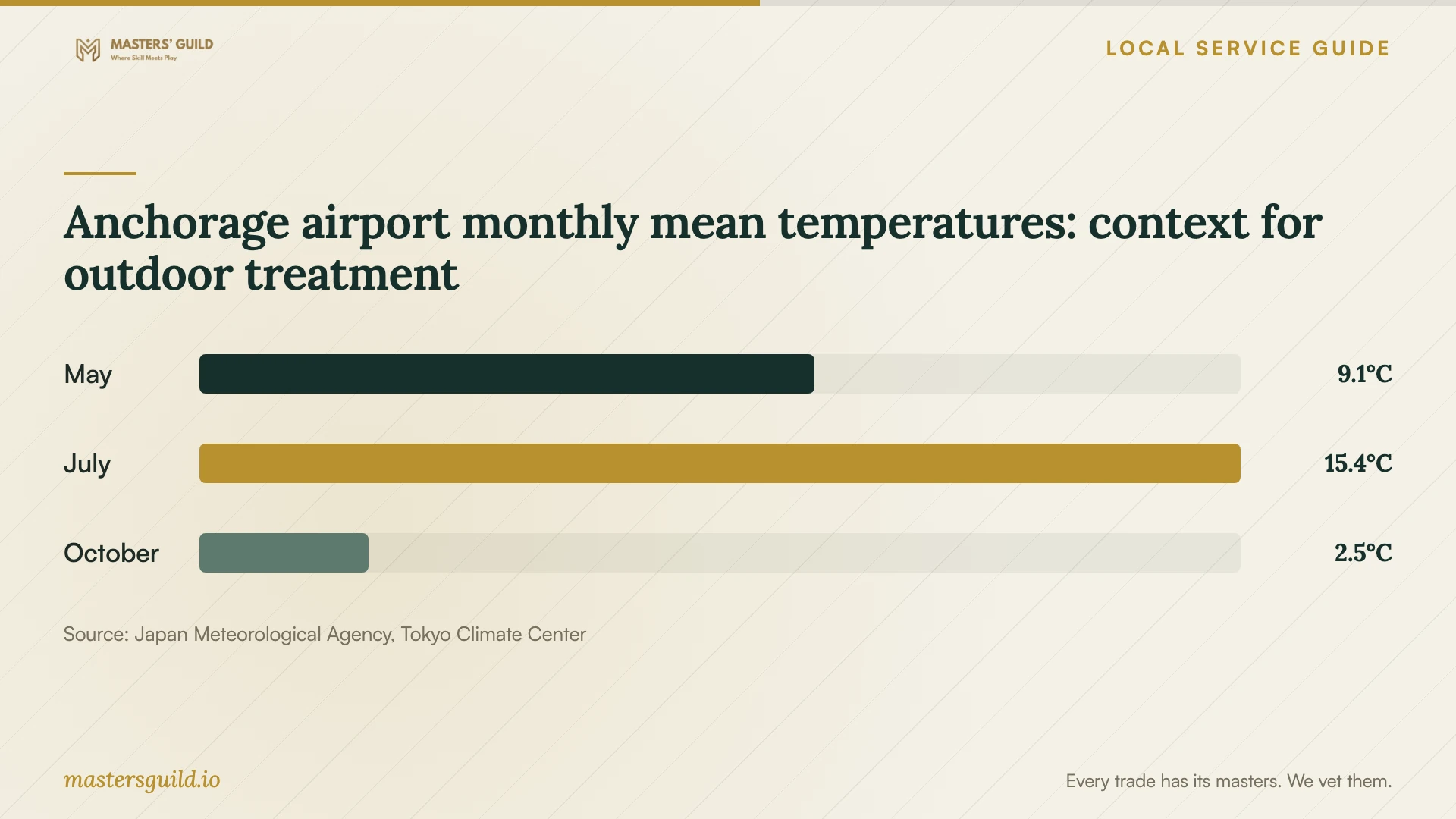
Do not approve outdoor freezing based on the season alone. The Japan Meteorological Agency lists October's monthly normal mean temperature at Anchorage International Airport as 2.5°C. The table does not identify its reference years. An outdoor monthly average cannot establish temperature within a mattress or exposure duration. Ask for measurements and a treatment protocol rather than a promise based on local weather. [2] [3]
Anchorage airport monthly mean temperatures: context for outdoor treatment
Local details that affect your job
Private-property pesticide work requires a municipal permit
Anchorage requires a pest control health permit for operators applying pesticides on private properties. Municipal parkland applications instead require Parks and Recreation Department approval. For a home appointment, request the operator's health permit details. Contact Environmental Health Services at 907-343-4200 to clarify the proposed work before authorizing pesticide application. [1]
Rental-housing pest concerns have a local contact
Anchorage Environmental Health Services regulates pests in rental housing under AMC 15.10.050 and AMC 15.10.060. Notify your property manager in writing and retain photographs and service records. Contact Environmental Health Services at 907-343-4200 for guidance about a rental-housing pest concern. Clarify responsibility for your rental circumstances before arranging paid treatment. [1]
Choose your next step
| Situation | Next step | Question to ask |
|---|---|---|
| Suspected bed bugs from bite marks | Request identification; UAF says locating the insects confirms an infestation. | What evidence supports your diagnosis? |
| Pesticide application on private property | Request the operator's Anchorage pest control health permit details. | Can I confirm your municipal permit information? |
| Bed bugs in multifamily housing | Involve the property manager and coordinate among tenants. | Who will arrange access and assess other units? |
| Proposed whole-home heat treatment | Request a professional treatment and monitoring plan, consistent with UAF guidance. | How will you monitor temperatures and assess the result? |
| Proposed outdoor freezing of furniture | Request temperature and exposure measurements; UAF cautions that large items take a long time to cool. | How will you verify conditions within the item? |
Your hiring checklist
- Photograph the suspected pest and note where you found it.
- Request identification and a written inspection scope.
- Ask for municipal permit details before authorizing pesticide application.
- Coordinate access and payment responsibility with your property manager if applicable.
- Compare quotes covering the same inspection area, treatment and follow-up.
- Obtain preparation and re-entry instructions before booking.
- Ask how the provider will measure conditions during temperature treatment.
- Keep the treatment record and agree on when to request a return inspection.
Frequently Asked Questions
Does an operator need an Anchorage pest control permit?
Anchorage requires a pest control health permit for operators applying pesticides outside municipal parks and greenspaces, including private properties. Ask for permit details before authorizing that work. Contact Environmental Health Services to clarify the requirement for a proposed service without pesticide application. [1]
Can winter weather treat bed bugs in a mattress?
Request a measured treatment protocol before relying on outdoor cold. UAF specifies exposure below 0°F for at least four days and cautions that large items take a long time to cool. Ask how the provider will verify temperature within the mattress and exposure duration. [2]
Should I use a fogger before the inspection?
UAF warns that foggers can force bed bugs into other rooms, fail to reach hiding places and leave eggs alive. Request identification and a treatment plan before choosing a product. Tell the inspector about products you have used and where you applied them. [2]
What should the written quote include?
Request the identified pest, inspection area, treatment method, preparation duties, total charge and follow-up schedule. Ask the provider to state exclusions, additional visit charges and guarantee conditions. Clarify who must approve a change in scope and whether recurring visits require a separate agreement.
Sources and scope
This guide combines the sources below with practical planning guidance. Figures apply to the stated geography and period; request a written quote for your property.