
Local service guide
Mold removal in Anchorage: hiring and repair planning
Arrange mold removal in Anchorage by asking an experienced contractor to identify the moisture source, define the cleanup area and separate removal from repairs. EPA says homeowners can handle many patches smaller than about 10 square feet, but advises professional help for contaminated water and suspected hidden mold. Before approving associated equipment repairs, ask municipal Development Services which permit category applies. [2] [3]
Choose the right level of cleanup
Measure the visible affected area without opening walls or pulling off wallpaper. EPA says a patch smaller than about 10 square feet is manageable for homeowners in most cases. That guidance does not settle a job involving extensive water damage, contaminated water or suspected HVAC contamination. Describe those conditions when requesting an assessment. [3]
For a small hard-surface patch, EPA recommends detergent and water followed by complete drying. Porous materials such as carpet and ceiling tiles may need disposal. Wear gloves, goggles and a properly fitting N-95 respirator when cleaning. Consult a health professional before starting if you have health concerns. [3]
Hire an experienced professional to investigate a moldy smell without a visible source. EPA cautions that disturbing hidden growth can release spores. If you know or suspect mold contamination in the HVAC system, EPA says to avoid running it because it could spread mold through the building. [3]
Ask for a scope you can compare
Give each bidder the same photographs, affected-room list and account of the leak. Ask them to identify what they inspected, what remains inaccessible and how they will obtain your approval if they discover additional damage. Request separate prices for assessment, cleanup, disposal, moisture repairs and reconstruction.
EPA recommends checking references and hiring a contractor with mold-cleanup experience. Ask which professional or government cleanup guidance the contractor follows. Have the bidder explain how workers will limit your exposure, handle affected belongings and decide which materials they can clean. [3]
Discuss testing before paying for it. EPA says sampling is unnecessary in most cases with visible mold. It also says no EPA or other federal mold limits exist, so sampling cannot establish compliance with a federal mold standard. Ask a proposed testing provider what decision the result would change and who will interpret it. [3]
Separate cleanup from municipal repair questions
Send Development Services a description of the proposed repair work before agreeing to the full package. Its permit page identifies residential permits for one- and two-family dwellings and a separate commercial permit route. It also describes retrofit permits for like-for-like replacement of appliances, electrical services and plumbing fixtures, or specified equipment modifications. [2]
Ask the contractor to name the person responsible for confirming permit requirements and handling any application. Keep cleanup, moisture-source repair and rebuilding as separate lines in the agreement. The municipal page does not establish that every mold cleanup requires a permit or that every associated repair qualifies for the same category. [2]
Prepare the home and document completion
Before work begins, agree on access, where you will keep unaffected belongings and whether you can use the affected room. Photograph conditions and save the contractor's written scope. Ask for a plan covering discoveries behind finishes, approval of extra work and the order of cleanup and repairs.
EPA considers moisture repair essential to completion. Check that the contractor has removed visible mold and addressed moldy odors, then revisit the area after cleanup for water damage or renewed growth. EPA notes that staining can remain after removal, so distinguish cosmetic marks from unresolved contamination. [3]
Ask for a handover record describing the moisture repair, materials removed and any follow-up instructions. EPA advises drying wet materials within 24 to 48 hours after leaks or spills to help prevent growth. That prevention window does not predict how long an established remediation project will take. [3]
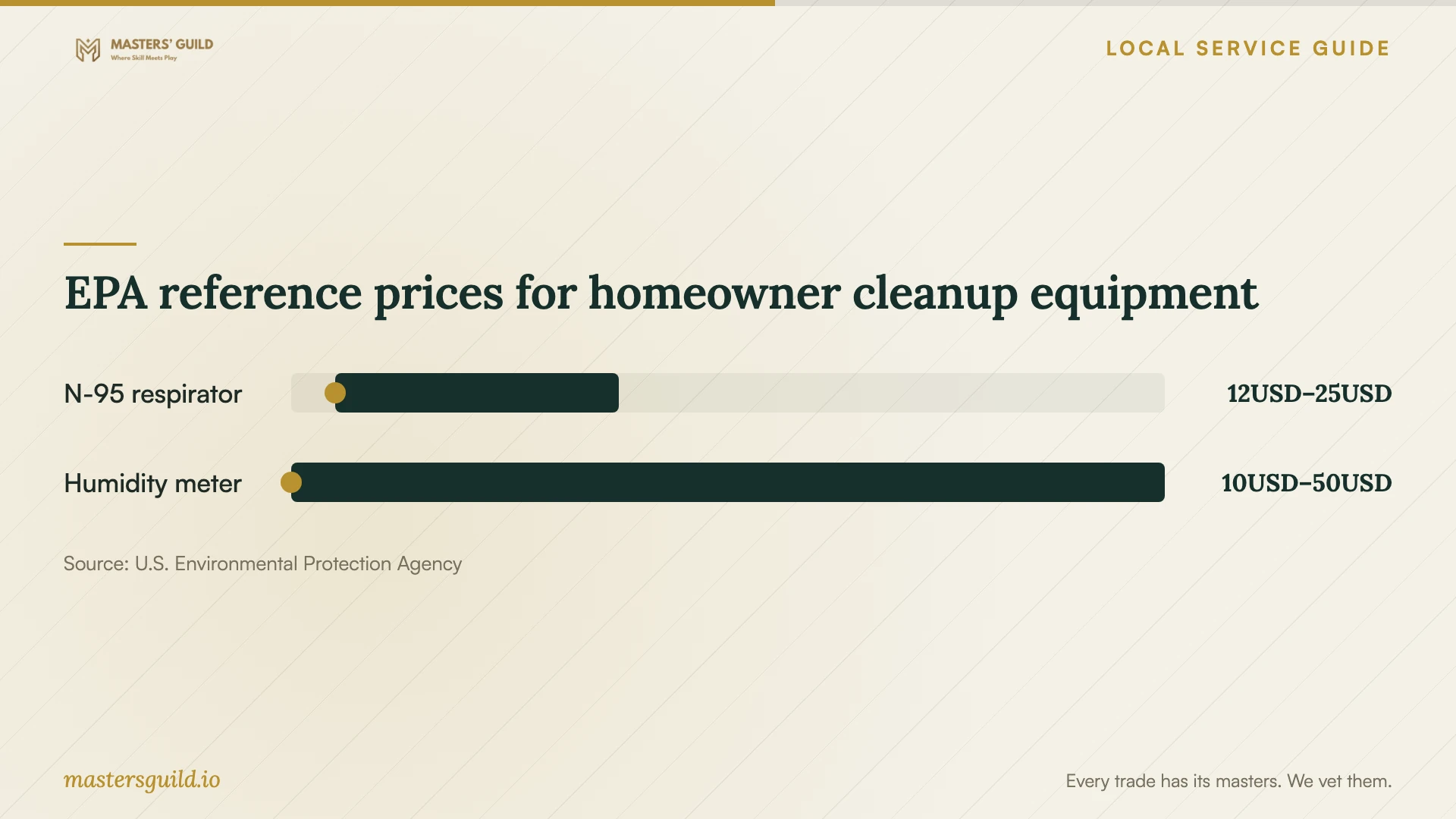
EPA reference prices for homeowner cleanup equipment
Local details that affect your job
Residential complaints differ from hotel complaints
Anchorage Health Department's mold page says the significant-visible-mold public-nuisance ordinance applies to hotels and specified visitor accommodations, excluding residences, apartments and other commercial facilities. Do not assume that hotel enforcement route covers your home. For a covered hotel concern, the department accepts complaints online or at (907) 343-4200 and asks for photographs and a completed witness statement. [1]
Ask about retrofit permits for associated repairs
The municipal permit page includes a retrofit category for like-for-like replacement of an appliance, electrical service or plumbing fixture, and specified modifications of existing equipment. If your remediation quote includes that work, ask Development Services which route applies before approving it. Describe the equipment and proposed changes; the page alone does not determine your project's permit obligation. [2]
Choose your next step from the conditions you find
| Condition | Next step | Planning point |
|---|---|---|
| Small hard-surface patch under about 10 square feet | Consider homeowner cleanup using EPA precautions | Fix moisture and dry the surface; size alone does not resolve other concerns |
| Extensive water damage or growth over 10 square feet | Consult EPA's broader remediation guidance and discuss professional assessment | Describe the full affected area when requesting a scope |
| Sewage or other contaminated water | Hire a professional experienced with contaminated-water damage | Disclose the water source before scheduling cleanup |
| Moldy smell with no visible source | Consider an experienced professional for investigation | Avoid disturbing suspected hidden growth yourself |
| Cleanup includes equipment replacement or modification | Ask Anchorage Development Services about permit categories | Confirm requirements for the proposed repair rather than assuming an exemption |
Your hiring checklist
- Photograph visible growth and record the leak location before requesting bids.
- Tell bidders about suspected hidden growth, contaminated water or HVAC involvement.
- Ask for references from comparable remediation projects.
- Request separate cleanup, disposal, repair and reconstruction prices.
- Confirm who will check municipal permit requirements for associated repairs.
- Agree on access, room use and approval of additional work.
- Request a completion record and arrange a follow-up inspection of the affected area.
Frequently Asked Questions
Do I need a mold test before hiring someone?
EPA says sampling is unnecessary in most cases when you can see mold. Ask what a proposed test would resolve before authorizing it. If sampling has a defined purpose, EPA recommends a professional experienced in sampling design and interpretation. [3]
Can a contractor paint over the affected wall?
EPA advises cleaning mold and drying surfaces before painting or caulking. It warns that paint over moldy surfaces is likely to peel. Ask the contractor to explain removal and moisture repair before approving new finishes. [3]
Does Anchorage's mold ordinance cover my house?
The municipal mold page says its significant-visible-mold ordinance excludes residences and apartments. It covers hotels and specified visitor accommodations. Use that distinction when deciding whether the department's hotel complaint process fits your situation. [1]
How should I judge whether cleanup is finished?
EPA says to fix the moisture problem, complete removal and check for visible mold and moldy odors. Revisit the area after cleanup for renewed growth or water damage. Ask the contractor to document those checks and explain any remaining staining. [3]
Sources and scope
This guide combines the sources below with practical planning guidance. Figures apply to the stated geography and period; request a written quote for your property.