
Local service guide
Arrange lawn mowing in Anchorage
Arrange lawn mowing in Anchorage by comparing property-specific quotes that cover cutting height, trimming, clipping handling, and rescheduling. For routine maintenance, use UAF Cooperative Extension’s regional recommendation as a starting point: mow most Alaska lawns to 3 inches and remove no more than one-third of the grass during a cut. Agree on the visit frequency and disposal arrangement before accepting a recurring plan. [1]
Choose the interval and cutting method
Have the provider assess grass growth before committing to weekly or biweekly visits. UAF’s Southcentral and Interior Alaska publication says highly fertilized lawns may need mowing twice a week, while less-fertilized lawns may need a cut every week and a half to two weeks. These examples describe growth-dependent needs rather than a fixed schedule for your yard. [1]
Include the finished height in your agreement. If the first visit involves overgrown grass, request a staged cutting plan that respects the one-third removal limit. Have the provider explain how they will adjust the interval if growth outpaces the agreed schedule. [1]
Set postponement terms before recurring work starts. Decide who assesses ground conditions, how you receive notice, when the crew returns, and whether you pay for a skipped visit. Require your approval for changes in frequency or extra recovery work.
Compare quotes for the same work
Send each bidder photographs, approximate grass area, current grass height, and access instructions. Identify slopes, narrow gates, trees, beds, and places you want left untouched. Request a description of mowing, trimming around obstacles, edging, and clearing clippings from paths.
Request property-specific mowing quotes and separate prices for bagging and hauling. Compare the first-visit price with the recurring price. For a seasonal agreement, confirm the minimum commitment, cancellation terms, and charges for extra visits or work after the agreed end date.
Keep leaf cleanup, aeration, fertilizer application, and lawn repair separate from routine mowing unless you want them included. Request proof of liability insurance and a contact for damage complaints. Retain the accepted price and scope so you can resolve differences after the first visit.
Choose how to handle clippings
UAF recommends mulching mowers for Alaska because they cut clippings into finer pieces that decompose faster. Its guidance says bagging is usually unnecessary, except in cooler, moister, or shadier locations where clippings do not break down. Discuss those areas before paying for whole-lawn bagging. [1]
For collected clippings, choose an approved on-site collection arrangement or contractor hauling. Anchorage SWS prohibits bags in organics carts. Confirm accepted materials and available capacity with your collector before authorizing the crew to use your cart. [2]
For hauling, identify the destination and separate the contractor’s transport charge from facility fees. Anchorage’s code requires delivery of municipal solid waste to state-permitted processing and disposal facilities within the municipality unless the director grants a written exemption. The code also imposes extra charges for unsecured loads; include covered or tied transport in the hauling scope. [3]
Prepare for and inspect the first visit
Remove toys, pet waste, loose stones, and other objects before the crew arrives. Mark irrigation components and new planting areas. Provide gate instructions and identify acceptable parking and equipment access.
Discuss blade maintenance before hiring. UAF explains that dull mower blades leave ragged grass tips and stress the grass. After the first cut, inspect the height, grass tips, trimming near beds, and path cleanup. Report missed areas and agree on corrections before the next appointment. [1]
Set the scope of the final fall cut
Discuss the final fall visit separately from routine maintenance. In its gray snow mold guidance, UAF says a shorter final cut and bagging can help reduce damage. It gives no numeric height for that final cut. Request the provider’s proposed height and explanation before changing your maintenance specification. [1]
Decide whether the final appointment includes leaves and hauling. Record the stopping point for recurring visits, and confirm whether you need a new booking for the next growing season. Require approval before the crew adds fertilizer or repair work.
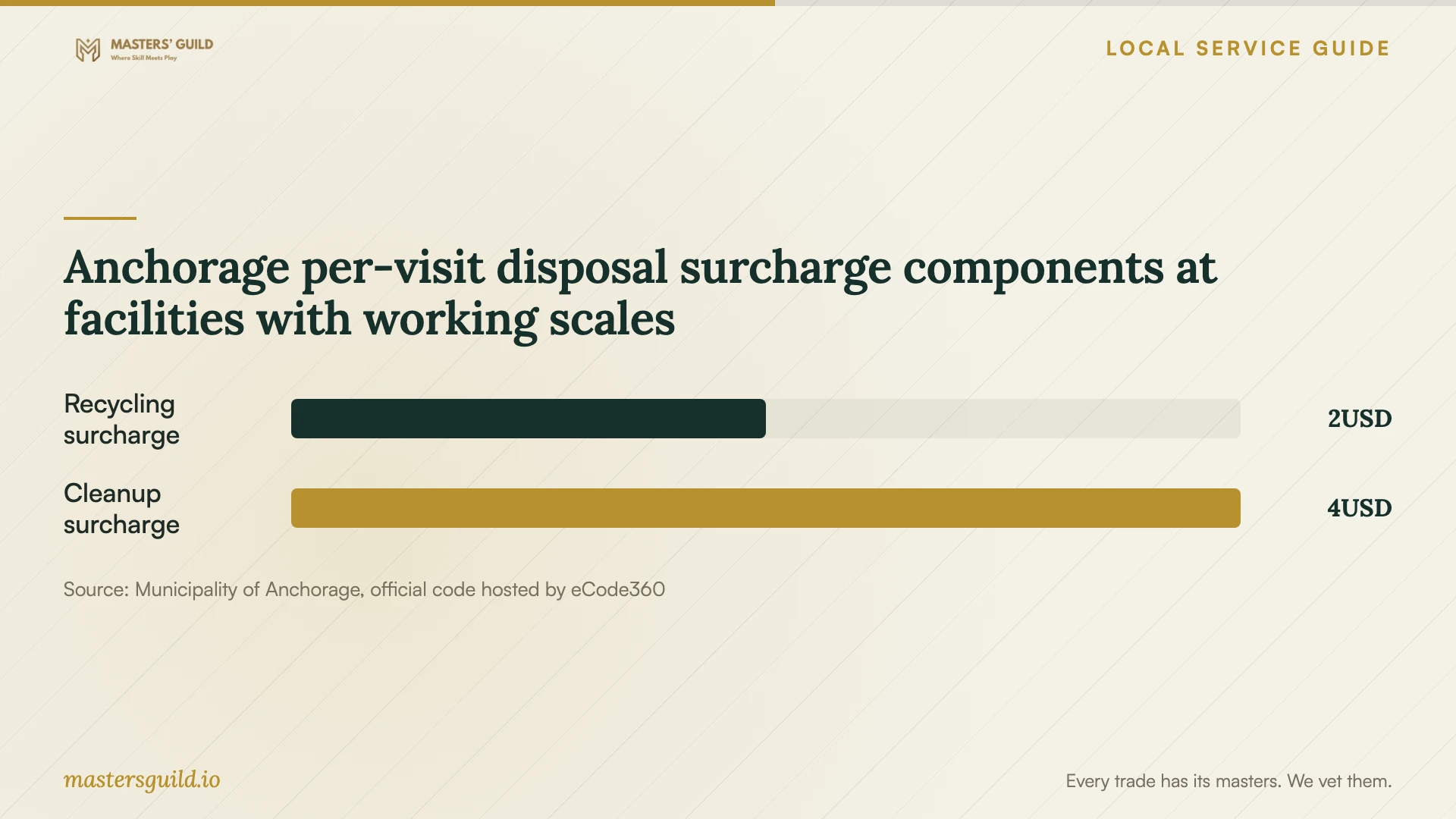
Anchorage per-visit disposal surcharge components at facilities with working scales
Local details that affect your job
Check SWS enrollment through the property owner
Anchorage SWS serves a designated collection area and directs residents to its customer service team for organics enrollment. It lists organics collection every other week and bills services through the property owner. Tenants should work through their landlord before requesting service changes. Confirm address eligibility, enrollment, and accepted materials before choosing a mowing offer that leaves collected clippings at the property. [2]
Use regional guidance for your cutting specification
UAF’s publication covers Southcentral and Interior Alaska, making its regional mowing guidance relevant to an Anchorage lawn. Specify its 3-inch routine height and one-third removal limit as your starting requirements, then discuss your grass and site with the provider. UAF reviewed the publication in October 2019; its availability in October 2026 does not represent a newer editorial review. [1]
Separate yard debris before landfill hauling
Anchorage’s code provides separate fee treatment for yard debris or food scraps exceeding one cubic yard when delivered to Anchorage Regional Landfill for composting or alternative uses. The load must contain no contaminants and remain separate from other waste streams. Confirm the intended disposal route and material separation with the hauling provider; this provision does not establish a complete hauling price. [3]
Match the service arrangement to your lawn
| Your situation | Arrangement to discuss | Question before hiring |
|---|---|---|
| Grass outgrows the planned interval | Adjust visits to respect UAF’s one-third removal limit | How will we approve schedule changes? |
| Cool, moist, or shaded areas retain clippings | Discuss bagging under UAF’s exception to routine mulching | Which areas need collection, and what does it cost? |
| You intend to use SWS organics collection | Confirm eligibility, enrollment, and accepted materials; no bags in organics carts | Can my collection accommodate the material? |
| You want off-site clipping removal | Specify the disposal destination, secured transport, and included fees | What hauling and facility charges will I pay? |
| You need the final fall cut | Discuss UAF’s shorter-cut and bagging advice for gray snow mold | What height do you propose, and are leaves included? |
Your hiring checklist
- Send the same photographs, lawn measurements, and access details to each bidder.
- Agree on cutting height, visit frequency, and an overgrown-lawn plan.
- Specify trimming, edging, and path cleanup.
- Choose mulching, approved on-site collection, or hauling.
- Confirm collection eligibility and accepted materials before using a household cart.
- Compare first-visit, recurring, bagging, and hauling prices.
- Record postponement, cancellation, and correction terms.
- Clear the lawn and inspect the first completed visit.
Frequently Asked Questions
Should I choose weekly or biweekly visits?
Choose the interval around growth and the amount removed at each cut. UAF says highly fertilized Alaska lawns may need twice-weekly mowing, while less-fertilized lawns may need a cut every week and a half to two weeks. Have the provider assess your lawn before setting recurring visits. [1]
Do I need bagging with each visit?
UAF recommends mulching for Alaska lawns and describes bagging as unnecessary unless cooler, moister, or shadier conditions prevent clippings from breaking down. Discuss selective bagging and its price before adding collection to the whole lawn. [1]
Can the crew use my SWS organics cart?
Confirm enrollment, accepted materials, and capacity with SWS first. SWS operates in a designated area, lists organics pickup every other week, and prohibits bags in organics carts. Arrange hauling if your collection cannot accommodate the material. [2]
Does the surcharge chart show my hauling cost?
It shows two municipal surcharge components for qualifying visits at facilities with working scales. Base disposal charges and other applicable fees remain separate. Request the contractor’s hauling price and confirm the actual facility charge for your load. [3]
Sources and scope
This guide combines the sources below with practical planning guidance. Figures apply to the stated geography and period; request a written quote for your property.