
Local service guide
Fall gardening in Anchorage: Hiring and Cleanup
For fall gardening in Anchorage, hire against a written task list covering beds to clear, plants to preserve, winter protection, and debris removal. Include soil sampling before freeze-up if you plan to renovate vegetable beds. For an October cleanup, agree on hauling: municipal curbside organics collection ended September 30 for 2026, while Materials Recovery Facility organics drop-off continues through October 31. Request written quotes for your specific beds and cleanup tasks. [1] [2]
Define the work before requesting offers
Send photographs, approximate bed dimensions, and the results you want. Identify vegetable beds, flower beds, containers, and shrubs as separate work areas. Mark retained plants and ask the gardener to identify unfamiliar plants before removal. List any access restrictions and show where you want tools, supports, and containers stored.
UAF Cooperative Extension recommends removing crop residues, storing poles and trellises, and marking perennials for spring. Turn those recommendations into named tasks. Specify which beds the gardener should clear, which supports they should dismantle, and where they should place markers. Discuss any retained plants before approving a general cleanup. [3]
For recurring care, agree on weeding, watering responsibilities, and how the gardener should report plant problems. Require approval before plant purchases, amendments, or treatments. Ask for a written total or an hourly rate with a spending limit, plus separate amounts for materials, hauling, and disposal.
Agree on the debris destination
Anchorage Solid Waste Services lists the Materials Recovery Facility across East 56th Avenue from the Central Transfer Station. Its seasonal schedule runs May 1 through October 31, Monday through Saturday, 8:30 a.m. to 3:30 p.m. The facility accepts yard clippings and natural wood debris, but excludes decking, lumber, and construction material from the natural-wood category. [1]
Ask the gardener to name the intended destination and confirm current hours and acceptance rules before hauling. Show them old raised-bed boards, plastic covers, and pots as well as plant debris. Request separate disposal arrangements for those materials instead of treating the entire cleanup as one organics load. [1]
For on-site composting, choose the pile location before work starts. UAF says homeowners can compost most crop residues and recommends well-composted material when adding compost to beds to avoid introducing weed seeds and other pests. Ask the gardener to set aside suspect plant material for discussion before adding it to your pile. [3]
Sample soil before buying amendments
UAF recommends sampling in fall before freeze-up. Its instructions call for combining subsamples from the top six inches at eight to ten locations in the garden. Ask who will collect and submit the sample, who receives the results, and whether explaining amendment recommendations forms part of the quote. [2]
Require a moisture check before digging or tilling. UAF advises waiting when a squeezed soil ball sticks tightly together; soil that crumbles under thumb pressure is suitable for spading. Ask the gardener to explain whether your bed is ready for cultivation and what they propose to do if it is too wet. [2]
For a new vegetable bed, discuss sunlight and watering before buying plants. UAF’s Anchorage-area guidance describes cool soils, potentially inadequate rainfall, and the value of full sun. Show the gardener shade from buildings and trees and any places where water collects. UAF advises using a soil test to determine the need for lime. [2]
Approve winter protection plant by plant
UAF recommends insulating sensitive perennials with mulch while considering conditions and timing that could shelter rodents. It also calls for spring mulch removal. For container perennials, the publication describes insulating around the container, placing it in the ground, or storing the plant in a sheltered location. Agree on the approach for each container and who handles the spring follow-up. [3]
Include watering shrubs before ground freeze and draining hoses, sprinklers, watering cans, and rain barrels. UAF explains that watering after the ground freezes is ineffective for preventing winter drying. Identify the water supply and storage locations so the gardener can complete those tasks during the visit. [3]
Ask for proposed cuts by plant name. UAF recommends removing dead, damaged, or diseased parts during perennial winter preparation and gives dormant-season pruning guidance for listed berry bushes and roses. Have the gardener explain the timing and intended cuts before you approve them. [3]
Plan spring transplants and the handover
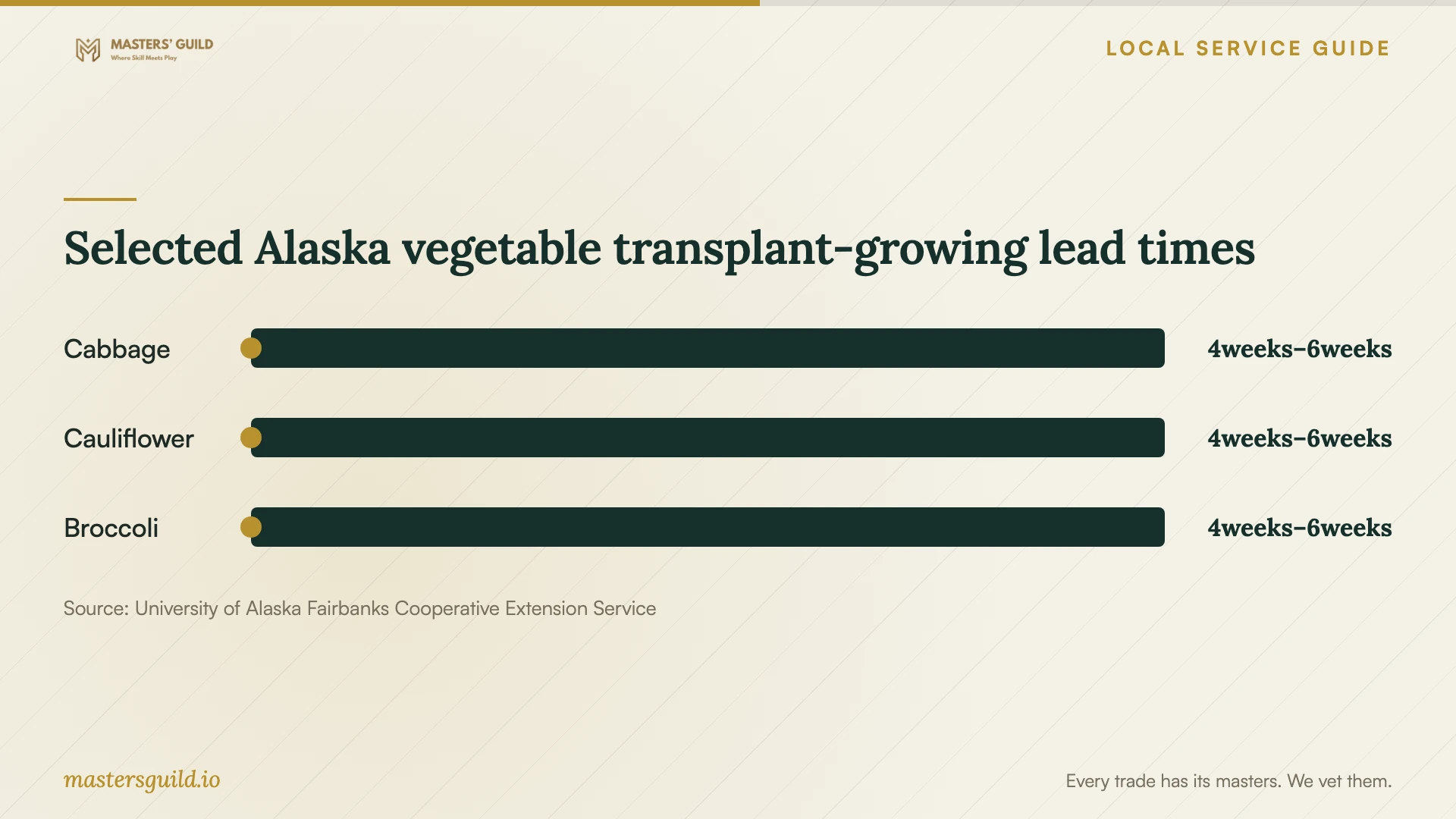
Decide whether you want to buy vegetable transplants or commission seed starting. The chart reproduces selected entries from UAF’s transplant-growing table. The publication instructs readers to count backward from the average last killing frost. Ask the gardener which frost-date reference they will use; the chart does not supply an Anchorage frost date. [2]
At the end of the cleanup, walk through the beds together. Check retained plants, markers, stored supports, and debris removal against the task list. Ask for a short record of work completed, materials added, and unresolved plant questions. Record spring follow-up responsibilities before approving another visit.
Selected Alaska vegetable transplant-growing lead times
Local details that affect your job
October cleanup needs a hauling plan
Anchorage Solid Waste Services ended its 2026 curbside organics collection season September 30 and lists Materials Recovery Facility organics drop-off through October 31. For an October visit, specify who transports the debris and confirm the destination before scheduling. If work moves beyond October, check an alternative disposal arrangement. [1]
Raised-bed lumber needs separate handling
The municipal facility excludes decking, lumber, and construction material from its accepted natural-wood debris category. If the gardener will dismantle raised beds, show the boards during quoting and ask for a disposal route separate from the plant debris. [1]
Use the fall visit for soil sampling
UAF’s Alaska guidance recommends soil sampling before fall freeze-up and soil-test-based decisions about lime. Apply that guidance to a planned vegetable-bed renovation here: include sampling in the visit, assign responsibility for submission, and review the recommendations before buying amendments. [2]
Choose the scope for your garden
| Your situation | Work to request | Decision before booking |
|---|---|---|
| Finished vegetable beds | Remove crop residues and store supports | Choose on-site composting or a confirmed hauling destination |
| Uncertain soil fertility | Sample soil before freeze-up | Assign sample submission and review of recommendations |
| Sensitive perennials or containers | Plan insulation and sheltered storage | Approve materials, locations, and spring mulch removal |
| Raised-bed dismantling | Separate lumber from plant debris | Confirm disposal outside the natural-wood category |
| Next season’s vegetable garden | Plan sunlight, watering, and transplant supply | Choose purchased transplants or crop-specific seed starting |
Your hiring checklist
- Send photographs, bed dimensions, and the results you want.
- Mark retained plants and require approval before removing unidentified plants.
- Separate clearing, pruning, sampling, and winter protection in the scope.
- Show access, water supply, storage locations, and any compost area.
- Request written labor, materials, hauling, and disposal amounts.
- Confirm the debris destination and acceptance rules before the visit.
- Agree on a spending limit and approval process for additional work.
- Walk through completed work and record spring follow-up responsibilities.
Frequently Asked Questions
What should a fall garden cleanup include?
Request crop-residue removal, support storage, perennial markers, and a plant-specific protection plan. UAF also recommends draining watering equipment and watering shrubs before ground freeze. Include a separate agreement on debris removal and spring follow-up. [3]
Can a gardener haul organics to the municipal facility in October?
Solid Waste Services lists Materials Recovery Facility organics drop-off through October 31 for 2026. Confirm current hours and acceptance before hauling. Its natural-wood category excludes decking, lumber, and construction material, so discuss raised-bed boards separately. [1]
Should I buy lime before the gardener arrives?
Request soil sampling first. UAF recommends fall sampling before freeze-up and says homeowners should use a soil test to determine whether lime is needed. Ask the gardener to explain the recommended amendment and quantity before purchasing it. [2]
How should I compare gardening quotes?
Give each gardener the same photographs and task list. Compare the proposed work, total, materials, hauling, disposal, and follow-up. For hourly work, agree on a spending limit and require approval for additions.
Sources and scope
This guide combines the sources below with practical planning guidance. Figures apply to the stated geography and period; request a written quote for your property.